A nine-minute short won Best AI Feature Film at the OPUS Film Awards, and the film it beat took the Grand Prix
OPUS counts any film from 1 to 100 minutes as a feature, and its jury picks the Grand Prix from every shortlist. The Grand Prix winner, PRAY TO GACHA, is not public yet.
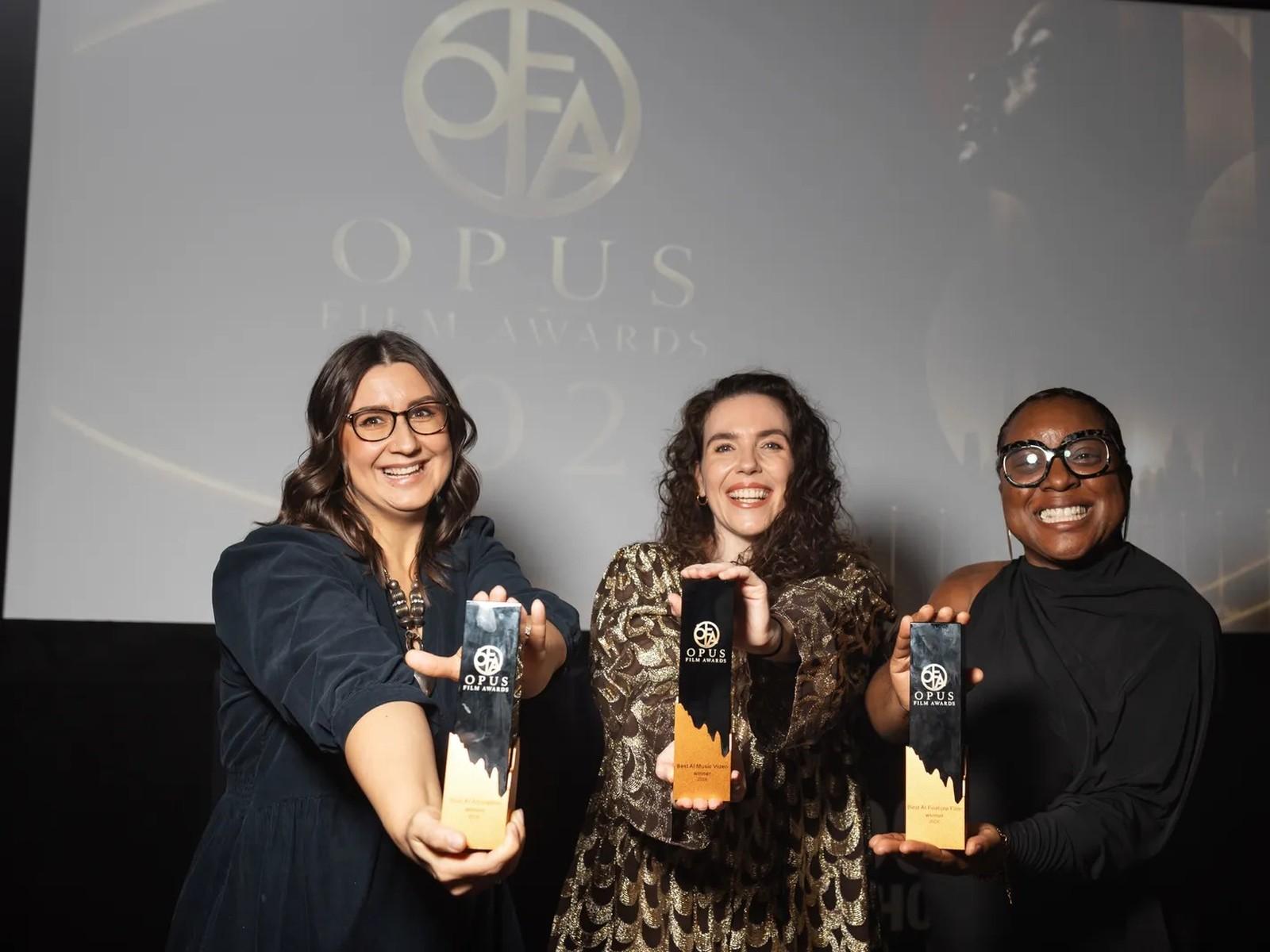
The top prize at London's first OPUS Film Awards went to a film that lost its own category, and the award it lost, Best AI Feature Film, went to a nine-minute short. If you pay an entry fee for a laurel, that matters, because the label means only what the festival's rules say it means.
At London Film School on Saturday, 14 November, OPUS gave its Grand Prix to ICO's PRAY TO GACHA, a 22-minute animation produced with the Tokyo studio Unplug. Jiaze Li's Candy, which runs eight minutes 59 seconds, won Best AI Feature Film. OPUS counts any film from 1 to 100 minutes as a feature, and its terms let the jury pick the Grand Prix from films shortlisted across every category, so a film can lose its category and still win the night.
The rest of the slate gives you names to watch. Dj Marcelll's The Walkers won Best AI Short Film, Tamara Llorens's THE SIESTA JOB won Best AI Animation and Selina Schneider's Checkmate won Best AI Music Video.
Candy had already won the US$32,000 Grand Prize at the first Lumara Film Festival in New York on 26 October, and it is free to watch on YouTube. PRAY TO GACHA is not public yet. On 16 November ICO told a fan on X that people would be able to watch it a little later, and OPUS has not published the tools entrants had to disclose.
Our take: OPUS picked strong winners, but its labels need work. A maker who wins a feature award with a nine-minute film should put the runtime next to the laurel.
Source: OPUS Film Awards winners and nominee pages, 20 Nov 2026; ICO and Unplug on X, 16 Nov 2026; MoonPay release on Lumara, Oct 2026.
Read the full article: thegenerated.com/stories/opus-film-awards-winners-20261120