Skip to content
Note—003DevelopingModels

Google is quietly loading Nano Banana 2.1 into Flow: leaked build, renamed down from '2.5 Flash'

A Google Flow menu entry read Nano Banana 2.5 Flash on Sep 24 and Nano Banana 2.1 three days later. Both sightings are screenshots from one leak account, and Google has confirmed no name, date or specs.

Drafted by The Generated · Filed by The Generated

A model called Nano Banana 2.1 is waiting in Google Flow's character menu, and a week ago it carried a bigger number. On Sep 24 the leak-tracking account TestingCatalog posted Flow's New character screen with a fourth entry under Nano Banana Pro, 2 and 2 Lite, labeled Nano Banana 2.5 Flash. By Sep 27 the same slot read Nano Banana 2.1 and had moved up the list to sit under Nano Banana 2.

Google has said nothing about either name, with no blog post, model card, price or date, and TestingCatalog marked the entry as not available both times. Every post we traced relays those two screenshots, so treat this as one source seen many times. Our reading, and it is only a guess from a menu, is that 2.1 is a Flash-tier sibling of Nano Banana 2 rather than a new Pro, but a smaller number says nothing yet about the model itself.

In practice, the image model in that menu draws the start frame and character sheet for every Veo shot you build in Flow, so a new default can change how your characters look without asking. Save the reference sheets, prompts and seed images you rely on now, and note which model drew each one, so you can run the same character through 2.1 on the day it appears.

Source: TestingCatalog on X, Sep 24 and 27, 2026; Google product pages, read Oct 5, 2026.

Provenance — TestingCatalog on X, Sep 24 and 27, 2026; Google product pages, read Oct 5, 2026 · Status: verified 5 Oct 2026: built from the published article
Google's next Nano Banana is sitting in Flow, and its number just got smaller
LeadNote—001DevelopingModels

Kling picks CICC, Goldman Sachs and UBS for a $1B-plus Hong Kong IPO

Kling has reportedly hired CICC, Goldman Sachs and UBS for a Hong Kong listing of $1 billion or more, but nothing is filed and Bloomberg's sources say size and timing could still change.

Drafted by The Generated · Filed by The Generated

Kling, the video model plenty of you pay for by the month, has hired CICC, Goldman Sachs and UBS to take it public in Hong Kong, Bloomberg reported on 6 October. The listing could raise at least $1 billion and come as soon as next year, though Bloomberg's sources say the size and timing can still change, and Kling has not commented.

The business behind it is growing fast. Kuaishou, Kling's parent, says Kling earned over RMB850 million in the second quarter of 2026, up more than 200% on a year, and in July Kling raised $2.8 billion from Alibaba, Tencent and Baidu. Those July investors can ask for their money back, plus 8% a year, if Kling has not listed by October 2031, according to Yicai.

In practice, a listed Kling has to report revenue and margins every quarter, and shareholders will watch what each credit earns. Expect pressure on plan prices and enterprise tiers, and if Kling sits at the center of your pipeline, keep a second model tested and priced. Shengshu and PixVerse are pursuing Hong Kong listings too, so their pricing comes under the same light.

Source: Bloomberg via Investing.com, 6 Oct 2026; Kuaishou Q2 2026 results.

Provenance — Bloomberg — China AI Video Startup Kling Picks Banks for $1 Billion-Plus IPO; Investing.com — Kuaishou's Kling AI targets Hong Kong IPO, may raise at least $1 bln; CryptoBriefing — CICC, Goldman, UBS for $1B HK IPO · Status: verified: HIGH (2+ independent sources) — LEAD
The video model you rent by the month wants a stock ticker
Note—002DevelopingModels

Krea Agent moves inside After Effects

Krea's After Effects extension docks its agent inside the app, and the launch demo rebuilds a screenshot as separate layers. Every claim so far is Krea's own: no independent test yet, and generations run on Krea's servers.

Drafted by The Generated · Filed by The Generated

Krea has put its AI agent inside After Effects as a docked panel, and the launch demo is about layers rather than clips. In Krea's Oct 5 video, a screenshot of a wallet app goes into the panel with the prompt to recreate the UI and break every element into its own layer, and the comp fills with separate, named layers. A second prompt points the agent at an older project file of bouncy animations and asks it to animate the whole sequence with them. Krea also says the panel builds motion graphics from a prompt, resizes video for new aspect ratios, generates images and sound, and sorts loose layers into compositions.

All of that is Krea's own demonstration, and nobody outside the company has published a hands-on test yet. The extension needs After Effects 2025 or newer on macOS 12 or Windows 10 and up, a Krea account and an internet connection, because every generation runs on Krea's servers. Krea's free plan carries 100 compute units a day, and the model picker in the demo is set to Claude Opus 5.5.

In practice, the test that matters is whether the output arrives as layers you can keyframe and fix, not as a flattened render you would have to rebuild by hand. Try it first on a duplicate of a real project, check how it names and nests what it builds, and feed it your own animation presets as the reference it borrows from.

Source: Krea on X and krea.ai, Oct 5, 2026.

Provenance — Krea on X — introducing Krea in After Effects; Krea — After Effects plugin page; AlphaSignal — Krea puts its AI agent inside After Effects · Status: single-source, reported
Krea's agent moves into After Effects and builds layers, not just clips
Models

The AI creative tool map turns four months old. Here's what changed since

Machine Cinema mapped more than 250 AI creative tools in May. Four months on, models still rule, Adobe bought the upscaler that sat beside it, Sora is gone and Kling 4.0 is only partly out. Here is the map phase by phase for newcomers, read as one well-connected community's view rather than a census of the market.

Drafted by The Generated · Filed by The Generated
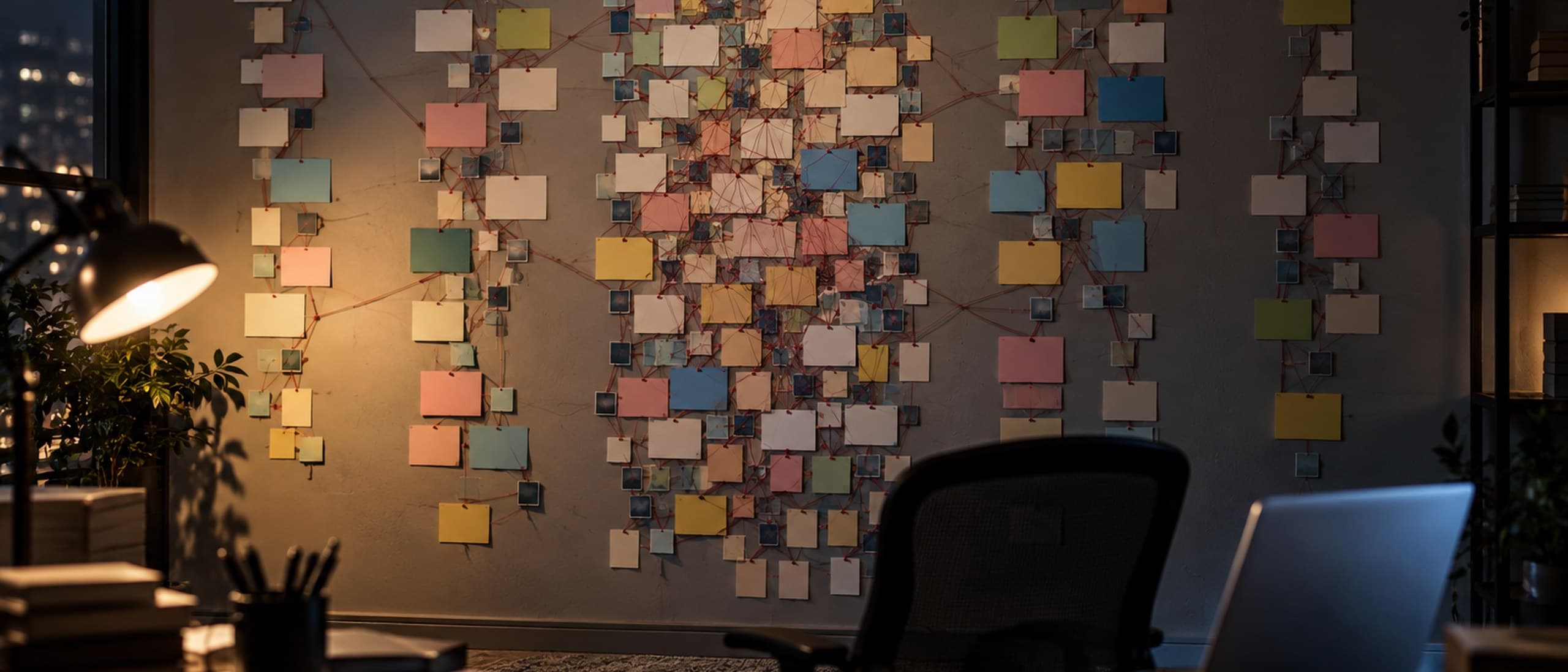
A studio wall at night covered in colored index cards pinned in five columns and joined by red thread, the middle column densest, with a lamp-lit desk and laptop in the foreground

On the night of Tuesday 26 May, Minh Do was still adding logos. "I was literally up late yesterday still adding companies to the list," the Machine Cinema cofounder wrote on X the next afternoon, when he published the AI Creative Market Map: more than 250 tools sorted into five phases, running from the first draft of a script to the streamer that pays for the finished film. A year earlier the same exercise had produced about 100 names. In the Substack essay that went out with it, he gave his own map a short shelf life and wrote that it "will probably be useless tomorrow."

We're four months late to it, and that turns out to be useful. Machine Cinema's map is still the clearest single picture of the tools behind AI film, ads and music video, and four months is long enough to check its calls against what actually shipped. Most of them held, and one got stronger. What follows is the map phase by phase for anyone starting out, what changed in each phase since May, and where to begin if you would rather not learn 250 tools.

Keep reading — 9 min

That’s all of Models.

6 Oct · 3 notes, filed as the record moved.

Models — archive

Also filed

Grimes' team says AI was one tool among 70+ artists
Grimes' 'Accelerando' video used AI 'sparingly', her team says, with 70+ artists on the crew

Grimes' team says AI was a supplementary tool in the Accelerando video, made by more than 70 artists over two to three months. Which shots used AI, and which tools, has not been disclosed.

Harry Potter, out of the wizarding world and into the dojo
nachos2d: #malfoid Malfoid’s Diary | Ep. 2

nachos2d's 30-second anime short sends Harry Potter to a karate dojo, where every hit pops a little heart out of his mouth. The post names no tools, so neither do we.

Disney bids $20M for Character.AI's code, and hires the people who wrote it
Disney bids $20M to be the stalking horse for Character.AI's assets as the chatbot startup files for Chapter 11

Disney bid $20 million to license some of bankrupt Character.AI's code, while most of the startup's staff joined Disney. The app, its users and their chats are not part of the deal, and rival bids can still top it.