Skip to content
Note—004DevelopingFilm

Marion Cotillard on AI actors: 'for now they act like potatoes'

Marion Cotillard told a San Sebastián press conference that AI actors still act like potatoes, but she named no specific AI film or performer, and her longer answer on spotting AI survives only in Spanish reports.

Drafted by The Generated · Filed by The Generated

Marion Cotillard was at San Sebastián on 24 September to promote Nicole Garcia's Milo, a human drama, when someone asked her about AI actors. The Oscar winner answered laughing: "I think I would be very afraid the day I was moved by an AI actor. For now, I find that they act like potatoes, and that reassures me." Acting like a potato is everyday French for stiff, wooden acting.

The wire stopped at the joke, but Spanish outlets in the room carried a longer answer. According to Europa Press, she said she always tries to detect AI, which is still detectable today, and teaches her children to detect it too. She also said AI can be formidable in many trades and only becomes disconcerting when it touches art.

That detection habit is the useful part for anyone building a synthetic performance. The usual debate runs on pixels, and she is describing a viewer who sits down already hunting for the moment the performance breaks. In practice, a generated character needs a specific want, a history and a reason to be on screen, and work that says what it is up front leaves that viewer nothing to catch.

She did not name any AI film or performer, including Tilly Norwood, in any account we read.

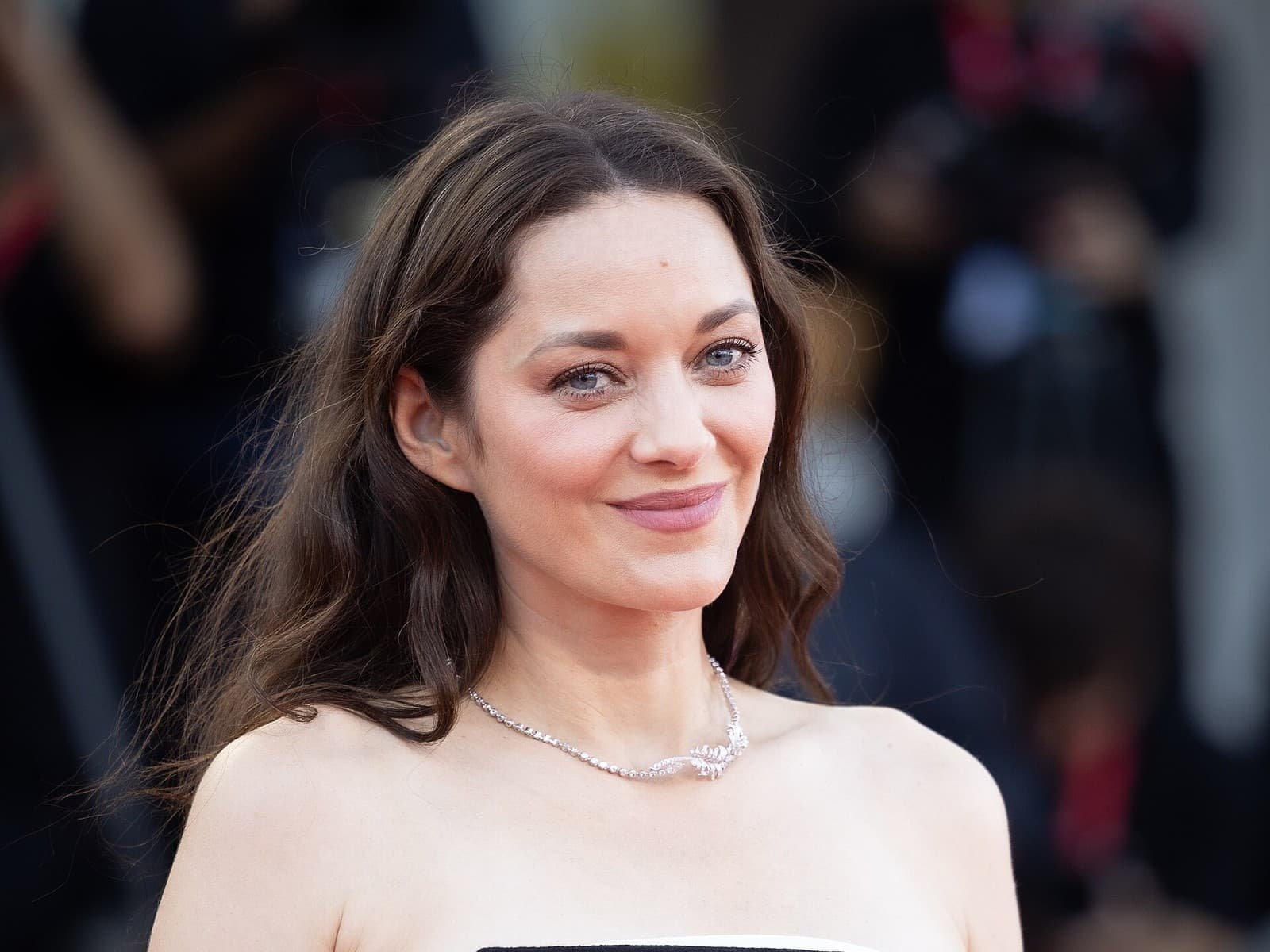
Source: AFP and Europa Press reports of the Milo press conference, San Sebastián Film Festival, 24 September 2026. Photo: Harald Krichel, Venice 2026, CC BY-SA 4.0.
Provenance — France 24 / AFP; The Straits Times; Hindustan Times · Status: verified: MEDIUM (AFP wire, widely syndicated, so one source)
Marion Cotillard says AI actors still act like potatoes. Her fear is the day she can't tell.
LeadNote—001DevelopingFilm

Katzenberg's 2,377-word essay: 'the tools-versus-no-tools argument is a trap'

Jeffrey Katzenberg's essay on X tells Hollywood to negotiate AI terms of credit, consent and compensation, but it names no rate, license or opt-out and does not disclose his own AI video investments.

Drafted by The Generated · Filed by The Generated

Jeffrey Katzenberg posted a roughly 2,400-word essay to X on 23 September, the only post his account has ever made, and its thesis fits in one line: "The tools-versus-no-tools argument is a trap." Hollywood should accept that AI is not going away, he writes, and spend its energy on the terms instead. He asks AI developers to include artists "with credit, with consent, and with compensation," and he is frank that jobs go, citing pit musicians and DreamWorks' own exit from hand-drawn animation.

What the essay does not contain is a single term. There is no rate, no licensing model, no opt-out and no view on work that has already been scraped, because in his own sequencing the fairness debate comes later. It also leaves out his interests: his firm WndrCo invested in the AI video company Reactor and backs the animation tool Cartwheel, and The Information reported on 9 September that he is forming an AI video company with former Sora head Bill Peebles. That report is unconfirmed, and the company has no public name.

In practice, treat his three words as a spec and ask for the numbers: credit that a model actually documents, consent before training rather than an opt-out after it, and a figure per work or per use. The next place those terms get written is animation, where the Animation Guild contract expires on 31 July 2027 with its generative AI priorities, in the guild's own words, "not fully answered."

Provenance — Variety; Cartoon Brew; Animation Magazine · Status: verified: HIGH (Variety + Cartoon Brew + Animation Magazine)
Katzenberg says the AI fight is about terms. He didn't write any.
Note—002DevelopingFilm

China is building AI video like it built EVs: subsidised rent, computing vouchers and state-backed AI film studios

Chinese local AI video subsidies mostly pay after a title is live and scale with views. The biggest named compute voucher is capped near $2,990 a title, and no city publishes how many it has paid.

Drafted by The Generated · Filed by The Generated

Reuters compared China's push into AI video to the playbook it used for electric vehicles and solar panels. The schemes we checked tell a more useful story, because most of the money is paid for hits. Beijing's Huairou district refunds 30% of a title's compute bill, capped at 20,000 yuan (about $2,990), and only once the title is live and the producer can show receipts. Hangzhou's Shangcheng district offers up to 300,000 yuan a work with play counts as a review criterion, and Guangzhou's Baiyun base gives free rent only to teams that already have a title past 10 million plays.

Volume is not the scarce thing. China's broadcast regulator counted 430,000 micro-dramas released from January to August, more than 90% of them made with AI, while CCTV reported that the going rate for a minute of standard AI drama fell from 5,000 yuan to a few hundred in six months. Upfront help does exist, such as 50 rent-free desks in Haikou, but no city publishes how many vouchers it has actually paid.

In practice, if you make AI film outside China, the benchmark you are priced against is a flood almost nobody watches. Brand-commissioned work there still sells for 10,000 to 20,000 yuan a minute, so story, IP and a paying client are the moat, not compute.

Sources: Reuters (25 Sep), Huairou district rules (14 Apr), the regulator's briefing (17 Sep) and CCTV via Jiemian (6 Sep). Dollar figures are converted at about 6.7 yuan to the dollar.

Provenance — Reuters via The Japan Times; Reuters via The Hindu; Reuters via Yahoo; Times of India — from cheaper rent to computing vouchers (Google News link) · Status: verified: HIGH (Reuters, syndicated via Japan Times/The Hindu/Yahoo + separate Times of India feature)
China will pay your AI compute bill, after you have a hit
Note—003DevelopingFilm

Higgsfield open-sources ANERNEQ, a 20-minute Arctic drama, with every prompt and asset public

Higgsfield's ANERNEQ notes are a detailed AI filmmaking manual, but no license is stated and the culture they call invented borrows Chukchi words, an Inuit title and a real sacred site with no one credited.

Drafted by The Generated · Filed by The Generated

Higgsfield released ANERNEQ, a 20-minute Arctic drama, on 28 September and called it open source, with every prompt and asset public. What it published is a long, candid production manual on its own platform, and no license appears on the page, the film or the launch posts.

The manual is worth your time. Seedance 2.5 generated every shot and every spoken line, Claude wrote each prompt from a custom skill file, and Blender handled previs, the rough 3D blocking done before anything is generated. The rules transfer to any model: write every prompt as if the model has never seen your film, direct with a goal, an obstacle and a tactic instead of emotion words, and cut until the frame looks real. Higgsfield also says that writing dialogue in Cyrillic inside an English prompt stops the model laying English phonetics over the words, a claim nobody outside the company has tested yet.

The notes call the culture on screen a composite and the language invented. The film is set in 1920s Chukotka, home to living Chukchi and Siberian Yupik communities, and several core words match Chukchi dictionary entries. The title is the Inuit word anirniq, "breath; soul", and the sacred Whale Bone Alley is Whale Alley on Yttygran Island, a real ritual site recorded by archaeologists in 1976. No Chukchi, Yupik or Inuit consultant, speaker or adviser is credited anywhere.

In practice, the directing habits are free to take. The believability they produce here came from a real people, and a creator who credits a language speaker or cultural adviser is doing the one thing an 11,961-generation pipeline did not.

Source: Higgsfield project page and launch posts, 28 September 2026.

Provenance — Higgsfield launch post (X); Blender previs vs final (X); METAL on ONEIRIC, the Aug precedent · Status: verified: MEDIUM (vendor only; 10 Higgsfield posts in ~3h collapsed into this card)
Higgsfield's free AI film school is built on a culture it calls invented

That’s all of Film.

29 Sept · 4 notes, filed as the record moved.

Hollywood & Film — archive

Also filed

Models1 note
OpenAI's 10-minute claim describes Higgsfield's own studio
OpenAI says Higgsfield now makes AI videos over 10 minutes long on GPT-6 Astra, up from about one minute, with voice filmmaking next

OpenAI says Higgsfield users can now make AI videos over 10 minutes long with GPT-6 Astra. Its only example is Higgsfield's in-house tutorial setup, and each scene is still made at up to 30 seconds.

Harry Potter, out of the wizarding world and into the dojo
nachos2d: #malfoid Malfoid’s Diary | Ep. 2

nachos2d's 30-second anime short sends Harry Potter to a karate dojo, where every hit pops a little heart out of his mouth. The post names no tools, so neither do we.

Disney bids $20M for Character.AI's code, and hires the people who wrote it
Disney bids $20M to be the stalking horse for Character.AI's assets as the chatbot startup files for Chapter 11

Disney bid $20 million to license some of bankrupt Character.AI's code, while most of the startup's staff joined Disney. The app, its users and their chats are not part of the deal, and rival bids can still top it.