Nikon is 're-reviewing' the winner of its Small World in Motion video contest after scientists say the footage looks AI-made
Nikon's winning Small World in Motion video used AI in post-processing, which the winner admits, but whether it crossed the contest's ban on AI-generated video is unresolved until Nikon's re-review or the raw grayscale footage settles it.
The winning video in this year's Nikon Small World in Motion contest used AI, and nobody disputes that part, including the winner. The argument is about which kind of AI, and whether anyone can prove it from the finished clip.
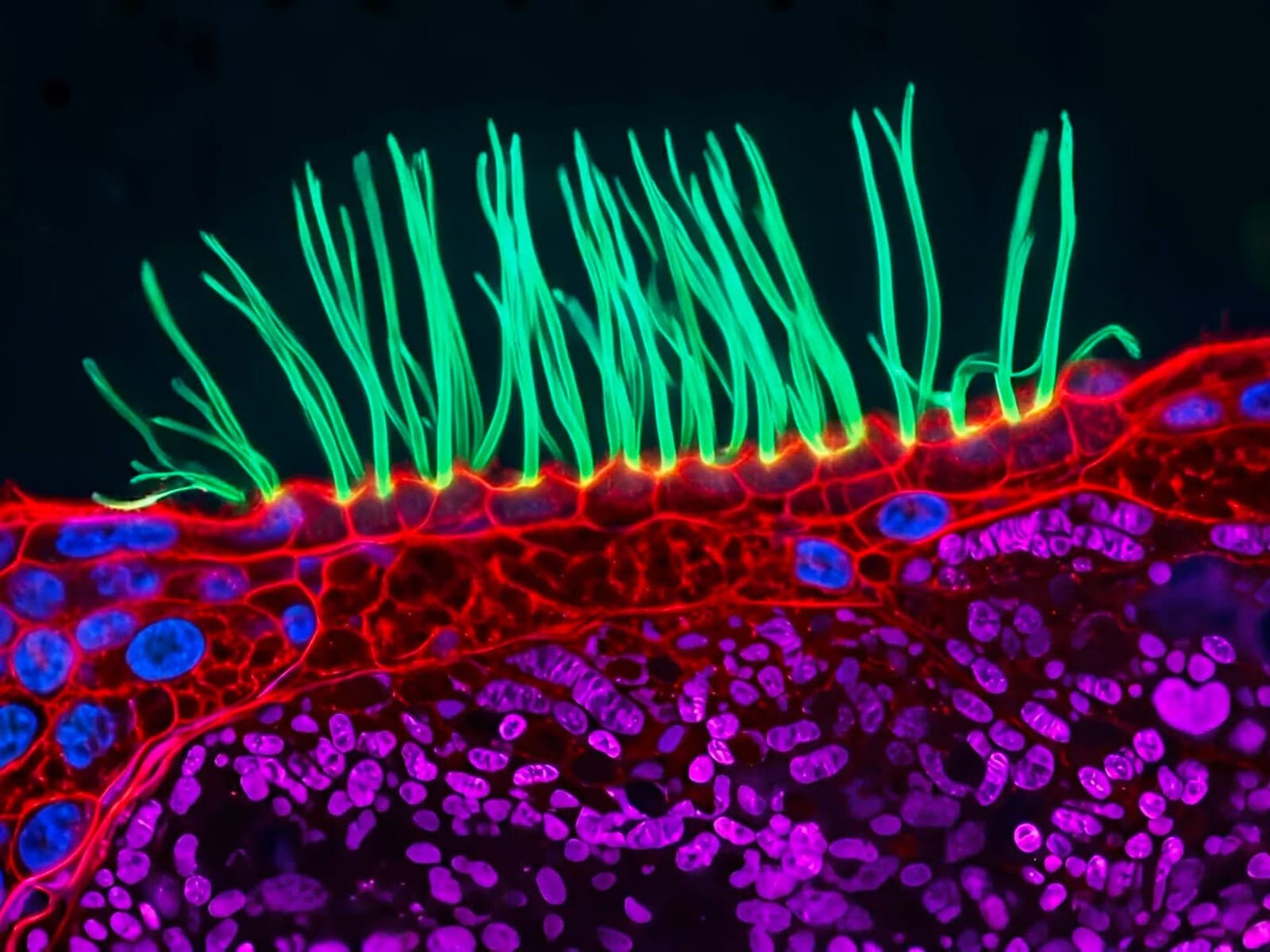
Ning Xu's first-place entry, announced on 15 September, shows the cilia lining a child's airway beating abnormally, a sign of the rare disorder primary ciliary dyskinesia. Within days, microscopists on LinkedIn said parts of it looked wrong: purple structures that pop in and out of existence, and cilia larger than their known size. On 22 September Nikon updated its post on the entry to say an AI model had assisted with post-processing, according to Nature.
Xu has said AI was used only to color structures in the reconstructed grayscale data, not to generate the cilia or their motion. The contest rules, as quoted by PetaPixel, say AI-generated videos are not permitted. Nikon is re-reviewing the entry and told the BBC that, at this time, it sees no rule broken. Scientists keep asking for one file: the raw grayscale video.
In practice, any festival or award that allows AI assistance but bans generation now faces the same proof problem. Keep your raw source files and a processing log for every entry, because the finished clip cannot show where assistance stopped.
Source: Nature and BBC, 30 Sep 2026; PetaPixel, 1 Oct 2026.