An all-AI essay film premiered at Turkey's oldest festival. Next week it competes at Cottbus
Vikki Bardot's 79-minute essay film was made with AI image, voice and music tools, and the models are still unnamed. It got into Turkey's oldest festival and Cottbus's main competition the way indie films do, through a distributor and programmers. The 'first ever' label doesn't hold: the same studio's Post Truth was in Fantasporto's main competition in February.
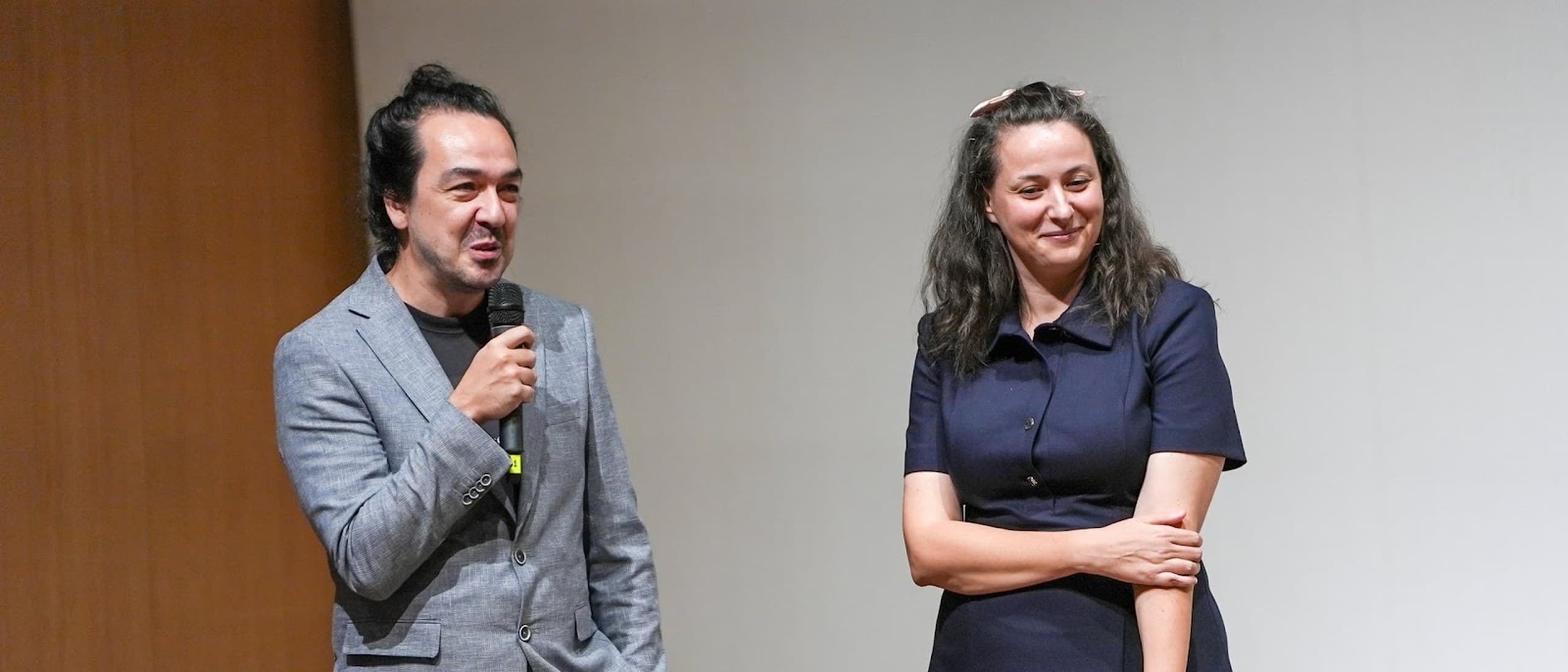
At 21:30 on Monday 26 October, the AKM Perge hall at the Antalya Golden Orange Film Festival screened a 79-minute film in which every image, the narrator's voice and the music came out of AI tools. When the lights came up, Gizem Avcıoğlu and her husband and co-writer Alkan Avcıoğlu stood in front of the screen for a Q&A. She told the audience that the production was made entirely with AI tools, and that she had written and edited it with him, drawing on her own life.
The film is A Woman Asleep (Uyuyan Kadın), credited to Vikki Bardot, the name Avcıoğlu works under abroad. It played as a National Gala title at the festival's 63rd edition, with two more screenings on 27 and 30 October. Next week it moves up a level: it is one of 10 films in the main feature competition at FilmFestival Cottbus in Germany, running 3 to 8 November, in the same lineup as new work from Radu Jude and Kantemir Balagov.
That is the real story for anyone making AI films. A synthetic feature got into rooms that usually ask for a cinematographer, a cast and a sales agent, and it got there by choosing a form that plays to what the tools do well. The "first ever" label riding along with it is the part that doesn't hold up.
What screened at Antalya
A Woman Asleep is an essay film inspired by A Man Asleep, Georges Perec's novel about a student who withdraws from the world, which he co-directed as a film with Bernard Queysanne in 1974. Bardot flips the premise: her protagonist ends up isolated through constant connection rather than retreat. The festival synopsis cites Alain Resnais, Chris Marker, Michelangelo Antonioni and Chantal Akerman as references, and the film is narrated by a clone of the director's own voice.
Bardot has been clear that the flat, synthetic surface is the point. She told Screen International: "I intentionally used synthetic imagery and an emotionally flat AI clone of my own voice to reflect a society that is increasingly detached and becoming more machine-like."
Two details on the listings don't line up. The festival page gives the running time as 79 minutes and the trades say 80. Variety, Screen and Türkiye Today call it an English-language film, while the Antalya page lists it in Turkish with English subtitles. We could not confirm which version screened.
There's also the label on the premiere. Screen and Bardot herself call Antalya the world premiere, and the festival tagged it a Türkiye premiere. We found no earlier public screening, so world premiere is the better-supported description.
How it was made, by the makers' account
According to Variety and Screen, the film was cut from a pool of about 50,000 AI-generated shots over two years. Screen reports that the visuals came from models trained and customized by Bardot, and that the music was generated through what it calls a custom experimental workflow. Neither the makers nor any outlet has named a single model or tool, so "trained and customized" could mean anything from fine-tuning commercial models to something more involved.
The human credits are not small. Bardot is credited for direction, cinematography and sound, and she and Alkan Avcıoğlu share the writing, producing and editing. The screenplay is semi-autobiographical. The 50,000-shot figure and the two-year timeline are the makers' own numbers, and no budget has been published.
Bardot has spent years on this. She told Habertürk she worked for about 15 years in film acquisitions before quitting to make AI work with her husband, and she gave a TEDx talk on AI and art in 2023. Her AI short Dreamt by Another was acquired by MUBI for Turkey. Alkan Avcıoğlu is an AI photographer who directed the studio's previous feature, the documentary Post Truth.
The festival that doubted AI and booked it anyway
Antalya's art director, Deniz Yavuz, set up a neat contradiction. At the festival's press conference on 13 October, he said that films made entirely with AI had not yet surpassed the level of films shot the traditional way, according to Antalya Ekspres. In the same answer he announced a gala screening for a fully AI feature, and said the festival could open a separate AI section once that work reaches a certain standard.
It also wasn't Antalya's first AI feature. Post Truth screened at the previous edition in October 2025. What changed this year is the framing: a festival director announcing a fully AI feature for the gala slate at a press conference, two weeks before it screened.
The early reception in Turkey has been friendly. First reviews from FikriSinema and Film Hafızası were positive, and Bardot posted on X that the screening was sold out, which her own photos of a full hall support. We found no organized backlash, and no English-language review yet.
Cottbus, and the "first" problem
Screen reported the Cottbus selection on 16 October with the claim that the film "is believed to be the first AI-generated feature selected for the main competition of an established international film festival." Turkish coverage repeated it as settled fact.
The studio's own record says otherwise. Post Truth, the Avcıoğlus' AI documentary, was selected for the main Cinema Fantástico competition at Fantasporto in Portugal, which ran from 27 February to 8 March 2026, as Habertürk reported in January and Business Doc Europe in June. Its sales agent, Odin's Eye Entertainment, also claimed a first when the film won a jury award at the Asolo Art Film Festival in Italy. At most, A Woman Asleep could be the first AI fiction feature in a main competition, and even that is the festival's and the studio's claim, not something anyone has checked across the circuit.
Bardot's own words are more careful than the headlines. In our translation of her Habertürk interview, she said the studio had already crossed important thresholds with Post Truth, but that "in an environment where festivals often try to program AI-made films in experimental side sections, getting into the main competition is another threshold."
Cottbus festival director Bernd Buder was quoted in Screen praising the film's "refreshing blend of analytical acuity, a personal touch, and narrative composure." Cottbus focuses on emerging directors from Central and Eastern Europe, and this is a debut feature competing for real prizes against established names.
The playbook other AI filmmakers can borrow
Strip out the "first" debate and what's left is a route other AI filmmakers can copy. The essay form needs no lip-sync and no strict character continuity, which are still the weakest points of video models, and Bardot made the synthetic look part of the meaning instead of hiding it. Then the team used the same channels as any indie film: a trailer premiere through Variety, a stop at the Berlin market in February, Turkish arthouse distributor Başka Sinema for a spring 2027 release in about 20 cities, and festival programmers rather than AI-only showcases.
That last choice is deliberate. In our translation of the Habertürk interview, Bardot said she finds festivals where only AI films compete meaningless and doesn't apply to them, "because what matters to me is not making an AI film, but making a good film." Her pitch to Variety was the same idea in English: "The most interesting use of AI isn't recreating Hollywood forms. It's giving independent filmmakers the freedom to make personal, formally ambitious films that might otherwise never get financed."
For creators who keep hearing that AI work can't be taken seriously, this is a useful counterexample with specific choices behind it: a form that hides the tools' weaknesses, a human writing and editing credit, and a distributor before the festival run. The limits are just as specific. Nobody outside the festivals has reviewed it in English, the tools are unnamed, and the budget is unknown.
Our take: the achievement is getting an AI feature judged as a film by programmers who doubt the tools, and that matters more than any "first" label. Cottbus will show whether a jury treats it the same way.
Timeline
- Date: 2023. Event: Bardot gives a TEDx talk on AI and art; Source: Variety, 25 Sep 2026
- Date: Jun to Jul 2025. Event: Post Truth, directed by Alkan Avcıoğlu, opens in about 20 Turkish cities via Başka Sinema; Source: Deadline; Variety
- Date: Oct 2025. Event: Post Truth premieres internationally at Warsaw, then screens at the 62nd Antalya Golden Orange; Source: Variety; Evrensel
- Date: Wed 4 Feb 2026. Event: A Woman Asleep announced for the Berlin market, trailer premiere via Variety; Source: Variety
- Date: 27 Feb to 8 Mar 2026. Event: Post Truth in the main Cinema Fantástico competition at Fantasporto; Source: Habertürk; Business Doc Europe
- Date: Jun 2026. Event: Post Truth wins Best Art Feature at the Asolo Art Film Festival; Source: Business Doc Europe
- Date: Fri 25 Sep 2026. Event: Başka Sinema acquires Turkish theatrical rights for spring 2027; Source: Variety
- Date: Tue 13 Oct 2026. Event: Antalya art director Deniz Yavuz announces a fully AI feature in the gala slate; Source: Antalya Ekspres
- Date: Fri 16 Oct 2026. Event: Screen reports the Cottbus main competition selection, "believed to be the first"; Source: Screen International
- Date: Mon 26 Oct 2026. Event: Gala screening at AKM Perge, 21:30, followed by a Q&A with the Avcıoğlus; Source: Antalya Golden Orange; Türkiye Today
- Date: Fri 30 Oct 2026. Event: Final Antalya screening; Source: Antalya Golden Orange
- Date: Tue 3 to Sun 8 Nov 2026. Event: 36th FilmFestival Cottbus, main feature competition; Source: Screen; Cottbus release
- Date: Spring 2027. Event: Turkish theatrical release, about 20 cities; Source: Variety
Sources and what is unconfirmed: Antalya Golden Orange film page and festival posts on X; Türkiye Today (27 Oct 2026, AA report of the Q&A); Screen International (16 Oct 2026); Variety (4 Feb and 25 Sep 2026); Habertürk interview with Bardot; Habertürk (22 Jan 2026) and Business Doc Europe (20 Jun 2026) on Post Truth; Antalya Ekspres (13 Oct 2026); FikriSinema review; Vikki Bardot and Alkan Avcıoğlu on X. Turkish quotes are our translation. We have not seen the film or its trailer and make no judgment on its quality. Unconfirmed: the models and tools used, the budget, which language version screened at Antalya, and whether any earlier AI fiction feature reached a main competition. We did not read the Cottbus festival's own site.