Idris Elba and Google open a free AI film academy in five African countries, but the film fund has no size
Creators in Ghana, Kenya, Nigeria, Sierra Leone and South Africa can apply until 15 November for 12 free weeks of Curious Refuge training, then a shot at a funded short. The organizers say only a select few teams get money, the $1 million from Google.org dates from July, and the FAQ's bracketed line adds a distribution window on Google platforms.
Near the bottom of the FAQ page for From Script to Screen with AI, under the question of how many projects get funded, sits a sentence most training programs never write down: "We would rather tell you the odds honestly now than surprise you at pitch stage." The answer it follows is three words long: "A select few."
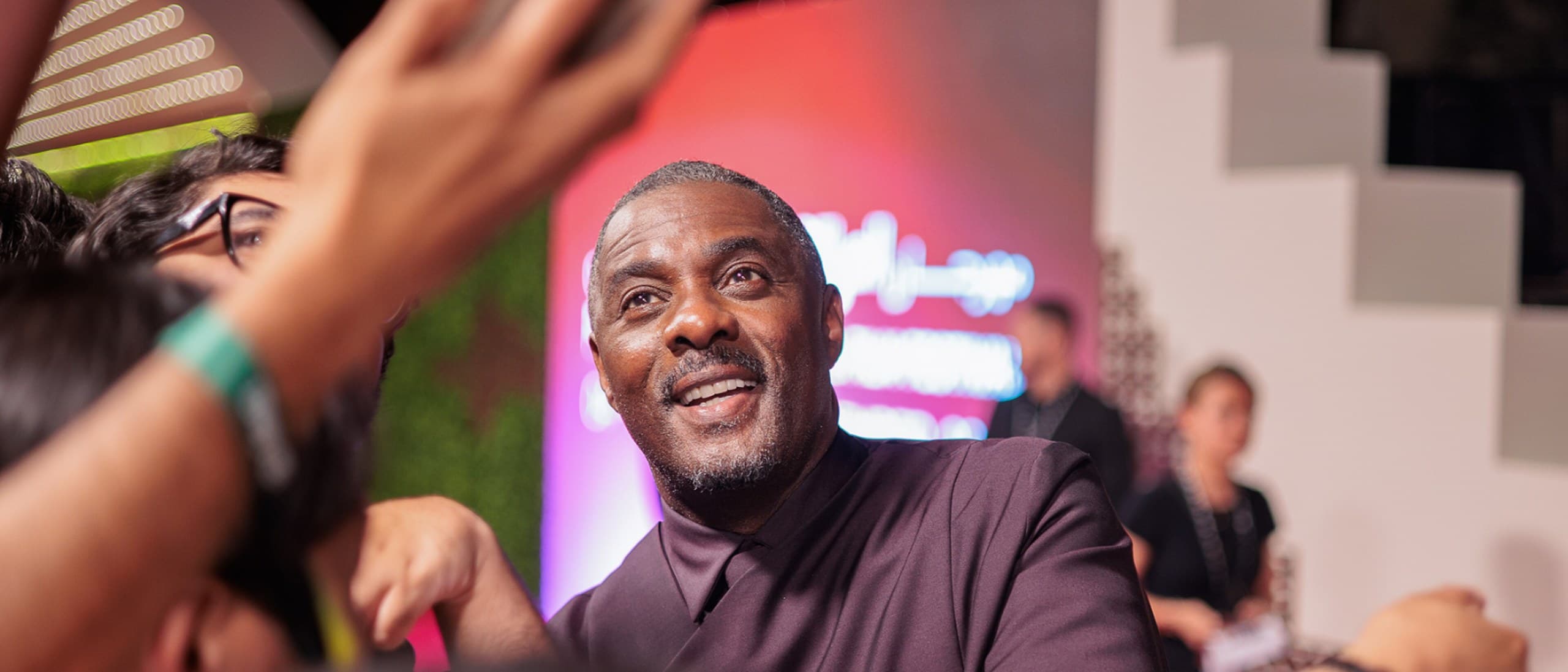
That page belongs to Akuna Learning, the education arm of The Akuna Group, the pan-African creative economy company chaired by Sir Idris Elba. On Monday 26 October it opened applications for a free AI filmmaking program for creators in Ghana, Kenya, Nigeria, Sierra Leone and South Africa, delivered with Google, paid for by Google.org and taught on a curriculum from the AI film school Curious Refuge. Applications close on Sunday 15 November.
The training is real, free and unusually well specified. The money is older than the launch suggests, the fund at the end of the road has no published size, and the funded films come with a Google condition that the press release leaves out. All three are worth knowing before you spend an evening on the application.
What you get, and what it asks of you
Everyone selected takes a foundation course in AI filmmaking, then picks one of five pathways: fiction, documentary, animation, advertising or screenwriting. The academy runs for twelve weeks online with weekly facilitation from Akuna, in-person meetups in each country and a certificate at the end. The release dates it February to April 2027, while the program's own FAQ and timeline page say Monday 25 January to Sunday 18 April 2027. It is safer to plan around the earlier date.
There is no application fee and no tuition. For scale, Curious Refuge sells a single course on its own site at $749 per artist. You don't need AI experience, a film school degree or years in the industry. You do need to live in one of the five countries, be 18 or over, and have a laptop, reliable internet and consistent power for the whole twelve weeks. In much of the region that last line is the real filter, and it is good that the organizers say it out loud.
The application asks for one example of your best creative work in any discipline, with moving image capped at three minutes, and the FAQ is explicit that it does not need to involve AI. You also send a CV, proof of ID and a 60 to 90 second video introducing yourself, and you consent to the capture of program moments for behind-the-scenes content. Women are strongly encouraged to apply.
Elba frames the whole thing as education first. In the release he said: "For me, this is about learning. This is about access to courses that help educate creators across the continent to tell their stories."
The road from classroom to funded film
After the academy, every graduate can put forward a one-page idea. The strongest ideas are shortlisted, each shortlisted idea owner becomes a team lead, and the teams spend four weeks with mentors and subject experts. Mentor-endorsed teams then pitch to panels drawn from Akuna, Google and the wider industry. The FAQ dates that stretch from 19 April to 11 July 2027. Selected projects are funded, produced between July and October, and showcased in October 2027.
Two rules shape your odds. The program funds teams, not individuals, and each funded team needs at least three academy graduates, including the lead, plus a screenwriter, who can be the lead. And the FAQ says plainly that not every graduate will join a team. Nobody has published the cohort size, the number of funded films or what each one receives.
Khaled Gad, chief executive of The Akuna Group, pitches the structure as the point: "Training on its own does not build an industry. Creators need a route from the classroom to the screen." The route exists. For most people who get in, it ends at the certificate, and the FAQ calls that "a success in its own right."
The $1 million was announced in July
The release says the program is "supported by US$1 million funding from Google.org." That is not new money. At its Cloud Summit in Johannesburg on Wednesday 1 July 2026, Google listed a partnership with The Akuna Group "backed by more than $1 million (R17 million) in Google.org funding" for AI creative education and digital tools.
Bloomberg reported the same day, in a story carried by Moneyweb, that Google and Elba's Elba Hope Foundation would pay for access to Gemini and other Google products for about 100,000 creators in the same five countries, a figure it attributed to Google's James Manyika. Manyika told Bloomberg: "We think about all those creatives who don't have access to these enormous studio budgets." Elba, on a video call at the summit, put it more simply: "Talent is everywhere, opportunity is not."
The October release names only Google.org and says nothing about 100,000 creators or Gemini access. So the academy looks like the first concrete program built on the July grant, and it trains a cohort rather than a hundred thousand people. Nobody has said how the $1 million splits between tool access, Curious Refuge tuition, facilitation, meetups and film budgets, which is the number that tells you how big the films can be.
The line in square brackets
The release promises that creators "will maintain control of their work," with no ownership claim by the program or its partners. The FAQ agrees that you keep the IP, then adds a condition. Funded projects sign an agreement before any money moves, "covering production support [and a distribution window on Google platforms]."
The square brackets are on the live page, which reads like draft text that went up by mistake. Either way, it is the only place the program mentions distribution. Google owns YouTube, and no page says how long the window lasts, which platforms it covers or whether it is exclusive. The mentoring phase includes an IP clinic before any pitch, so funded teams should get a chance to read every line. Until the organizers publish the terms, read it this way: you own the film, and Google may get first look at where it plays.
Who is teaching, and with what
Curious Refuge has run AI filmmaking courses since 2020 and was acquired in February 2025 by Promise, a generative AI studio. In May 2025 Promise announced a strategic investment from Google's AI Futures Fund. So Google.org money pays for a curriculum from a company Google has invested in. That isn't hidden: Promise co-founder Jamie Byrne posted on launch day that his company's division Curious Refuge is partnering with Google and Akuna. It just isn't in the release.
No page on the program site names Veo, Flow or Gemini. The fiction pathway lists scripting, consistent characters, voice generation, lip-sync and dubbing without naming a single tool. Google ran a smaller version of this idea in Lagos in March, giving 20 African creators an AI film workshop with the artist Malik Afegbua and three months of Flow access, so expect Google tools, but nobody has confirmed which.
Reaction so far is quiet. The program's own X account has 14 followers, and the widest share we found, from the Ghanaian entertainment blogger Ameyaw Debrah, reached about 1,600 impressions. Most coverage is the release reprinted, so the press agreement you may see is one source.
Should you apply?
If you live in one of the five countries and have the laptop, the connection and the power, the answer is yes. Twelve weeks of structured training, a certificate and a cohort of peers across five film scenes cost you an application and a short video. Treat the funded film as a long shot that rewards building a team early, and keep a copy of the agreement terms when you get them.
Our take: this is a genuine pathway for the many and a corporate funnel for the few who reach the money, and the organizers deserve credit for saying the odds honestly. They now owe applicants the rest: the fund size, the number of films and what that bracketed distribution window actually means.
Timeline
- Date: Mon 24 Feb 2025. Event: Promise acquires Curious Refuge; Source: Promise blog
- Date: Tue 20 May 2025. Event: Promise announces investment from Google AI Futures Fund; Source: Promise blog
- Date: Fri 6 Mar 2026. Event: Google AI film workshop for 20 creators in Lagos, with Flow access; Source: Google Africa blog
- Date: Wed 1 Jul 2026. Event: Google.org backs the Akuna program with more than $1M at Cloud Summit Johannesburg; Source: Google press release; Bloomberg via Moneyweb
- Date: Mon 26 Oct 2026. Event: Applications open for From Script to Screen with AI; Source: Akuna release (APO)
- Date: Sun 15 Nov 2026. Event: Applications close; Source: Release; program site
- Date: Mon 14 Dec 2026. Event: Offers and onboarding; Source: Program timeline
- Date: Mon 25 Jan 2027. Event: Academy starts (release says February); Source: Program FAQ
- Date: Sun 18 Apr 2027. Event: Academy ends; Source: Program FAQ
- Date: 19 Apr to 11 Jul 2027. Event: Teams, mentoring and pitches; Source: Program FAQ
- Date: Oct 2027. Event: Funded films showcased; second intake opens 19 Oct; Source: Release; program timeline
Sources and what is unconfirmed: The Akuna Group release distributed by APO Group, 26 October 2026; akunalearning.com home, FAQ, timeline, apply and fiction pathway pages, read 27 October; Google Cloud press release from the Johannesburg summit, 1 July 2026; Bloomberg via Moneyweb, 1 July 2026; Promise blog posts of February and May 2025; Jamie Byrne on X, 26 October; the Curious Refuge course page; the Google Africa blog, March 2026; X search, 27 October. Unconfirmed: cohort size, fund size, number of funded films, which Google tools are taught, the length and terms of the distribution window, and whether the July Gemini access for about 100,000 creators still exists.