The Arc's $38,000 AI bill works out to about $460 a finished minute
The makers of The Arc, a five-episode AI sci-fi series Artlist commissioned, say it took about $38,000 in credits supplied by Artlist. That works out to roughly $460 of credit value per finished minute, but the valuation rate is undisclosed, every day rate sits outside the figure, and the director gave a $15,000 Seedance number two weeks earlier.
On the stage of the DGA Theater in Los Angeles on 29 September, director Darin Stewart put a price on his AI series. "$15,000 in Seedance credits, which is a lot of money in the AI world, but in traditional, it's not," he told the AI Creator Day crowd, according to What's Trending's write-up of the panel. Twelve days later he and executive producer Simone Ferretti gave Business Insider a bigger figure: roughly $38,000 in AI credits supplied by Artlist, about $7,600 for each of five episodes.
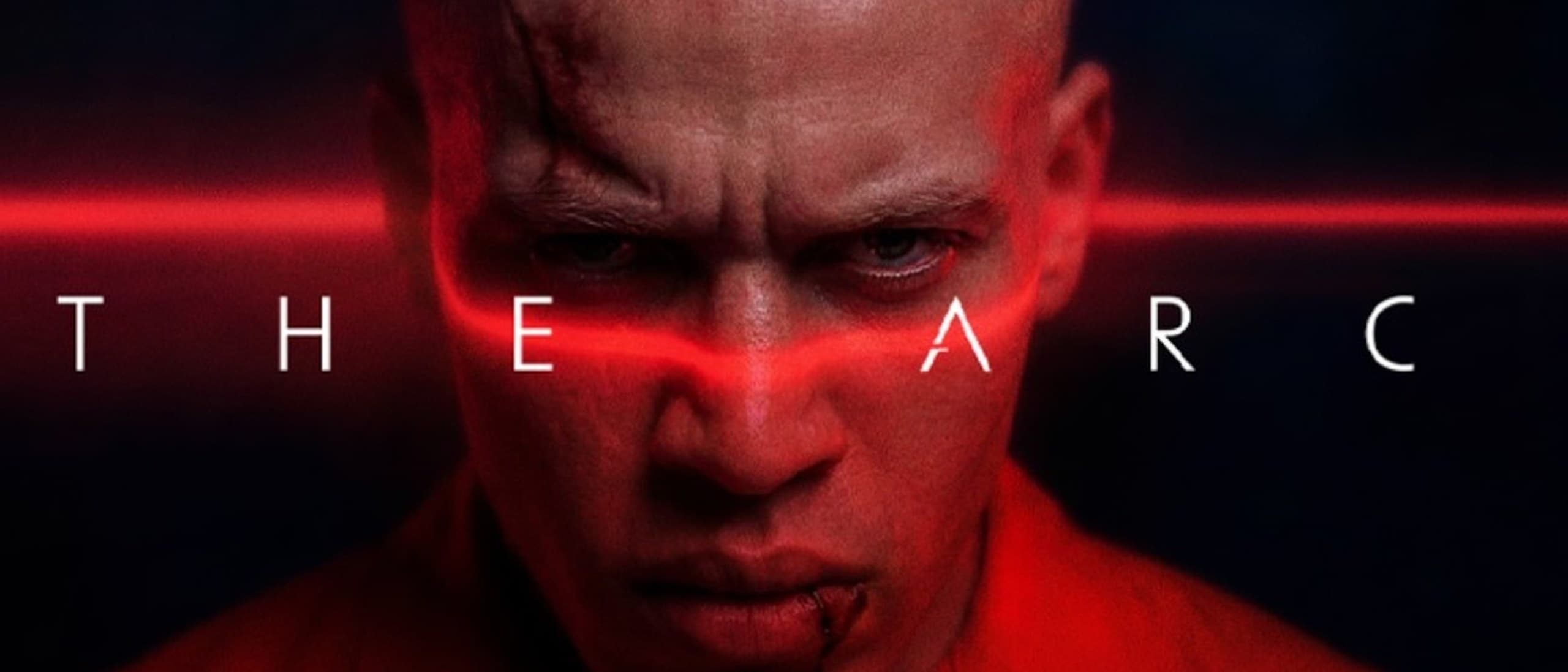
The series is The Arc, an Artlist TV Original about death row inmates who are offered one way out, surviving fully immersive historical simulations run by a classified government program. Artlist TV lists five episodes running about 83 minutes in total, and the first went up on Artlist's YouTube channel on 24 June. The makers say no human actors, sets, props or costumes were used, and that most shots came from Seedance, with Kling alongside it.
Those figures are the first public line items from a finished multi-episode AI series, which makes them worth more than the headline. Read with the arithmetic and the caveats beside them, they give anyone planning an AI production a real starting point. Read as "a TV show for $38,000", they mislead.
What the $38,000 is, and what it leaves out
The $38,000 is Artlist's valuation of credits it handed to a show it commissioned, hosts and markets. Nobody has said what rate Artlist used to put a dollar figure on those credits, and nobody has explained how the $15,000 Seedance number from the panel relates to it. It may be the Seedance share of the larger total, but that is our guess, not something either side has said. The panel quote itself was captured by an AI notetaker, so even its wording is unconfirmed.
The figure leaves out every person who worked on the show. Stewart told Business Insider: "Everyone on our team got paid their full day rates the same way they would on set." The credits list a director and post house, an executive producer, a producer, an AI studio and three AI artists, and none of their fees are in the $38,000.
The relationship matters too. Ferretti, a creator with 1.7 million followers, has been working with Artlist for three years, according to Artlist's own blog, and its premiere post about the show is tagged as a partnership. The Arc is Artlist's showcase for its platform, and it is not an independent production that happened to pick Artlist's tools.
The per-minute math
Divide the credit value by the runtime and The Arc comes out at about $456 to $473 of credits per finished minute, depending on whether you use Artlist TV's listed runtimes or the YouTube cuts, which run three minutes shorter. To see what that buys, we used Artlist's own rate card as it stands today. Its help center bills Seedance 2.0 at 600 credits a second at 1080p, and its AI Creator plan sells 80,000 credits for $69.99 a month, or $41.67 a month billed yearly. Rate cards change and the production ran from May to August, so treat every line below as an estimate.
- Measure: Credit value per finished minute. Value: about $456 to $473; How we got it: $38,000 divided by 83.3 minutes (Artlist TV) or 80.35 minutes (YouTube)
- Measure: Credit value per episode. Value: $7,600; How we got it: Business Insider; episodes run 10 to 22 minutes, so per-minute cost varied
- Measure: Seedance 2.0 at 1080p, retail, per generated second. Value: $0.31 to $0.53; How we got it: 600 credits at $0.52 to $0.875 per 1,000 credits
- Measure: 1080p seconds the $38,000 would buy at monthly retail. Value: about 72,000 (20 hours); How we got it: About 15 times the finished runtime
- Measure: Nine full 1080p renders of every finished second. Value: about $22,800; How we got it: Leaves room inside $38,000 for drafts, Kling, stills and audio
- Measure: The $15,000 Seedance figure at 1080p retail. Value: about 28,600 seconds (8 hours); How we got it: About 6 times the finished runtime
The numbers are plausible as a ballpark, since generating 10 to 15 seconds for every second that survives the edit is believable for narrative work. They do not reconcile cleanly, though, and only a line-item answer from Artlist or Stewart would settle how the two totals fit together.
Eight to 10 generations, for the hard shots
The number most likely to travel is the yield, and it is the softest one in the story. Business Insider's headline says the show took eight to 10 generations for every usable shot. Its own body text is narrower: Stewart said that one shot could require eight to 10 generations. That describes the difficult end of the range, not a measured average, and no generation log has been published.
It is not a clean cost multiplier either. Stewart said the team drafted at a lower resolution and only raised the output quality once they had the result they wanted, so a generation in that count mixes cheap drafts with full renders. A ratio of one usable shot in nine is our own reading of the numbers, which nobody reported, and it should not go into anyone's budget as fact.
How the team kept the bill down
The method is the useful part. Claude helped with scripts, Nano Banana Pro and GPT Image 2 made stills, and ShotDeck and Figma held character sheets and mood boards, a process Stewart called "pretty similar to traditional production". The makers have not said which version of Seedance they used, and the production predates Seedance 2.5.
From episode three onward, the team split each script into page blocks and generated them in parallel instead of working through a shoot-then-post pipeline, and Stewart told the AI Creator Day panel why it worked: "Everyone can prompt, everyone can direct, everyone can edit, really allowed us to divide and conquer." By the finale it had paid off, he said, because "our fifth episode is our longest episode" and the team made it in the shortest time.
Not everything bent to the workflow. Artlist's blog says voice generation tools failed mid-production and produced inconsistent accents across takes, which cost the team three full days on a three-week deadline and forced them to export audio one scene at a time.
The audience has been modest. On Artlist's YouTube channel the first episode has 9,184 views and the fifth has 1,201, so about 13% of first-episode viewers made it to the finale there. IndieWire's column on the budget, which calls fully generated work "without artistic merit and an insult to life itself", drew six likes on X. This is a numbers story, not a hit.
What it means for your budget
In practice, for anyone making work this week, The Arc gives you planning inputs that did not exist a month ago. The figures to work with are these.
- Budget credits per finished minute, not per episode: The Arc ran at roughly $460 of credit value a minute at Artlist's own valuation.
- Plan for 10 to 15 generated seconds for every second you keep, and draft at low resolution so most of those seconds are cheap.
- Price people separately, because the headline figure carried no day rates for a team that was paid in full.
- Check what your plan's unlimited tier covers: on Artlist's $500-a-year AI Creator plan it covers select lighter models, not full Seedance 2.0 or 2.5.
Artlist green-lit three series from Stewart and Ferretti, not one, according to the panel. If the next two arrive with a credit rate and a generation log attached, the industry gets its first properly audited AI production budget.
Timeline
- Date: End of Apr 2026. What happened: Stewart and Ferretti pitch with no concept; Artlist says yes within 48 hours, to three series; Source: Artlist blog; TheWrap; What's Trending
- Date: 27 May 2026. What happened: Artlist TV announced, launching 1 June; Source: PetaPixel; TechRadar
- Date: 24 Jun 2026. What happened: Episode 1 on Artlist's YouTube channel; Source: YouTube Data API
- Date: 8 and 20 Jul 2026. What happened: Episodes 2 and 3; Source: YouTube Data API
- Date: 18 Aug 2026. What happened: Private premiere of all five episodes, Electric Cinema, London; Source: Artlist blog
- Date: 20 Aug 2026. What happened: Episodes 4 and 5 and a behind-the-scenes film posted; Source: YouTube Data API
- Date: 29 Sep 2026. What happened: AI Creator Day panel, DGA Theater: "$15,000 in Seedance credits"; Source: What's Trending; TheWrap
- Date: 11 Oct 2026. What happened: Business Insider: $38,000 in credits, $7,600 an episode, 8 to 10 generations; Source: Business Insider
- Date: 16 Oct 2026. What happened: IndieWire column: Can AI make a sci-fi series for $38,000?; Source: IndieWire
Sources and what is unconfirmed: Business Insider (Kelsey Vlamis, 11 Oct); IndieWire (Sarah Shachat, 16 Oct), cited as reaction; What's Trending (4 Oct) and TheWrap (30 Sep) on the AI Creator Day panel; Artlist's blog premiere post (24 Aug); Artlist TV, help center credit tables and pricing page (read 19 Oct); YouTube Data API (19 Oct). Artlist's credit valuation rate, the Seedance share of the $38,000 and how the $15,000 figure relates to it are unconfirmed. Per-minute and per-second figures are our estimates from Artlist's current rate card.