Collage wants to tell Hollywood which AI studios to trust. Who vets Collage?
Collage, launched Monday by ex-UTA agent Dante DeSario and investor Michael Lambert, wants to be the trusted broker between AI-native studios and Hollywood. Its eight-client roster comes from the company statement and none of the studios has confirmed it, and its backers include AGC Studios, which sells client Native Foreign's Critterz.
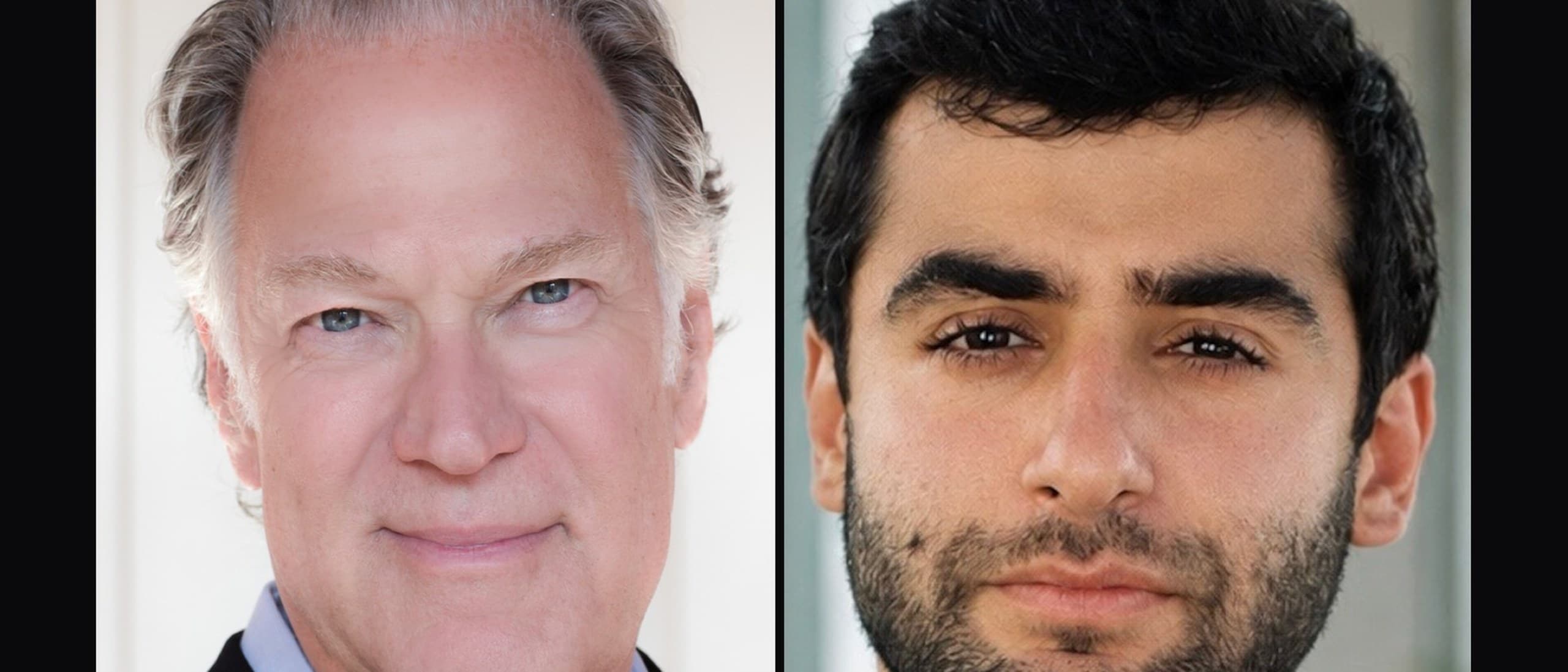
In February 2024, Dante DeSario, then an agent in UTA's independent film group, got his hands on an early demo of OpenAI's Sora. He went on to meet filmmakers who were playing with it, signed some of them, and watched them turn their experiments into production companies. Two and a half years later, with Sora itself switched off, those companies are the business he is building around.
On Monday DeSario and media investor Michael Lambert launched Collage, a management and investment company for AI-native studios. Variety ran the exclusive interview at 10:04am Pacific, and Deadline followed about four hours later with the company's statement. The pitch is easy to follow: Hollywood wants to buy AI production but does not know whom to trust, and the studios making it need someone who speaks guild, legal and studio. Collage says it will be that someone, and it will invest in some of those studios along the way.
What Collage says it will do
According to the statement Deadline ran, Collage will identify top suppliers, match production methods to projects, price and size jobs, and help manage the quality, legal and delivery sides of production. It will also invest selectively, directly or later through vehicles managed by an arm called Collage Capital. That makes it part manager, part producer's rep and part investor, which is a lot of hats for a company Variety says has five full-time staff and roughly a dozen part-timers.
DeSario described it to Variety as a service for both sides. For the studios, that means steering them through Hollywood guilds, "studio bureaucrats," copyright issues and demos of what the technology can do. For the buyers, he wants to show which companies are making human-led work and "who to stay away from." His statement put it more formally: "Hollywood needed a trusted way to find and work with the best of these companies, while the companies themselves needed help with business development and operations, technology relationships, and capital."
The seed round is closed, but DeSario would not give the amount, and he would not say which companies Collage has already invested in. Both trades print the same backers in the same order. Deadline names Black Bear and Fundamental Films as investors, then lists Dennis Miller, Blue Deer Media, GOAL Ventures, AGC Studios, Roy Lee, Marty Bowen, Todd Lieberman, Todd Garner, Barry Porter, George Huber, Max Michael and Ric Roman Waugh as other investors and senior advisors, without saying which is which.
The roster depends on who you ask
Deadline's list, drawn from the company statement, names eight clients at launch: Asteria, Defect, Lipstick, Matriarch, Native Foreign, Obsidian, Secret Level and Lux Meridian. Variety's interview names four of them, Asteria, Native Foreign, Obsidian and Jason Zada's Secret Level, and describes them as an initial batch of companies DeSario is aiding. Neither outlet says what being a client means, whether that is a management commission, a retainer or equity. As of Tuesday morning, none of the eight had announced Collage on its own site or X account.
Variety's four are real studios with real partners. Asteria, co-founded by Bryn Mooser and Natasha Lyonne, launched its Continuum Suite in March. Obsidian, from Wes Walker and Louis Gheysens, launched last November with a creative partnership with Imagine Entertainment. Secret Level is making Terrarium, a hybrid horror feature it says follows a DGA and SAG-AFTRA compliant workflow. Native Foreign, which UTA signed in July 2024, is the studio behind Critterz.
The other four are harder to pin down. Lipstick is a Berlin studio whose own site lists a Cannes Lions silver and an AI Craft bronze this year, and Matriarch was launched in August by Verena Puhm, formerly head of Luma's Dream Lab LA. Defect calls itself a real-time 3D animation studio, and its own site does not describe it as AI-native. Lux Meridian, which Deadline calls the generative production arm of Territory Group, has no web presence we could find, and the Dune and The Martian credits attached to it belong to Territory Studio's screen graphics work.
Some of Deadline's descriptions have also aged. It calls Critterz OpenAI-backed, but OpenAI shut the Sora app on 26 April and the Sora API, the version developers build products on, on 24 September, and Bloomberg Law reported in May that the film had missed its Cannes debut and was looking for a new technology partner. ChikaBOOM!, cited by Deadline as a festival feature, is listed as a short on Asteria's own site.
Everyone in the room already has a stake
This is where the trades stopped short. AGC Studios, listed among Collage's investors and advisors, is also the worldwide sales company on Critterz, the feature from Collage client Native Foreign, a deal both Deadline and Variety reported on 4 May. The tools platform Artlist finances and executive produces Secret Level's Terrarium. CAA backs Asteria alongside Comcast Ventures. UTA, DeSario's old agency, signed Native Foreign back in July 2024.
None of this is a scandal. Overlapping investors are normal at seed stage, and managers routinely work alongside agencies. But Collage sells itself as the party that tells studios "who to stay away from," and at least one name on its backer list has a commercial interest in a client's film. If Collage is going to price and vet AI suppliers for Hollywood, buyers will reasonably want to know which of those suppliers its backers already have money riding on. A public disclosure policy would cost the company very little and would answer the obvious question before a studio lawyer asks it.
Not the first, but a new kind of middleman
Agencies got here first. UTA signed Native Foreign after its Sora-made brand film for Toys R Us, WME signed the AI animation studio Toonstar in June 2025, and CAA put money into Asteria. What is new about Collage is the combination: one desk that manages AI studios, prices their jobs for buyers and invests in them. That looks more like a producer's rep with a fund attached than a talent agency.
DeSario's own record is in independent film. Deadline says he packaged and arranged financing for hundreds of films at UTA, including Jordan Firstman's Club Kid, which A24 bought this spring for a UTA-record sum in the high-teens millions. Deadline's May report on that sale credits UTA's Independent Film Group but does not name him. His pitch to Variety leans on that background: "I'm an independent film guy," he said, adding: "I just want to help filmmakers get their projects made."
What it means if you make AI work
Read the roster again and look at who is on it: studios with staff, funding and Hollywood partners. Collage signs companies, not solo makers. Still, a manager with a price list matters to anyone making AI film, because it moves the question from whether AI is allowed to which AI shop is trusted, and trust is something an independent creator can build.
- Finished work is the entry ticket. DeSario told Variety the real differentiation is between those "who can have taste and want to tell stories" and everyone else, and taste only shows in finished pieces.
- A clean rights story is now a sales asset. Secret Level puts its guild-compliant workflow up front for a reason, and a broker that handles legal and delivery will price rights risk into every deal it touches.
- The money map matters before you sign. When a manager, sales agent or tool vendor shows up with an offer, it pays to check who invests in whom.
DeSario says one of his goals is to help bring about an AI version of a "Toy Story" moment, a film made with AI that breaks through with general moviegoers. If that film arrives, it may well come through a room like the one Collage is building. The people in that room should say up front which companies they already have money in.
Timeline
- Date: Feb 2024. What happened: OpenAI unveils Sora; DeSario sees an early demo that month; Source: OpenAI; Variety
- Date: 22 Jul 2024. What happened: UTA signs Native Foreign; Source: Deadline
- Date: Jun 2025. What happened: WME signs AI animation studio Toonstar; Source: Animation Magazine
- Date: 4 Nov 2025. What happened: Obsidian launches with an Imagine Entertainment partnership; Source: IndieWire
- Date: 11 Mar 2026. What happened: Asteria launches Continuum Suite; Source: Deadline
- Date: 26 Apr 2026. What happened: OpenAI shuts the Sora web and app; Source: OpenAI help center
- Date: 4 May 2026. What happened: AGC Studios boards Critterz world sales; Source: Deadline; Variety
- Date: 22 May 2026. What happened: Critterz misses its Cannes debut, seeks a new tech partner; Source: Bloomberg Law
- Date: Jul 2026. What happened: Collage founded (DeSario's LinkedIn says May); Source: Variety; LinkedIn
- Date: 24 Sep 2026. What happened: OpenAI shuts the Sora API; Source: OpenAI help center
- Date: Mon 19 Oct 2026. What happened: Variety exclusive at 10:04am PT; Deadline statement report at 2:23pm PT; Source: Variety; Deadline
Sources and what is unconfirmed: Variety (Corbin Bolies) and Deadline (Dade Hayes), 19 Oct 2026, both read in full; Deadline on UTA and Native Foreign (22 Jul 2024), AGC and Critterz (4 May 2026, also Variety), Asteria (11 Mar 2026), Matriarch (13 Aug 2026) and Club Kid (18 May 2026); Bloomberg Law (22 May 2026, summary only); OpenAI help center on Sora; Secret Level's blog on Terrarium; IndieWire on Obsidian; Animation Magazine on Toonstar; The Ankler on Asteria's backers; the Asteria, Defect and Lipstick sites. Unconfirmed: the seed amount and Collage's existing investments; the founding month (Variety says July, DeSario's LinkedIn says May); the base (Variety says Beverly Hills, Deadline says L.A.); what each client relationship involves; whether Defect uses generative AI; Lux Meridian's existence beyond Deadline's line. We did not contact Collage or its clients.