Ellison calls AI bigger than CGI, but Skydance's filing books it as savings
David Ellison told investors AI could out-do CGI and make risky original films affordable, the same argument indie AI filmmakers make. Skydance's shareholder letter books AI only inside cost cuts and the streaming merge, and his own Terminator example needs a fact check.
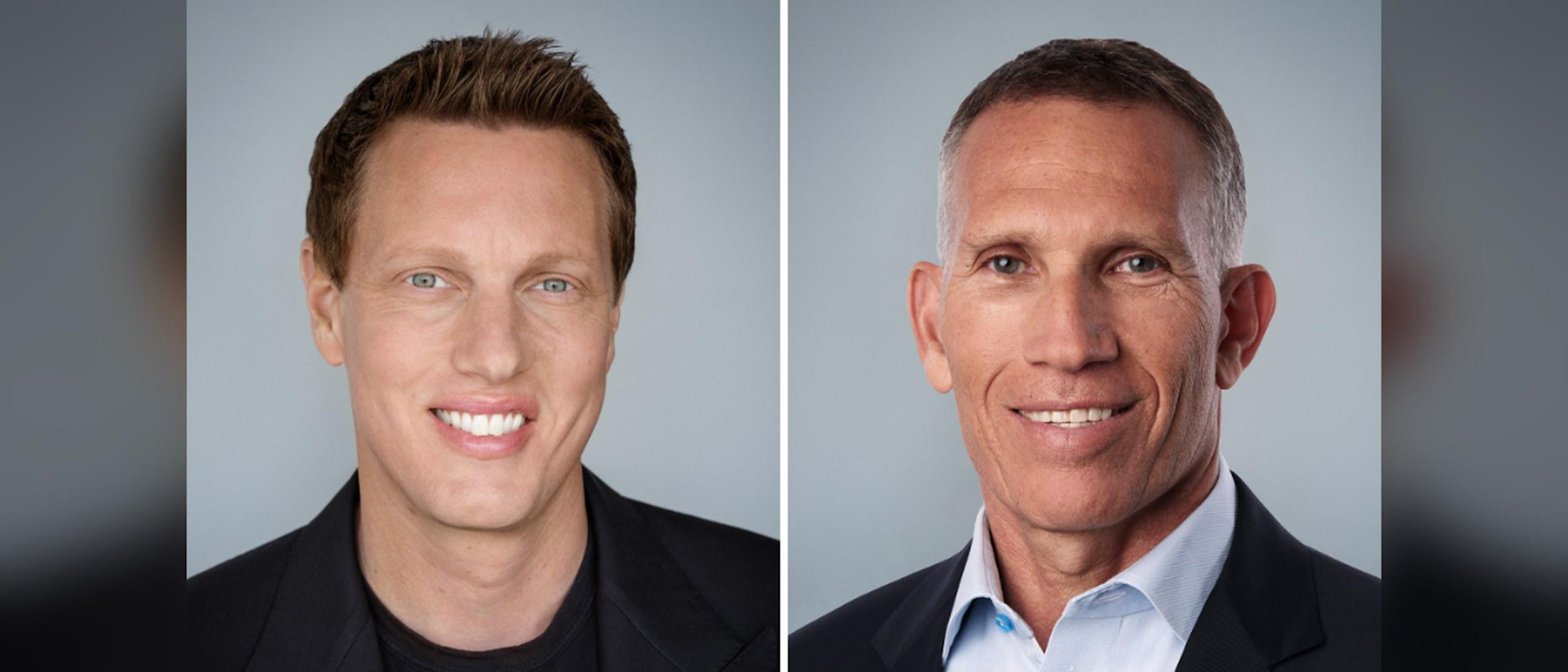
Skydance chairman and CEO David Ellison told investors on Monday 9 November that AI "really has the potential to be the biggest creative unlock in modern history," and predicted it will matter more than the CGI wave behind Jurassic Park and Terminator 2. He said it on Skydance's first earnings call since it bought Warner Bros. Discovery.
For AI creators, the argument he made is their own: cheaper production lets a studio take more risks on original ideas and first-time filmmakers. What the coverage missed is where Skydance put AI in writing. Its shareholder letter, filed with the SEC the same day, mentions AI only as a way to cut costs and merge faster, never in production or creative work. When a studio pitches AI to investors, the filing is the commitment and the speech is the story.
What Ellison said, and what he was asked
The AI answer was prepared. Investor relations read out a pre-selected question from Citizens Bank analyst Matt Condon about technology investment before the live Q&A began, and no analyst asked about AI live. Ellison opened by saying that "in a world of AI slop, we think there will always be a premium for truly handcrafted storytelling." He also repeated a line he has used since at least March, that AI "is a tool for artists and will never be a replacement for them."
Then he made the budget case. The Terminator, he said, was made for $4 million, and making it shot for shot today would cost "$60 million-$70 million." His conclusion was that "these tools will help unlock more original storytelling by being able to make the budgets more digestible to be able to take that amount of risk."
On what Skydance is building, he was careful: "While none of this is forecast in our model, we've been developing AI tools that, again, it's early days, but it strongly indicates that content will be easier to produce." He named no tool, team or production. Some headlines turned that into Paramount building its own AI tools, but the word own does not appear in the transcript. Ellison closed by saying Skydance will build technology that is "truly differentiated and bespoke to our business" and partner with leading providers where it makes sense.
What Skydance wrote down
The written results tell a narrower story. Co-CEO Ynon Kreiz described a $6 billion savings program that covers "non-labor and labor spend." In the shareholder letter, AI appears three times. "Scaling AI workflows" sits inside an overhead cut of at least $2.2 billion, "leveraging AI coding tools" sits inside a technology cut of at least $1.4 billion, and "the latest in AI tools" is the reason Skydance expects to fold Paramount+ and HBO Max together in about a year.
CFO Dennis Cinelli said working capital is one of the first areas where Skydance is deploying AI workflows, starting with a new AI agent that helps the team that pays suppliers. None of those lines involves a camera, a script or a VFX shot. The only public sign of creative AI work so far is an Oracle TV segment from Oracle AI World in October describing Skydance and Oracle collaborating on AI-powered animation. Oracle is chaired by Larry Ellison, David Ellison's father.
Checking the Terminator math
Ellison's example needs two corrections. The Terminator was budgeted at $4 million but cost about $6.4 million, according to The Numbers, and it was shot in 1984, not 1983 as he said. The $60 million to $70 million figure is his own estimate, with no source given.
The franchise's recent history also cuts against the thesis. The last two Terminator films, both co-produced by Skydance, cost $155 million (Genisys, 2015) and $185 million (Dark Fate, 2019). Expensive originals are not what kept the studio's budgets high; its own franchise sequels did.
What it means for AI creators
- Skydance's chief is now publicly making the case for cheap original bets that indie AI filmmakers have been making for years, and his group owns Paramount, HBO and Warner Bros.
- If he means it, the opening goes to makers who can show a finished, low-cost proof of an original idea rather than a pitch deck.
- Nothing on the call names a tool, a fund or a slate for that work yet, so the money Skydance has committed to AI so far sits in back-office workflow and code.
Our take
Ellison is right that AI lowers the price of a risky idea, and it matters that the most powerful studio chief in Hollywood says so out loud. But the corporate ledger is where intentions get tested, and Skydance's only counts AI as savings. Until a budget line, a slate or a named production carries the creative unlock, treat it as a pitch to investors, not a door open to filmmakers.
Timeline
- Date: Fri 26 Oct 1984. Event: The Terminator opens in the US, budgeted at $4 million and finished at about $6.4 million; Source: The Numbers; AFI Catalog via Saturation.io
- Date: Wed 1 Jul 2015. Event: Terminator Genisys, co-produced by Skydance, opens on a $155 million budget; Source: The Numbers
- Date: Fri 1 Nov 2019. Event: Terminator: Dark Fate, co-produced by Skydance, opens on a $185 million budget; Source: The Numbers
- Date: Mon 2 Mar 2026. Event: Warner Bros. Discovery deal investor call: Ellison calls AI transformative; Source: Deadline, 5 Mar
- Date: Tue 6 Oct 2026. Event: Skydance closes the Warner Bros. Discovery deal; Day 1 letter says technology must serve the art; Source: Skydance
- Date: Late Oct 2026. Event: Oracle TV segment at Oracle AI World on Skydance and Oracle AI animation work; Source: Oracle TV
- Date: Mon 9 Nov 2026. Event: Q3 results, shareholder letter (SEC 8-K) and call with Ellison's AI answer; Source: SEC filing; call transcript
Sources and what is unconfirmed: Quartr transcript of the Skydance Q3 2026 call (via StockAnalysis), read in full; Skydance shareholder letter, SEC Form 8-K Exhibit 99, 9 Nov 2026; The Verge and The Hollywood Reporter, 9 to 10 Nov; Deadline, 5 Mar and 9 Nov 2026; Skydance Day 1 letter, 6 Oct 2026; The Numbers budget pages. We worked from the transcript and did not hear the call audio. We did not watch the Oracle TV segment, and Skydance has not named any in-house AI tool or the productions using one. We did not contact Skydance.
Your Voice
Skydance's Ellison: AI has potential to be big creative unlock, on par with advent of CGI.
I mean it might be possible for AI to create better virtual actors than David Ellison in FLYBOYS
ORCL is owned by Larry Ellison. Skydance is Larry’s son, David Ellison. ORCL will provide the compute used in movie production. AI will reduce production costs.
Quoted from public posts on X and credited by handle. If one of these is yours and you want it removed, message @the__generated on X and it comes down.
Got something to say? Tag @the__generated on X