Elvis' rights holders sue Suno, arguing a blocked name is no defense if it sounds like him
Elvis' rights holders say a Tennessee law makes the voice, not the name, the test, so Suno's artist-name filter is no defense. Nothing is decided, and the key test went through lyrics, not the prompt.
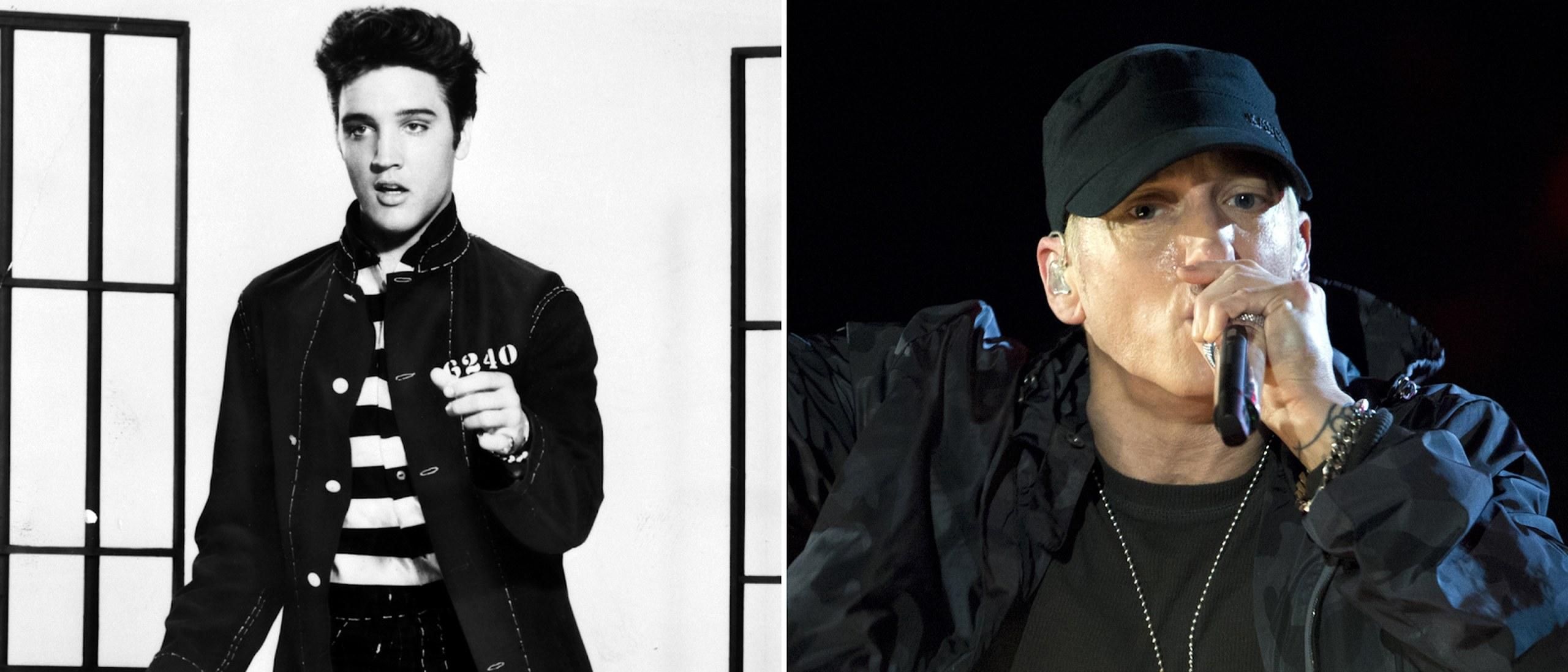
Elvis Presley Enterprises and other Presley rights holders sued Suno on Friday 6 November in federal court in San Francisco, claiming its AI music generator copies Elvis' voice in breach of Tennessee's ELVIS Act. The same lawyers filed a second suit that day for Eminem's publisher, Eight Mile Style, over 269 songs it says Suno trained on.
The rule being tested reaches past Suno. Tennessee's law treats a voice as a sound that is "readily identifiable" as a particular person, real or simulated, so blocking an artist's name in the prompt may be no defense if the vocal still sounds like him. For anyone scoring a film or music video with a generator, the risk moves from what you typed to what the track sounds like. What the coverage missed is that the Presley complaint is written as a reply to Suno's own motion, filed three days earlier, to dismiss a similar case brought by Jason Isbell. It quotes that motion and calls its central statements "unequivocally false".
What Suno told a court three days earlier
On Tuesday 3 November, Suno asked a federal court in Massachusetts to throw out the publicity class action that Isbell and three other musicians filed in August. Its lawyers argued that people use artist names as "shorthand" for a genre, that its outputs do not "replicate the auditory characteristics of any real artist's voice", and, quoting CEO Mikey Shulman's August blog post, that Suno "has never allowed prompts for specific artists or copyrighted songs."
The Presley complaint is built to fill each gap that motion pointed to. It is brought by the company that holds Elvis' publicity rights after his death, a right a Tennessee appeals court upheld in 1987. It attaches 38 recordings it says carry his voice, measured against the same "readily identifiable" test Suno cited against Isbell.
The weakest link is the name in the prompt
Early coverage said users can type Presley's name and get his voice, but the complaint pleads that only "upon information and belief". Its one dated test went a different way: on Wednesday 7 October, with no style prompt and only a lyric that spelled out "E L V I S P R E S L E Y" letter by letter, Suno produced two tracks titled "He Is Still The King" that the complaint says carry Elvis' voice. That goes around a filter that reads the style prompt rather than through it.
We have not heard any of the 50 recordings lodged with the court, and the complaint concedes some outputs fall "short of the true talent" they evoke. It says one output, "Elvis in The Jailhouse Rock", was still live with more than 125,000 plays at filing. Three song links cited in the complaints returned error pages when we checked, logged out, on Monday; removal after filing is likely but not proven.
The Act's tool clause needs a product whose "primary purpose" is producing a particular person's voice, a tough fit for a general music generator. In our reading, the stronger route is the clause on making a voice available: the complaint says Suno's own recommendation features pushed the Elvis-sounding tracks.
The Eminem suit is about training, not his voice
Eight Mile Style and Martin Affiliated, both of Ferndale, Michigan, own compositions, meaning the songs and lyrics rather than the recordings, and Eminem is not a party. Their complaint makes no voice claim. It says Suno copied 269 Eminem works to train its model, ripped audio from YouTube and used proxy services to get past logins and paywalls, and that outputs reproduce lyrics from songs including "Lose Yourself" and "Till I Collapse". It also cites a $29 guide selling Eminem-style prompts.
The money figures are maximum asks, not findings: more than $50 million for Elvis' voice and likeness plus up to $128.85 million in statutory copyright damages on 859 works, and up to $40.35 million for Eight Mile Style.
Suno's answer and the wider fight
A Suno spokesperson, Cat McCormack, told The Verge that the company does "not allow prompts for specific artists' names and songs" and works with third-party providers to screen uploaded audio and lyrics. Suno is based in Cambridge, Massachusetts; the complaint argues Tennessee law applies because Presley died a Tennessee resident.
This is not the first ELVIS Act case: the Johnny Cash trust sued Coca-Cola under it on Tuesday 25 November 2025. It is the first we can find brought by an artist's estate against an AI music generator. Both new suits come from the same Nashville team at Adams and Reese, led by Richard Busch, which also sued Suno for Reservoir on 21 October and Anthropic for Presley song owners on 23 October: one campaign, not two reactions. Both complaints point to Warner Music Group's 2025 licensing deal with Suno as proof a licensing market exists. Nothing has been decided in either case.
What it means for AI creators
- The question for a Suno soundtrack is shifting from whether you typed a name to whether the vocal sounds like a real singer.
- Guides selling artist-style prompts are now exhibits in a complaint, so a workflow built on them carries visible risk.
- Original vocals, licensed catalogs and credited human singers are the lane this fight leaves open, and the one a client or distributor can check.
Our take
A name filter was always a thin defense for a model that learned what famous voices sound like. Creators who built a workflow on these tools are caught between catalogs and a vendor they do not control; a clear answer on voices is what lets them use generated music with confidence.
Timeline
- Date: Mon 1 Jul 2024. Event: ELVIS Act takes effect in Tennessee; Source: Cash v Coca-Cola complaint
- Date: Tue 25 Nov 2025. Event: Johnny Cash trust sues Coca-Cola under the ELVIS Act; Warner Music Group and Suno settle and partner; Source: Billboard; Presley complaint
- Date: Fri 31 Jul 2026. Event: Munich Regional Court rules for GEMA against Suno; Source: Presley complaint
- Date: Thu 6 Aug 2026. Event: Shulman blog: Suno has never allowed prompts for specific artists; Source: Suno blog
- Date: Mon 31 Aug 2026. Event: Isbell and three other musicians file a publicity class action in Massachusetts; Source: CourtListener
- Date: Wed 7 Oct 2026. Event: Plaintiffs' lyrics-only test yields two Elvis-like tracks; Source: Presley complaint
- Date: Wed 21 Oct 2026. Event: Reservoir sues Suno (same law firm); Source: CourtListener
- Date: Tue 3 Nov 2026. Event: Suno moves to dismiss Isbell, calling artist names genre shorthand; Source: Isbell v Suno, ECF 30
- Date: Fri 6 Nov 2026. Event: Presley and Eight Mile Style complaints filed in San Francisco; Source: CourtListener dockets
- Date: Mon 9 Nov 2026. Event: Three Suno song links cited in the complaints return error pages; Source: Our check, logged out
Sources and what is unconfirmed: complaints in Elvis Presley Enterprises and others v Suno, 3:26-cv-13398, and Eight Mile Style v Suno, 3:26-cv-13399, Northern District of California, both filed 6 Nov 2026 (CourtListener); Suno's motion to dismiss in Isbell v Suno, 1:26-cv-14005, District of Massachusetts, ECF 30, 3 Nov 2026; Suno blog, Mikey Shulman, 6 Aug 2026; Suno statement to The Verge, 8 Nov 2026; Variety and Billboard, 7 Nov 2026; Cash trust v Coca-Cola complaint; ELVIS Act text. Unconfirmed: what the 50 exhibit recordings sound like (we have not heard them), whether names typed in the style prompt still work, why the cited song links stopped resolving, and the Elvis-titled Voice the complaint describes. All claims in both suits are allegations. We did not contact Suno or the plaintiffs' lawyers.
Your Voice
AI gave independent creators opportunities many of us never had before. As labels negotiate, platforms change their rules, and new regulations are debated, will those opportunities remain within reach?
You can copyright a song, but you can't copyright your voice. But Tennessee law may have created a new problem for AI.
Quoted from public posts on X and credited by handle. If one of these is yours and you want it removed, message @the__generated on X and it comes down.
Got something to say? Tag @the__generated on X