On Kling's stage, Kim Sung-soo sold AI filmmaking. Off it, he said the tools serve '99 out of 100 people'
At Kling's co-hosted panel in Busan, director Kim Sung-soo said he will never go back to old methods, yet he made his eight-minute short with a nine-person crew and Kling production support on undisclosed terms. Off the stage he said tools like Kling, Veo and Higgsfield fail on anything unusual, and MooAm said it only hires AI artists who have directed live action.
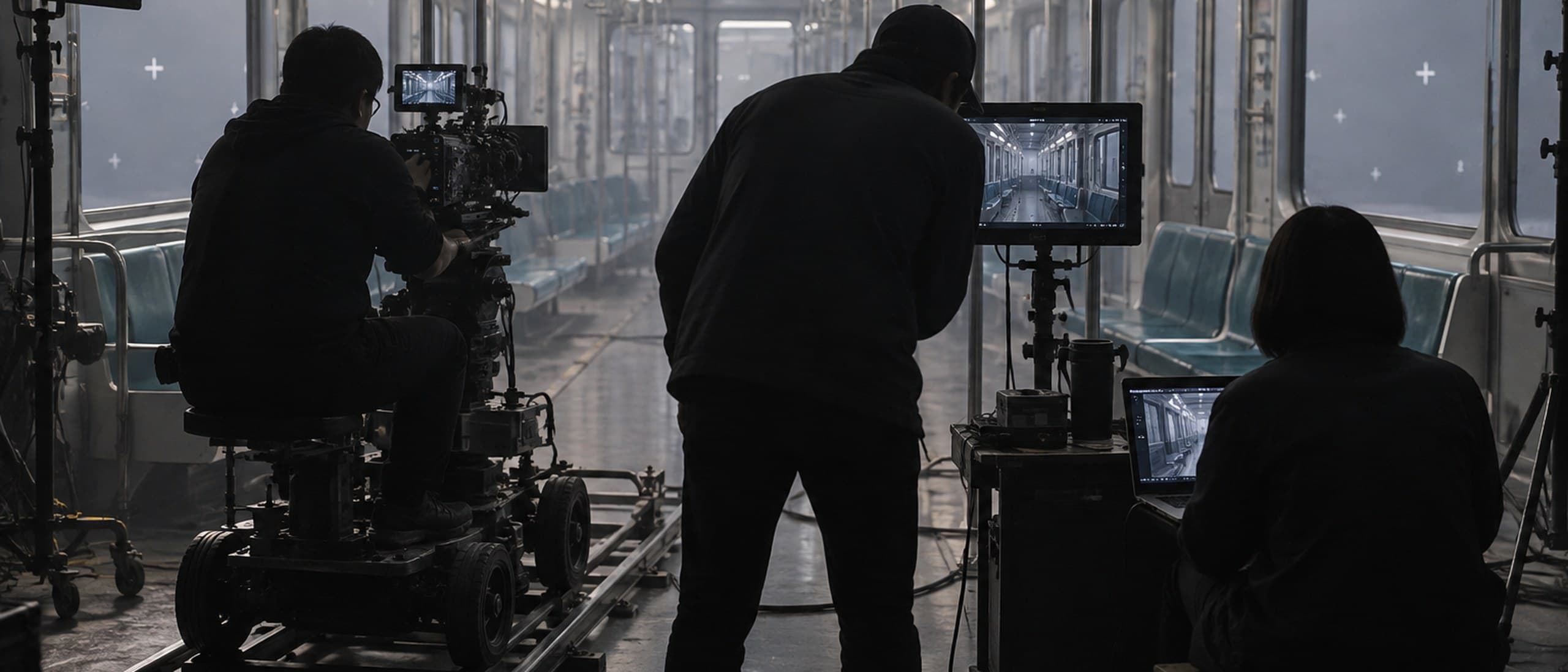
A young office worker wakes up as a giant, oozing insect, and he still has to get to work on the subway. That is the premise of Worm Train, an eight-minute short inspired by Kafka's Metamorphosis, and for a while this year its director, Kim Sung-soo, thought it could not be made. The AI tools he tried could not show a giant insect crashing into a packed train crowd, so around March he shelved it.
Kim is not a hobbyist testing a new app. He directed 12.12: The Day and Asura: The City of Madness, and on Sunday 11 October he sat on a panel at the Asian Contents & Film Market in Busan and told the room he had once thought AI would destroy the industry. "I don't think so any more," he said, according to Deadline. Variety has him going further: "I'll never go back to the way I used to make films."
The panel belonged to Kling AI. The video model's maker co-hosted the session with the market, every panelist showed work made with its tools, and Worm Train itself received "production support from Kling AI", according to PD Journal, which interviewed Kim at the market. The terms have not been disclosed. Kling also paid for two of the English-language write-ups: Screen International's piece on Kim is labeled "Sponsored by Kling AI", and a Deadline follow-up on 14 October is marked Partner Content. The news reports filed from the room by Deadline, Variety and the Korean daily Hankyoreh are independent, and the quotes below come from those and from Kim's own interviews.
What he said away from the panel
The most useful thing Kim said this week did not come from the stage, and it did not run in English. In a sit-down interview with OhmyNews, he said tools like Kling, Veo and Higgsfield are built to produce what "99 out of 100 people would like", and that when you ask for something unusual, the AI "stops working or produces something strange". Speaking to PD Journal, he asked for differentiated AI services built for professionals, and for a Korean foundation model. Both quotes are our translation from Korean.
That is a working director describing the ceiling of the tool he is using, during the showcase of the company that makes it. It also explains why the craft argument on the panel was more than politeness toward the people who still hold the cameras.
A nine-person crew for an eight-minute short
Kim restarted Worm Train this autumn after an early look at Kling 4.0. Outlets disagree on whether that was August or September, but PD Journal says he used a "Kling AI 4.0 preview version". That matters for anyone hoping to copy him, because Kling's own product page still says the full 4.0 is "coming soon this October", with a Flash version going first to a limited group of creators. He was working with access most independent makers do not have yet.
He did not hand the film to a prompt box. Variety reports a nine-person team that included an animation art director and a music director, and says they generated only part of the short and shot the rest conventionally. PD Journal adds an editor and four young AI artists to the crew list. Kim's own summary of the method, as PD Journal reported it: "The footage comes from Kling AI, and everything else follows the film production system." He called it a more controlled way of working, and he told Deadline and Variety that he checks every output for infringement and publicity rights.
He also has a headline number, and it needs care. Screen's sponsored piece quotes him saying a job that used to take two years now takes two days. In the independent Korean reports the comparison is looser: 12.12: The Day took more than four years from first idea to seeing a scene on set, while Worm Train's first shots came almost straight away. Treat it as a vivid estimate from the director, since no production log backs it.
The hiring rule worth stealing
Harry Hyun, director and CEO of the Korean AI studio MooAm, made the sharpest version of the craft argument. AI images impress at first and then start to look alike, she said, because "everyone is using the same lighting, same everything," as Deadline reported it. In Deadline's account she warned that "if you don't have experienced filmmakers on set, everything can end up looking the same." Variety's version is blunter: "Faces look identical, sets look identical, lighting looks identical."
Hyun also shared the most practical detail of the day. MooAm only hires AI artists who have directed at least one live-action short, according to Variety, and its directing team now includes an "AI coordinator" who decides which cuts get generated and keeps a continuity script for them. Assistant directors need basic AI literacy too, she said, because gray screens with tracking points are replacing green screens. MooAm brought Natasha, a 100-minute period thriller that uses live action for the performances and Kling for a 1944 snowstorm and the crowd scenes.
The other two panelists made the same point from different angles. Li Wei, co-director of the animated feature Jiang Ziya, showed a trailer for Born of the Tide, a 105-minute AI-animated feature about China's boat-dwelling Tanka community. "AI can generate many things, but the choice and the details all come down to the director," he said, per Variety. Lee Sang-wook of the MBC C&I AI Contents Lab presented Rendering Love, a short-form K-pop romantic comedy developed with Parasite producer Barunson E&A, and warned that "if even one or two individuals lag on the learning curve, overall quality can suffer." At a separate session the same day, VFX veteran Hong Jae Cheol made a similar case, telling Variety that AI is just a tool and that film is a sequence.
Born of the Tide was also on Kling's panel at Cannes in May, so Busan is part of a recurring market showcase. One reader under Deadline's report called the panel "desperate, weak, and short sighted". The skeptics have a point about the stage. They are on weaker ground about the argument itself, which came from a director who says budgets used to censor his scripts and who still hired a crew when the budget problem went away.
What this means for anyone making AI work
In practice, for anyone making work this week, the hiring signal from Busan is plainer than the marketing around it. The people landing roles on AI productions in Korea are the ones who can already direct, shoot, edit and score, and the tools still flatten anything unusual unless someone with taste pushes back.
- A live-action short on your reel is now an entry ticket at MooAm, which says it won't hire AI artists without one.
- The AI coordinator is a real job title on at least one studio's directing team, and the role is to decide which shots get generated and to keep them consistent.
- Kim's complaint about the 99 out of 100 doubles as a brief: the strange idea the model resists is the one that stands out, so that is where the hours should go.
Kim is aiming to finish Worm Train around 25 October and says he will send it to Kling soon after. No platform has been named. When it lands, the question worth asking is whether eight minutes made with a vendor's support and a nine-person crew look like the 99 or like the one.
Timeline
- Date: Late Feb 2026. What happened: Kim conceives Worm Train and generates the opening and transformation shots first; Source: Hankyoreh
- Date: Around Mar 2026. What happened: Kim shelves the short; Creative Mango's CEO later brokers a Kling collaboration; Source: OhmyNews
- Date: 21 May 2026. What happened: Born of the Tide appears on Kling's Cannes panel; Source: Deadline
- Date: 26 Aug 2026. What happened: Busan festival announces Kling will co-host the ACFM panel; Source: BIFF press release
- Date: 28 to 30 Sep 2026. What happened: Kling 4.0 announced in early access, wider rollout due in October; Source: Kling blog
- Date: Sun 11 Oct 2026. What happened: Kling panel at BEXCO, Busan, with Kim, Hyun, Li and Lee; Source: Deadline, Variety, Hankyoreh
- Date: Mon 12 Oct 2026. What happened: Screen International runs a Kim profile labeled Sponsored by Kling AI; Source: Screen International
- Date: Wed 14 Oct 2026. What happened: Deadline runs a Kling follow-up labeled Partner Content; Source: Deadline
- Date: Thu 15 Oct 2026. What happened: PD Journal reports Kling production support for Worm Train; full Kling 4.0 still coming soon; Source: PD Journal, Kling product page
- Date: About 25 Oct 2026. What happened: Kim's target date to finish Worm Train; Source: OhmyNews
Sources and what is unconfirmed: news reports from Deadline (Liz Shackleton), Variety (Ophélie Surcouf; Lin Ying-Hsuan for Hong) and Hankyoreh, all 11 Oct; Kim's interviews with OhmyNews (14 Oct) and PD Journal (15 Oct), and DigitalToday (13 Oct); the Busan festival's 26 Aug release and the ACFM session page; Kling's blog (30 Sep) and 4.0 product page (read 15 Oct). Screen International's 12 Oct piece and Deadline's 14 Oct piece are paid Kling content and are cited only for their labels and Kim's two-years line. The session was interpreted and no recording was found, so every quote is one outlet's rendering. Korean quotes are our translation. How much of Worm Train is generated, the terms of Kling's support and the release platform are undisclosed, and we have not seen any of the films.