LightBox Expo calls generative AI theft. Its studio sponsors are betting on it
LightBox Expo co-founder Jim Demonakos calls generative AI theft, and the show bans text-to-image work from display and sale when it opens on 23 October. The written rule still allows image upscalers and names no detection method, and the Disney, Netflix and Adobe names on its sponsor wall are betting heavily on generative AI elsewhere.
This year more than 1,500 artists applied for one of 250 tables in LightBox Expo's Artist Alley, the long run of sketchbooks, prints and portfolios at the Pasadena Convention Center that studio recruiters from Disney, DreamWorks and Sony Pictures Animation walk past every October. About one applicant in six got a table, and every one of them agreed to a rule that nothing on it can be made with text-to-image tools. When the show opens on Friday 23 October, that rule covers the whole event and not only the people selling work.
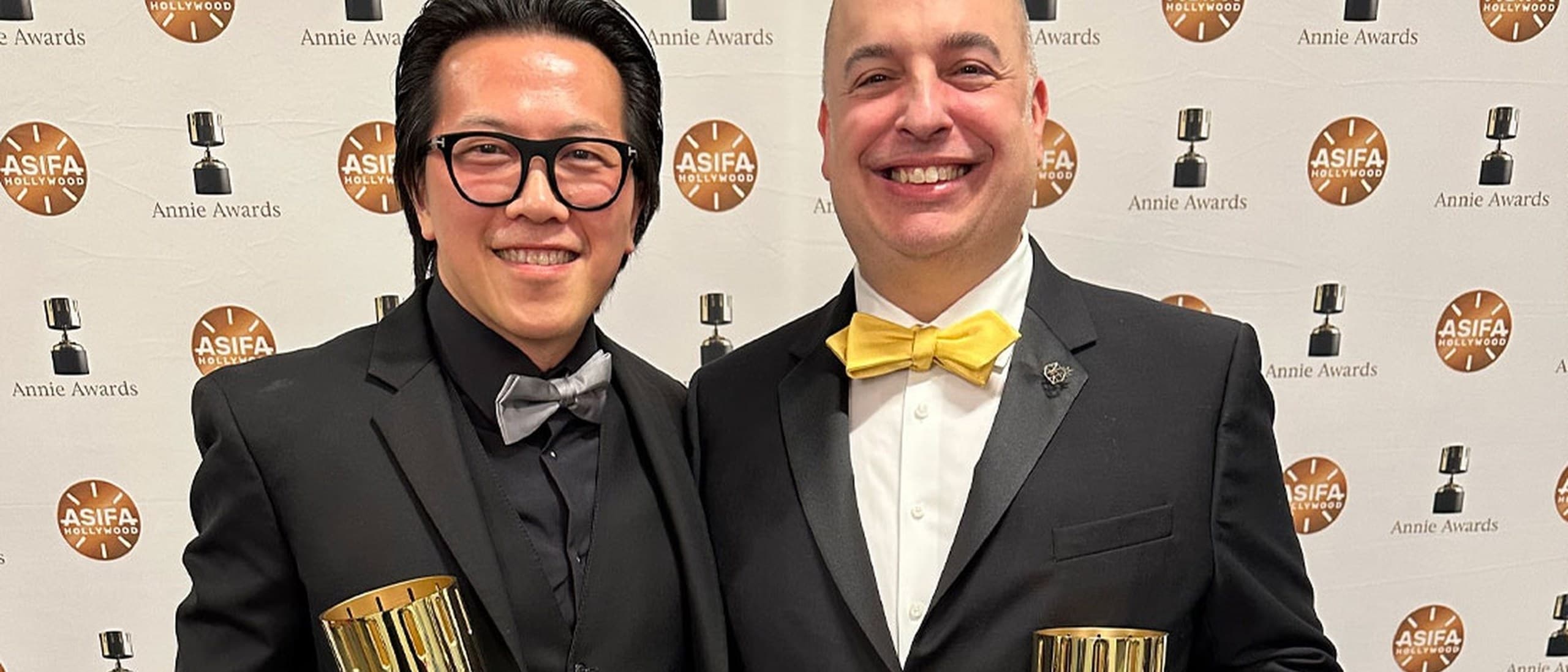
Jim Demonakos, who co-founded LightBox with the character designer Bobby Chiu in 2018, does not soften the reason. In an interview with Cartoon Brew published on Wednesday, he called AI work "bootleg because you've stolen it from someone" and went further: "we don't think there's anything wrong with saying that we think generative AI is theft and it's not real art." For an event that ASIFA-Hollywood honored with a Special Achievement Award at the 53rd Annie Awards, that is about as blunt as institutional language gets, and it is worth reading closely, because the written rule underneath it draws a more practical line than the quote suggests.
What the rule actually bans
The AI Policy on LightBox's site says that "products that have been created with the use of generative AI tools (such as text-to-image tools) are strictly prohibited", and the FAQ adds that AI-generated content is not permitted for display or sale at the event. The same page lists what is fine: "spell checkers, image upscalers, basic photo filters and/or accessibility tools", as long as the "core creative process remains human-driven". An exhibitor who breaks the rule "may be asked to remove any prohibited products and/or may be disqualified".
Two things are missing from that page. It names no detection method, no review step and no warning before removal, and Demonakos describes an advisory council that curates Artist Alley applications without saying how AI work gets caught. It also never defines an image upscaler. Most upscalers sold today are machine-learning models, so the clearest gray zone in the policy is a tool plenty of illustrators already use. That reading is ours, since LightBox has not said where an AI upscaler falls.
Demonakos says the policy has existed "for four years now, possibly five", first on the exhibit floor and in Artist Alley, and that LightBox made it attendee-facing last year. We could not date the policy page, and the show ran online in 2020 and 2021, so the safe version is that the rule has been in place for several years.
Not alone, just louder
The substance is not unique. Emerald City Comic Con, the Seattle show Demonakos founded in 2003 and sold to ReedPop in 2015, bans AI-generated products from sale and gives one warning before removal. San Diego Comic-Con's Art Show dropped its old allowance for labeled AI pieces shown but not sold in January, after artists pushed back, and now bans work made partly or wholly with AI; The Verge noted at the time that enforcement is hard without reliable detection. What sets LightBox apart is vocabulary. Most events write this in compliance language, while Demonakos puts the words theft and bootleg on the record.
- Event: LightBox Expo, Pasadena. AI rule: Generative-AI products banned from display and sale; upscalers and minor tools allowed; removal or disqualification; Source: lightboxexpo.com AI Policy, read 1 Oct 2026
- Event: Emerald City Comic Con, Seattle. AI rule: AI-generated products banned from sale; one warning, then removal and a possible future ban; Source: ECCC AI-Generated Products Policy
- Event: San Diego Comic-Con Art Show. AI rule: Full ban on work made partly or wholly with AI, replacing a display-only allowance; Source: Times of San Diego and The Verge, 21 Jan 2026
- Event: Annecy and Mifa. AI rule: No ban; launched Mifa AI and the AI4Animation think tank in 2026; Source: Annecy festival site; Screen Daily, 22 Jun 2026
Annecy is heading the other way. Its market launched Mifa AI and an AI4Animation think tank this year, which means two of the animation calendar's key gatherings now point in opposite directions, one courting AI tools and one keeping them off the floor.
Who pays for the room
LightBox's 2026 sponsor wall reads like a studio directory. Procreate is the principal sponsor, with Schoolism and Make Originals at Platinum and Sony Pictures Animation and Netflix Animation Studios at Gold, according to an AWN China announcement in June. The logo wall also carries The Walt Disney Company and its studios, DreamWorks, Warner Bros Animation, Paramount, Illumination, Adobe and a long run of art schools.
Several of those names have made large, public bets on generative AI. Disney put $1 billion into OpenAI in December 2025 and licensed more than 200 Disney, Marvel, Pixar and Star Wars characters for Sora, according to its own press release. Netflix used generative-AI final footage in El Eternauta in 2025, as Ted Sarandos told investors that July. Adobe's Firefly app now hosts more than 30 models, including ones from OpenAI, Google, Runway and Kling. Procreate sits at the opposite pole, since its chief executive James Cuda vowed in 2024 never to put generative AI in the app.
Demonakos is clear about why the studios keep coming: "They're not at their booth selling Blu-rays; they're there to talk to people about how to get in the industry, what they look for." He also says LightBox has had no pushback from AI companies, and his explanation is that they would not find a receptive audience there. That is his account and we cannot check it. Either way, the ban governs the floor and the art for sale, and it does not reach the production pipelines of the companies hiring in the room. Nobody at LightBox claims otherwise.
The pitch from the stage
Chiu is using his own slot to make the case in business terms. His panel, "Ending the Era of the Starving Artist", argues that a project can deliver what people want from AI, "less time spent, fewer people involved, and less money needed", without using any of it. The project is Magrid's Magic Shoppe, an interactive comic from An Infinite Story, a company Chiu co-founded, and its Kickstarter launches on Tuesday 6 October with a $19,999 target. Schoolism, the art school he founded, is a Platinum sponsor of the show. None of that undercuts the argument, though it is worth knowing who is making it.
What it means if you make AI work
In practice, for anyone making work this week, the artist-convention circuit is now closed to generated work for sale. LightBox, ECCC and the SDCC Art Show all bar it, so a table, a print run or a portfolio built on text-to-image output will not get through the door. If those rooms matter to you because recruiters walk them, the ticket in is human-made work, with any assisted step kept to the minor tools the policy names and disclosed if someone asks.
That is not the same as the industry closing to AI filmmakers. The studios sponsoring LightBox are funding, licensing and shipping generative tools elsewhere, and Mifa AI shows a major festival building a room for exactly that work. The useful move is knowing which room you are in. If you run a hybrid workflow, keep the human-made layer (boards, character designs, paintovers) as its own portfolio, because that is the part this crowd will actually look at, and save your generated finals for the venues that want them.
The open question for October is enforcement. LightBox has published penalties without a detection method, and the first exhibitor removed or the first upscaled print that gets challenged will show where the line really sits once the doors open on 23 October.
Timeline
- Date: 29 Oct 2018. What happened: Chiu and Demonakos announce LightBox Expo; Source: ICv2
- Date: Sep 2019. What happened: First show in Pasadena, about 8,000 attendees by the organizers' count; Source: Pasadena Weekly
- Date: 2020 to 2021. What happened: Show runs online; Source: Pasadena Weekly
- Date: 19 Aug 2024. What happened: Procreate vows never to add generative AI; Source: TechCrunch
- Date: 11 Dec 2025. What happened: Disney invests $1 billion in OpenAI and licenses characters to Sora; Source: Disney press release
- Date: 5 Jan 2026. What happened: ASIFA-Hollywood names LightBox a Special Achievement Award recipient at the 53rd Annies; Source: ASIFA-Hollywood
- Date: 21 Jan 2026. What happened: SDCC Art Show moves to a full AI ban; Source: Times of San Diego, The Verge
- Date: Jun 2026. What happened: Annecy's market launches Mifa AI and AI4Animation; Source: Screen Daily
- Date: 30 Sep 2026. What happened: Demonakos calls generative AI "theft" in the Cartoon Brew interview; Source: Cartoon Brew
- Date: 6 Oct 2026. What happened: Chiu's Magrid's Magic Shoppe Kickstarter launches; Source: Comic Crusaders
- Date: 23 to 25 Oct 2026. What happened: LightBox Expo, Pasadena Convention Center; Source: LightBox Expo