Maharaja in Denims rebuilt its stills three times and now targets April 2027
Producer Khushwant Singh says Maharaja in Denims, a feature-length generative AI film from Chandigarh's Intelliflicks, redid close to an hour of footage three times as the tools improved and cost more than $500,000 before marketing. The budget is unaudited and the April 2027 release is a target, but the team's choice to stop chasing the next model is the lesson.
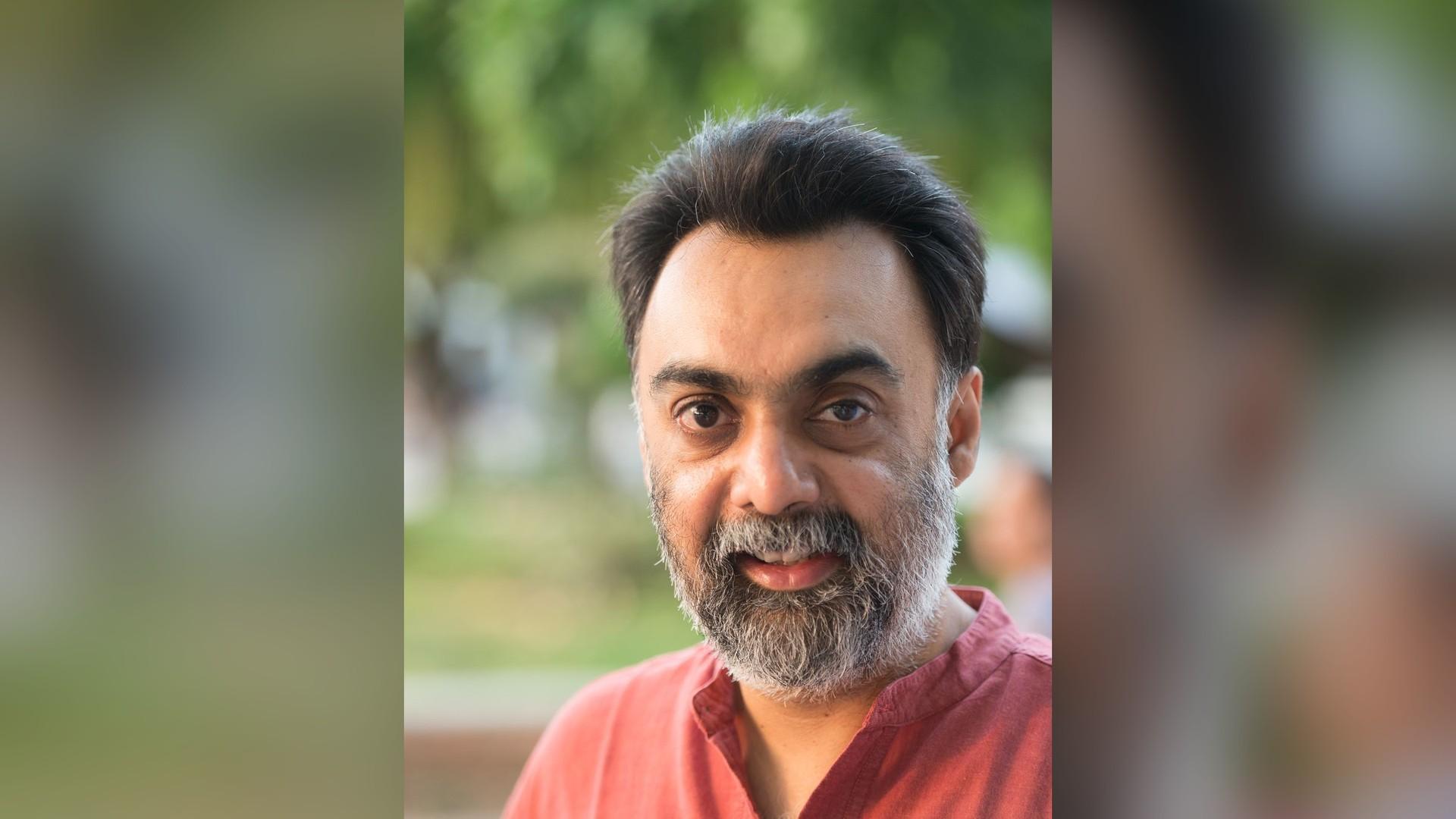
Maharaja in Denims, a feature-length generative AI film from Chandigarh's Intelliflicks Studios, is aiming for release by April 2027, producer Khushwant Singh told Variety on Wednesday 25 November. Singh said the team rebuilt the stills for the entire film three times before locking a look, and he put the cost at more than $500,000 (about £370,000), excluding marketing.
Cheaper generation doesn't remove the cost of rebuilding a film when its makers keep changing tools and references. Singh says new technology usually brings costs down to around a tenth, but his team redid close to an hour of the film three times as the models improved. For AI creators, the useful moment is when they stopped: offered a newer way to animate, they kept the stills they had.
Seven tools and one lampshade
According to Variety, production started in 2024 with Midjourney and Runway, moved to Google Veo with Nano Banana handling stills, then went through Kling AI and Seedance 2.0 before wrapping on tools available on Higgsfield. ChatGPT and Google Imagen helped build early character references, and keeping faces, costumes and sets in line took heavy manual fixes in face-swapping software, Photoshop and Adobe Firefly.
Nano Banana was the turning point, Singh says, because it could generate new camera angles from reference images with far fewer manual corrections. Even so, he told Variety that near-perfect shot-to-shot consistency only became possible four or five months ago. His example is a household one: "if a lampshade is placed at a particular spot in a two-minute scene, it must remain in exactly the same position across every generated shot, irrespective of the camera angle."
When Higgsfield began allowing moving shots straight from character sheets, switching would have added time and money, so the team animated the stills it already had. Early performances were guided by real actors through Runway Act-One, and one person created most of the motion shots so each character would move and react the same way. Singh also says the short clips gave the editor less room to shape scenes than conventional footage does.
The budget is one producer's number
The more-than-$500,000 figure is the weakest claim in the story. It comes from Singh alone, with no accounts or cost breakdown, so there's no way to split it into generation, labor, postproduction and rework, or to say how much the model switching cost. It's a reported total for one production and won't work as a per-minute price or an industry benchmark.
The release is softer than Variety's headline, which says the film "sets" April 2027. The body says the team hopes to release by then, in time for the Baisakhi harvest festival, and that co-producer Twenty-Twenty One Studios is weighing a theatrical run followed by non-theatrical distribution. We found no fixed date, theater booking or platform deal. That co-production isn't new either: CNBC-TV18 reported the partnership on 4 August 2025.
Singh also calls the film "the first full-length generative AI film rooted in realism." That's his claim, and nobody has checked it.
A finish line that keeps moving
In May 2025, Singh told the Indian Express the team had stitched together about 30 minutes toward a runtime of around 100 minutes and was aiming for an August or September 2025 release. He also said then: "Technology evolves so fast that every week brings new improvements. At some point, we have to accept that the film is done." Eighteen months later, the target is April 2027.
People made most of it
Balpreet Kaur, a Punjab-based independent filmmaker who adapted the novel, directs and holds final creative control, according to Variety. The music is human-made, and dubbing and narration were recorded with actors in the studio; playback singer Sukhwinder Singh sang two versions of the title track. Singh calls the creative process "entirely human-led," which reads very differently from the August 2025 co-production announcement, which CNBC-TV18 quoted as calling it a film "generated entirely by artificial intelligence."
On copyright, Singh relays co-founder Gurdeep Pall's view that what the models were trained on is a question for the companies that own them, while the studio is responsible for how it uses them and avoids drawing on anyone's style or IP. That's the producer's position, and nobody has tested it in a license review or a court.
What it means for AI creators
A lot of people came to AI filmmaking expecting it to cut cost and labor, and this production shows where that expectation breaks. Every model upgrade looks like a free improvement until it means regenerating work you'd already finished. The team's own fix, keeping its stills rather than moving to a newer animation path, is the part worth copying into your own workflow.
Lock your character and set references early, and keep them as editable files you own outside any one platform. Before adopting a better model mid-project, price the redo honestly in hours as well as credits. And plan for the edit: if your clips are short, shoot more coverage than you think you need, because the editor can't trim what doesn't exist.
Our take
Our take: Maharaja in Denims feels like the honest version of the AI feature story. It took people, real actors and a lot of rework, and its makers are saying so. The $500,000 figure needs a breakdown before anyone treats it as a benchmark, but the lesson about knowing when to stop chasing the next model is one every long-form AI project can use.
Timeline
- Date: July 2020. Event: Producer Guneet Monga Kapoor options the novel; that version never gets made; Source: Variety, 25 Nov 2026
- Date: 2023. Event: Singh and Gurdeep Pall co-found Intelliflicks after Pall proposes an AI adaptation; Source: Variety; Intelliflicks site
- Date: 2024. Event: Project unveiled with a short clip; production starts on Midjourney and Runway; Source: Variety
- Date: Sat 17 May 2025. Event: Singh: about 30 of around 100 minutes assembled, release aimed for Aug or Sep 2025; Source: Indian Express
- Date: Mon 19 May 2025. Event: Cannes release names Maharaja in Denims as a proof of concept for an AI film slate; Source: PR Newswire
- Date: Mon 4 Aug 2025. Event: Twenty-Twenty One Studios co-production partnership reported; Source: CNBC-TV18
- Date: Wed 25 Nov 2026. Event: Singh gives Variety the three rebuilds, more than $500,000 cost and April 2027 target; Source: Variety
- Date: April 2027. Event: Hoped-for release, in time for Baisakhi; Source: Variety
Sources and what is unconfirmed: Variety interview with Khushwant Singh by Naman Ramachandran, 25 Nov 2026 (re-read 26 Nov); Intelliflicks Studios website; Indian Express interview, 17 May 2025; Intelliflicks and Visual Alchemy release on PR Newswire, 19 May 2025; CNBC-TV18, 4 Aug 2025. Unconfirmed: the budget and how much of it went on rework, the April 2027 date, distribution, final runtime, the "first" claim, and training-data or music licensing. Intelliflicks not contacted. GBP at 0.74.