Goku's voice calls AI clones theft as her union writes the consent rules
Masako Nozawa, Goku's voice for 40 years, told NHK an unauthorized AI copy of her voice is the same as theft. Her own agency already licenses an AI version for non-acting work, and her union's new guidelines spell out how to ask, though they are voluntary and the law still allows training.
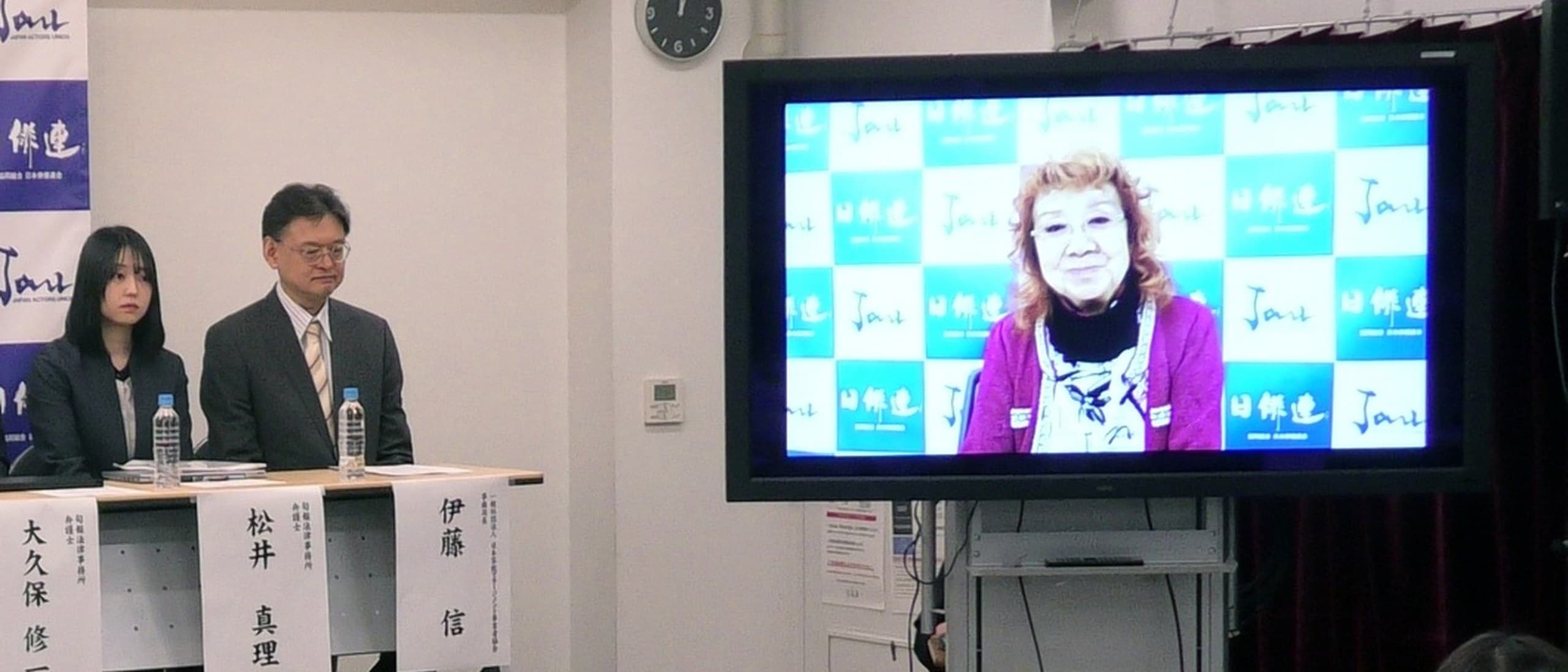
Masako Nozawa sat down with NHK last Wednesday and was shown a video that used her voice. Reports say it was an AI Goku singing a song. She has voiced Goku since 1986, she turns 90 on Sunday, and she did not hedge. "This is not my voice," she told the broadcaster, in our translation of the Japanese. "I can't forgive using it without asking. It's the same as a thief, and it makes me angry."
That line has traveled a long way since NHK aired the interview on Thursday 15 October. A Dexerto post of it passed 2.4 million impressions on X, against about 133,000 for NHK News's own post. Most of the English coverage reads it as the most famous voice in anime turning against AI. That reading skips the part that matters for anyone making films with these tools. Nozawa's target is unauthorized use, and on the same day her union published a rulebook that spells out how to use a performer's voice with permission.
What she said, and what she did not say
Nozawa told NHK that her voice is her identity and her performances belong to her. "If anyone uses even a little of it, they should get permission," she said, again in our translation. She allowed that the copy might be a perfect likeness, and then gave it the review that has been quoted most: "It has no heart." NHK World's English version adds that she hopes everyone will follow the rules now being written, and that she told young actors to speak words that come alive rather than just read text.
She was not at the union's press conference in Tokyo, whatever some English reports say. She sent a video message, and it is warmer about the technology than the headlines. Anime News Network's translation has her saying: "I'm excited the world we dreamed of when I was a child is slowly becoming a reality. But our voices are being used without our consent. It's a bit disappointing." She closed on a hope that by following the rules, "we can create a world where humans and AI can have fun."
There is one more fact the English coverage has mostly missed. In October 2024 her agency, Aoni Production, licensed AI versions of the voices of ten of its actors, Nozawa among them, to the voice startup CoeFont. The deal covered navigation and assistant voices in other languages, and Aoni said at the time it would not supply anything touching acting. So the voice of Goku already has a licensed AI version, with its uses fenced off. What made her angry was the version nobody asked her about.
The rulebook she was speaking for
Nozawa is a vice chair of the Japan Actors Union, known as Nippairen, which has about 2,600 members. On Thursday 15 October it launched Japan's first guidelines for generative AI use of performers' voices, 21 pages and 22 articles, under the campaign banner it has used since 2024, #NOMORE無断生成AI (no more unauthorized generative AI). Broly's voice actor, Bin Shimada, told the press conference he had heard an AI Broly singing Ado's hit "Usseewa" and that his anger only grew the longer he thought about it.
Here is what the guidelines ask for, based on the union's release, NHK's summary and a reading of the full text by the Tokyo law firm Itokai. Consent has to be written and given separately for each stage: training a model on the voice, generating with it, and using the result in a work. Blanket buyouts and after-the-fact approval do not count. Consent lasts a year at most, in principle. AI dubbing needs fresh consent for every language. Finished work should carry an AI label, the name of the AI used and the original performer's name, unless the performer asks to be left off. AI is not supposed to replace actors in anime and dubbing roles that need a performance. For performers who have died, AI use is ruled out in principle, with narrow exceptions for sequels that need written consent from family and agency.
Two clauses reach well beyond the studios. The guidelines count sole traders, doujin (self-published fan) creators and individual streamers as covered businesses. And when a violation turns up, the union says it will demand an immediate halt to distribution and a payment equal to sales, dating back to the day the unauthorized use began.
What the rules can enforce, and what still needs the law
The guidelines are a voluntary industry standard. They bind the studios, agencies and producers who sign up, and the Itokai analysis says plainly that they do not reach an anonymous uploader who never signed anything. Japanese copyright law, under Article 30-4, still allows training on copyrighted material, so the consent-to-train clause is a contract term the union wants, not current law.
The law is moving toward the union, though. On 30 September the Tokyo District Court ruled for the first time that a voice can be protected as a publicity right, in a case brought by voice actor Kenjiro Tsuda against TikTok, even as it dismissed the takedown claim because the account was already gone. An August report from a Ministry of Justice study group said that selling a generator marketed on sounding like a named star, or making money from a sound-alike, can infringe that right, while ordinary impressions generally do not. And on 13 October a trade ministry panel discussed adding voice and likeness to Japan's unfair-competition law, with no member objecting.
The licensed lane is the opportunity
For creators, the takeaway is not that voice AI is off the table in Japan. It is that the fan short with a cloned Goku voice is now a named, written risk, and the people who own those voices have told you exactly what asking looks like. The Aoni and CoeFont deal shows a working version of the other path, with named actors, limited uses and acting carved out.
- If your short uses a recognizable anime voice you did not license, you are now inside the union's definition of a business, and the courts have said a voice can be a publicity right.
- If you want a known voice, the guidelines read like the checklist a rights holder will hand you: written consent for each stage, a term of up to a year, a fee and an on-screen AI credit.
- The safest creative bet is still an original voice: your own, a hired actor who signs for each stage, or a synthetic voice that was not built to imitate anyone.
Our take: Nozawa handed AI filmmakers a cleaner line than the headlines suggest. She thinks the technology is amazing, and she wants to be asked. The creators who build their workflows around asking will be the ones the rights holders license to first.
Timeline
- Date: Mon 7 Oct 2024. Event: Aoni Production licenses AI voices of 10 actors, Nozawa among them, to CoeFont for non-acting uses; Source: Nikkei, ITmedia, Oricon
- Date: Aug 2026. Event: Ministry of Justice study group report on voice and publicity rights; Source: Ministry of Justice
- Date: Wed 30 Sep 2026. Event: Tokyo District Court recognizes voice as a publicity right in Tsuda v TikTok, dismisses the takedown claim; Source: Court judgment; Kyodo via Nikkei Asia
- Date: Tue 13 Oct 2026. Event: Trade ministry panel discusses protecting voice and likeness under unfair-competition law; Source: Asahi
- Date: Wed 14 Oct 2026. Event: Nozawa interviewed by NHK; Source: NHK World
- Date: Thu 15 Oct 2026. Event: Nippairen launches its AI voice guidelines; Nozawa sends a video message; NHK airs the interview; Source: Nippairen; Natalie; NHK
- Date: Fri 16 Oct 2026. Event: NHK World publishes the English version; Anime News Network covers the guidelines; Source: NHK World; ANN
- Date: Mon 19 Oct 2026. Event: Automaton and Kotaku stories; Source: Automaton; Kotaku
- Date: Sun 25 Oct 2026. Event: Nozawa turns 90; Source: ANN; Wikipedia
Sources and what is unconfirmed: NHK World English (16 Oct), read in full; NHK's Japanese article (15 Oct), read as reproduced because the original sits behind a login wall, and checked against NHK World's English and Chinese versions; Nippairen's release page; Itokai law firm analysis (16 Oct); Anime News Network (16 Oct); Eiga Natalie (15 Oct); Oricon, Nikkei and ITmedia on the Aoni and CoeFont deal (Oct 2024); the Tokyo District Court judgment; Asahi (13 Oct). Japanese quotes are our translations. We did not watch the NHK broadcast, we did not open the guidelines PDF itself, and we did not contact Aoni, Toei or the union. Unconfirmed: which AI video Nozawa was shown, and whether the CoeFont voice is still on sale. No legal action by Nozawa, Aoni or Toei has been reported.
Your Voice
Nozawa perfectly lays out the problem with AI in any creative field, especially as a “replacement”. You need that humanity and intent backing it up. You can’t hide artificiality.
The Japanese voice actress for Dragon Ball's Goku is right! AI has no soul, creativity and can lead to damage in the art community. When I think about AI voices, it hurt so many feelings not to actors, but to artists!
She's voiced Goku since 1986. Nearly 40 years of Kamehamehas. Someone's AI copied her voice in an afternoon, and her review was perfect. Masako Nozawa, the voice of Dragon Ball's Goku: "It has no heart.
Quoted from public posts on X and credited by handle. If one of these is yours and you want it removed, message @the__generated on X and it comes down.
Got something to say? Tag @the__generated on X