OPUS gives its Best AI Feature Film award to a nine-minute short, and its Grand Prix to the film that lost it
The first OPUS Film Awards in London gave the Grand Prix to ICO's PRAY TO GACHA, a 22-minute animation that had lost the feature category to Jiaze Li's nine-minute Candy. OPUS defines a feature as 1 to 100 minutes, so the label is a filing bin, and the Grand Prix film has not been released yet.
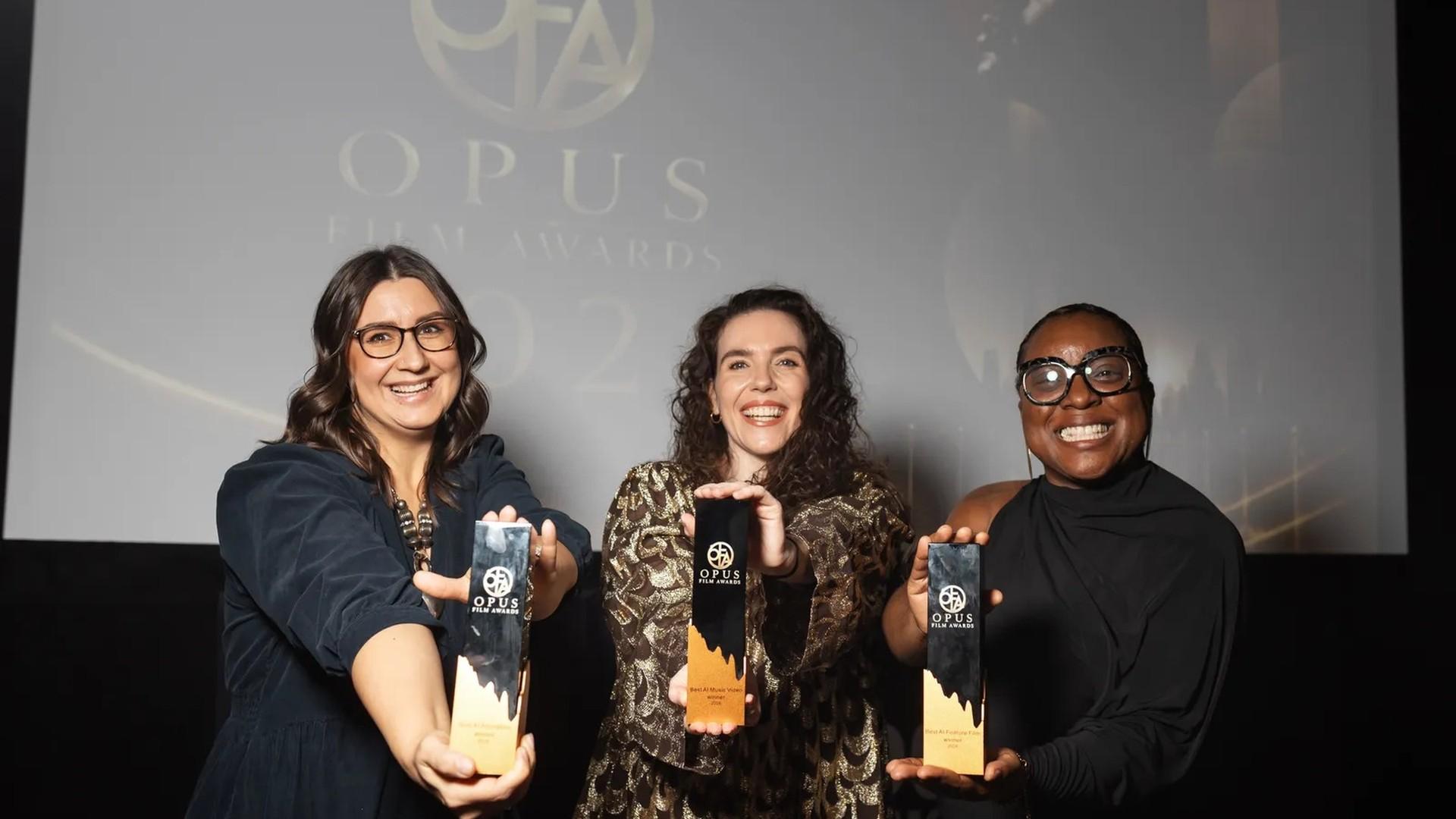
ICO's PRAY TO GACHA, a 22-minute Japanese AI animation, won the Grand Prix at the first OPUS Film Awards, held at London Film School on Saturday 14 November. Jiaze Li's Candy, which runs eight minutes and 59 seconds, won OPUS's Best AI Feature Film award, according to the festival's winners and nominee pages.
The two results are linked. PRAY TO GACHA was nominated for Best AI Feature Film and lost that category to Candy before the jury handed it the night's top prize. OPUS defines a feature as anything from 1 to 100 minutes, so the label is the festival's filing bin, not a description of the film. At new AI festivals, check the runtime and the rules before treating a feature laurel as a credential. Of the four write-ups we read (Latent Matinee, SoaplandTV, a recap account on X and the founder's own post), none mentions that the Grand Prix winner lost its category, and none states plainly that the winning film is not yet public.
How a 22-minute film lost the feature prize and won the night
The nominee pages list PRAY TO GACHA at 22:48 and Candy at 8:59. The other feature nominees ran 13:09 and 15:00, and one listed no runtime. None of the 54 nominees runs longer than 23 minutes. The awards and submit pages set the feature range at 1 to 100 minutes, and the terms say the jury picks the Grand Prix from films shortlisted across all categories, with no separate entry. So a film could lose its own category and still win overall, and that is what happened.
Candy had already been crowned elsewhere. It won the US$32,000 Grand Prize at the first Lumara Film Festival in New York on 26 October, according to a MoonPay release, and it is free to watch on YouTube. Li credits Seedance 2.5 with BytePlus in a post about the film. OPUS's terms allow films that have screened at other festivals, so London's feature award went to a film the circuit had already backed.
The Grand Prix winner is still unreleased
On Monday 16 November, ICO replied to a fan on X that the film could not be shown publicly yet and that people would be able to watch it a little later (our translation). Unplug, the Tokyo animation studio that produced it, posted the same day asking fans to wait a bit longer for the full release. A recap account has linked a five-minute version, which we have not reviewed. Its tools are not public either: OPUS required a tools disclosure from entrants but has not published it.
The film grew out of a character project that Unplug and ICO launched in May around ALO, a girl who loves capsule toys, with ICO as director and writer and Unplug chief executive Takashi Nakagawa sharing the original concept credit. Nakagawa told AdverTimes that a character IP suited to merchandise made more sense than video alone in a Japanese market where films are hard to monetize.
The full winners list
- Award: Grand Prix. Film: PRAY TO GACHA; Maker: ICO (@ICO_AIvideo), produced by Unplug; Runtime (OPUS page): 22:48
- Award: Best AI Feature Film. Film: Candy; Maker: Jiaze Li (@DiDi_OKK); Runtime (OPUS page): 8:59
- Award: Best AI Short Film. Film: The Walkers; Maker: Dj Marcelll (@djmarcelll); Runtime (OPUS page): Not listed
- Award: Best AI Animation. Film: THE SIESTA JOB; Maker: Tamara Llorens (@Tamara_Llorens); Runtime (OPUS page): 2:45
- Award: Best AI Anime Film. Film: Oni-Slaying Maiden; Maker: Ce Jiang; Runtime (OPUS page): 5:32
- Award: Best AI Documentary. Film: When You Run From Your Mom; Maker: Edmond Yang; Runtime (OPUS page): 5:00
- Award: Best AI Music Video. Film: Checkmate; Maker: Selina Schneider; Runtime (OPUS page): 1:38
- Award: Best AI Commercial. Film: Chicken Rider; Maker: Nick Tasker; Runtime (OPUS page): Not listed
- Award: Best AI Movie Trailer. Film: The Wind Before the Name; Maker: Mark Wachholz (@Magiermogul); Runtime (OPUS page): 3:00
- Award: Luminary Award. Film: Department of Good Memories; Maker: Caroline Kiessling; Runtime (OPUS page): 5:27
- Award: People's Choice. Film: Kakehashi (The Bridge); Maker: Luke Mazey (@slophouseco); Runtime (OPUS page): 2:03
Who runs OPUS and what winners get
OPUS was founded in May by Chanade Roberts, who also runs She Builds with AI, the initiative that presents the Luminary Award for women filmmakers. Entry cost GBP 25.50, or GBP 35.50 for the feature category, rising to GBP 35.50 and GBP 40.00 for late entries. Winners received a trophy, a certificate and a laurel, and we found no cash prize in the festival's listing or FAQ.
The organizer shortlists and the jury scores. In the festival's words, "Films are first shortlisted by the OPUS team, then reviewed and scored by our independent jury panel." The 12 listed jurors, chaired by Brice Weber and Phill Turner, are mostly working AI filmmakers, and we found none among the nominees. One link deserves disclosure: Best AI Short Film winner Dj Marcelll is a Certified Shaike Creator, and Shaike is OPUS's official platform partner. OPUS has not published jury scores, so that is context, not evidence of anything.
Where the numbers run thin
We counted the 54 nominees ourselves. The figure of 307 submissions comes only from Roberts's LinkedIn post, with no breakdown. Winners were also named in anime and documentary categories that the submit page never offered, while the July launch listing on Shaike described ten categories. We could not confirm how films landed there, and we did not contact OPUS. The ceremony itself moved from 12 to 14 November, and the rights and terms PDF still carries the old date.
What it means for AI creators
The first lesson is about laurels. An entrant pays a fee and gets a label whose meaning only the rules explain, so if you win a feature category with a nine-minute film, put the runtime next to the laurel and let it stand as a short award. Buyers and programmers read runtimes, and a credential that collapses on inspection costs more than it earns. The second lesson is about routes. The strongest film in the room came from an AI director working with a commercial animation studio on a character built to travel beyond the screen, while Candy shows the other path: one maker, one free upload, a Grand Prize in New York and a category win in London within three weeks. Both are open to creators now, and neither needed a feature-length runtime.
Our take
OPUS picked strong winners, but its labels need work. Until new AI festivals name categories by what the films are, creators should quote the runtime with the laurel.
Timeline
- Date: Mon 11 May 2026. Event: Unplug and ICO announce the PRAY TO GACHA character IP; Source: PR Times release
- Date: Wed 22 Jul 2026. Event: Shaike announces OPUS with a 12 November ceremony and ten categories; Source: shaike.ai
- Date: Sat 19 Sep 2026. Event: Regular entry deadline, moved from 5 September; late entries to 30 September; Source: OPUS terms
- Date: Sun 25 Oct 2026. Event: Nominees published; Source: OPUS program page
- Date: Mon 26 Oct 2026. Event: Candy wins the Lumara Grand Prize in New York; Source: MoonPay release
- Date: Sat 14 Nov 2026. Event: OPUS ceremony at London Film School; Source: OPUS event page
- Date: Sun 15 Nov 2026. Event: Founder posts the winners and the 307 submissions figure; Source: Chanade Roberts on LinkedIn
- Date: Mon 16 Nov 2026. Event: ICO and Unplug announce the Grand Prix; ICO says the film is not public yet; Source: ICO and Unplug on X
Sources and what is unconfirmed: OPUS winners, awards, submit, terms, event, program, jury, nominees, about and gallery pages and all 54 nominee pages, read 20 Nov 2026; OPUS rights and terms PDF; Chanade Roberts on LinkedIn, 15 Nov; ICO, Unplug, PRAY TO GACHA and Brice Weber on X, 16 Nov; PR Times, 11 May; AdverTimes, 30 Oct; MoonPay newsroom, 16 Oct; Shaike launch post and festival listing; Latent Matinee, 19 Nov, and SoaplandTV, 20 Nov, for comparison only. Unconfirmed: the 307 submissions figure, how the anime and documentary winners were chosen, whether ICO attended, the Grand Prix film's tools and release date, and which cut of The Walkers won. We did not contact OPUS or the makers.