Runway must face YouTube creators' download-lock lawsuit, a New York judge rules
Judge Lewis A. Kaplan refused to throw out a class action alleging Runway got around YouTube's download protections to train its video models. It is a pleading-stage ruling with no finding, no damages and no class, and it follows similar rulings against Snap and ByteDance while a key appeal is still pending.
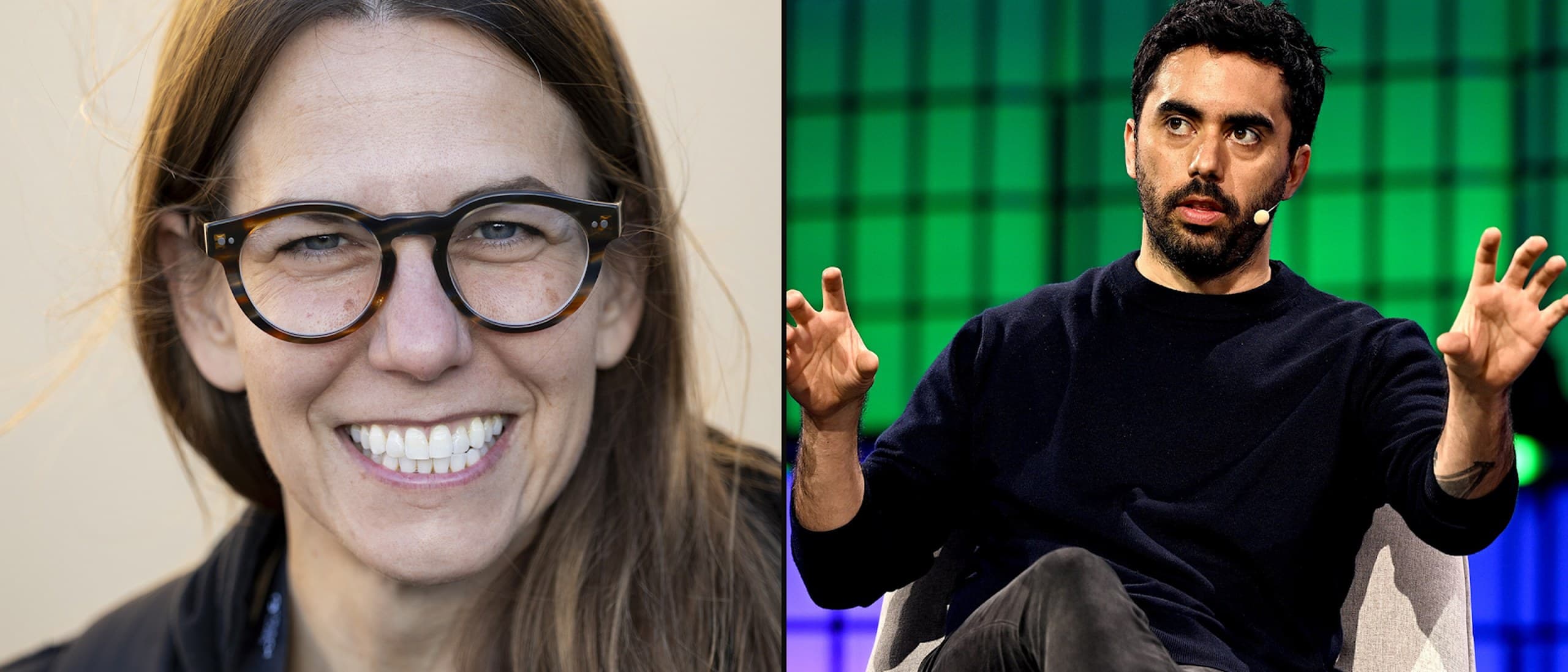
The Ali Spagnola channel on YouTube is a business, and the California company that owns it, Businessing LLC, says its videos appear extensively in the dataset Runway used to train its video models: at least 1,200 of them, scraped from YouTube. Random Golf Club, a Texas channel run by Ace Cam, Inc., says at least 390 of its videos went the same way. Neither has proved it yet, but on Friday 30 October they cleared the first wall.
In a 15-page opinion, Judge Lewis A. Kaplan of the Southern District of New York denied Runway's motion to dismiss their class action, Ace Cam and Businessing v Runway AI. The complaint has a single claim, so nothing was trimmed, and the whole case now moves on to Runway's answer and to discovery, the stage where each side has to hand over documents.
Not a copyright case, at least on paper
The suit doesn't accuse Runway of copyright infringement. It relies on the anti-circumvention rule in the Digital Millennium Copyright Act, section 1201(a), which makes it unlawful to get around a technological measure that controls access to a work. The plaintiffs point to five such measures on YouTube, which the court calls technological protection measures (TPMs): a rolling cipher that hides the real file location, IP blocking and rate limits, session-bound URLs that expire, CAPTCHA challenges, and proof-of-origin tokens (digital tags that check each request comes from YouTube's own player).
According to the complaint, Runway or people working for it beat those measures with tools such as yt-dlp, a popular open-source downloader, and rotated through IP addresses to avoid being blocked. All of that is allegation. The order itself says that at this stage the court "assumes the truth of all well-pleaded factual allegations in the complaint," which is a long way from a finding that any of it happened.
The choice of law matters to working creators. Most YouTube videos are never registered with the Copyright Office, and registration normally comes before an infringement suit. The plaintiffs argue that section 1201 is different, a right that "neither requires copyright registration nor is answered by a fair-use defense." That is their strategy, and a smart one, since fair use is the ground AI companies have been holding. Kaplan's opinion doesn't mention fair use at all, so nobody should read it as a ruling that the fight has been skipped.
Runway's best argument, and why it failed for now
Runway's core point was simple. Anyone can watch these videos on YouTube for free, so there's no locked door to pick, and the five measures are at most copy controls that stop downloading, not access controls that the statute covers. Its lawyers at Orrick also warned that the plaintiffs' reading would let the DMCA undercut fair use, invoking congressional intent that the DMCA "not override the fair use defense."
Kaplan was not persuaded, and his key line is this: "The public nature of content that has been uploaded to YouTube does not render it unprotected because the public's viewership of the content necessarily is subject to YouTube's TPMs." He found the plaintiffs had "plausibly" alleged that Runway's "bulk download activity bypassed at least one of YouTube's TPMs." He also accepted that creators don't have to install the measures themselves. By uploading, the complaint says, creators "affirmatively authorize YouTube to act as their platform and to deploy the TPMs that protect their content," and that was enough at this stage.
There is a wrinkle Runway will press later. The plaintiffs' own complaint says the case "does not concern ordinary viewing or downstream copying of publicly available content," and in a letter on Thursday 15 October Runway told the judge the plaintiffs had "affirmatively disclaimed" any theory that ordinary viewing is gated. Kaplan's reasoning leans on allegations that viewing itself runs through YouTube's measures. Expect that tension to come back when the evidence is in.
Not the first, and that is the real story
It would be easy to call this the first big training-data case against a filmmaker-facing video model to survive dismissal, but it isn't. On Wednesday 19 August a federal judge in Los Angeles denied Snap's motion to dismiss a suit built on the same claim and the same five YouTube measures. On Friday 2 October a judge in San Francisco denied ByteDance's motion in full, according to the plaintiffs' letter to Kaplan quoting that order. ByteDance makes Seedance, a model plenty of AI filmmakers use. Kaplan's opinion cites neither ruling.
What's new is where this one landed. Kaplan sits in Manhattan, inside the Second Circuit, and Runway is a pure AI video company whose tools sit in a lot of AI filmmakers' workflows. He also ruled while the Second Circuit is still deciding Yout v. RIAA, an appeal about whether YouTube's measures count as access controls at all. Kaplan relied on the lower-court decision in that case. If the appeals court rules the other way, it could undo the reasoning here and in the cases that followed it.
What the order doesn't say
The opinion names no Runway model. The idea that this is about Gen-3 traces back to 404 Media's July 2024 report on a leaked internal spreadsheet of YouTube channels, and at the time co-founder Anastasis Germanidis told TechCrunch the company trains on "curated, internal datasets." The consolidated complaint is wider than Gen-3 and lists Gen-2, Gen-3, Gen-3 Alpha, Gen-3 Turbo, Gen-4 and Gen-4.5. Citing that 404 Media report, it says the spreadsheet covered about 3,968 YouTube channels and more than 100,000 videos.
The order says nothing about damages either. The statute allows a court to award between $200 and $2,500 per act of circumvention, at its discretion, and no class has been certified, so any arithmetic on a payout would be invented. Runway raised $315 million at a reported $5.3 billion valuation in February, per TechCrunch. We found no public statement from Runway on the ruling and no reaction to it on X in a search of the past seven days.
What it means for AI creators
For most readers this case cuts both ways, because many of them are on both sides of it. The plaintiffs are working YouTubers whose back catalogs are their business, and the defendant makes one of the tools those same kinds of creators use to make new work. Here is how it lands on each side.
- Nothing changes for anyone using Runway today. This is a pleading-stage ruling with no injunction, no finding against the company and no class certified.
- The most important line for anyone who uploads is the authority point: the court accepted, for now, that a creator posting to YouTube can rely on YouTube's own measures without installing anything.
- YouTube has offered creators an opt-in setting for third-party AI training since December 2024, off by default, and Runway was on its list of companies, according to The Verge. The original complaint raised that setting, but the consolidated version dropped it, so it is context rather than part of the live case.
- The next real signals are Runway's answer, what discovery turns up about where the training footage came from, and the Second Circuit's ruling in Yout.
Our take
The useful fight here isn't creators against the tools. It's whether the companies building video models will say where their footage came from and ask, or pay, before taking it. Three judges have now let that question go forward. Runway can answer it in court, or it can answer it in public for the creators who pay for its product, and only the second builds any trust.
Timeline
- Date: Thu 25 Jul 2024. Event: 404 Media reports a leaked Runway spreadsheet of YouTube channels tied to Gen-3 training; Source: 404 Media; complaint paras 74-79
- Date: Mon 16 Dec 2024. Event: YouTube launches its opt-in third-party AI training setting, off by default, with Runway on the list; Source: The Verge
- Date: Wed 18 Feb 2026. Event: First complaint filed in the Southern District of New York; Source: CourtListener docket, Dkt. 1
- Date: Fri 27 Mar 2026. Event: Cases consolidated; Milberg and EKSM named interim co-lead class counsel; Source: Dkt. 26
- Date: Mon 27 Apr 2026. Event: Consolidated class action complaint filed; Source: Dkt. 33
- Date: Wed 27 May 2026. Event: Runway moves to dismiss; Source: Dkt. 34, 35
- Date: Wed 19 Aug 2026. Event: Snap's motion to dismiss the same claim denied in Los Angeles; Source: Ted Entertainment v. Snap, C.D. Cal., Dkt. 70
- Date: Fri 2 Oct 2026. Event: ByteDance's motion denied in full in San Francisco; Source: Plaintiffs' letter, Dkt. 56
- Date: Thu 15 Oct 2026. Event: Runway letter argues the plaintiffs disclaimed the viewing theory; Source: Dkt. 58
- Date: Fri 30 Oct 2026. Event: Judge Kaplan denies Runway's motion to dismiss; Source: Dkt. 61
- Date: Sun 1 Nov to Mon 2 Nov 2026. Event: First reports, from a class-action site and Law360; Source: OpenClassActions; Law360
Sources and what is unconfirmed: Memorandum Opinion, Ace Cam, Inc. and Businessing LLC v. Runway AI, Inc., No. 26-cv-1362 (LAK), S.D.N.Y., Dkt. 61, 30 Oct 2026, read in full; consolidated complaint (Dkt. 33), original complaint (Dkt. 1), Runway's motion and reply (Dkt. 35, 42), plaintiffs' opposition (Dkt. 41) and docket letters (Dkt. 39, 40, 56, 58), all via CourtListener; Ted Entertainment v. Snap, C.D. Cal., Dkt. 70, 19 Aug 2026; 17 U.S.C. 1201 and 1203; 404 Media, 25 Jul 2024 (attributed, body paywalled); The Verge, 16 Dec 2024; TechCrunch, Feb 2026. Unconfirmed: the ByteDance order itself (read only as quoted by the plaintiffs); the contents of two docket letters filed 28 and 29 Oct, which are not public; Runway's response. Law360's story is paywalled and was not read beyond its summary.