SAG-AFTRA's CEO says if it sounds like you, it's a replica, whatever the percentage says
At Web Summit, SAG-AFTRA's Duncan Crabtree-Ireland guessed that 10 to 15 percent of about 160,000 members want AI blocked, a figure no survey backs. Beside a likeness-detection vendor, he set the clearer rule: a voice or face that reads as you is a replica, whatever percentage a detector reports.
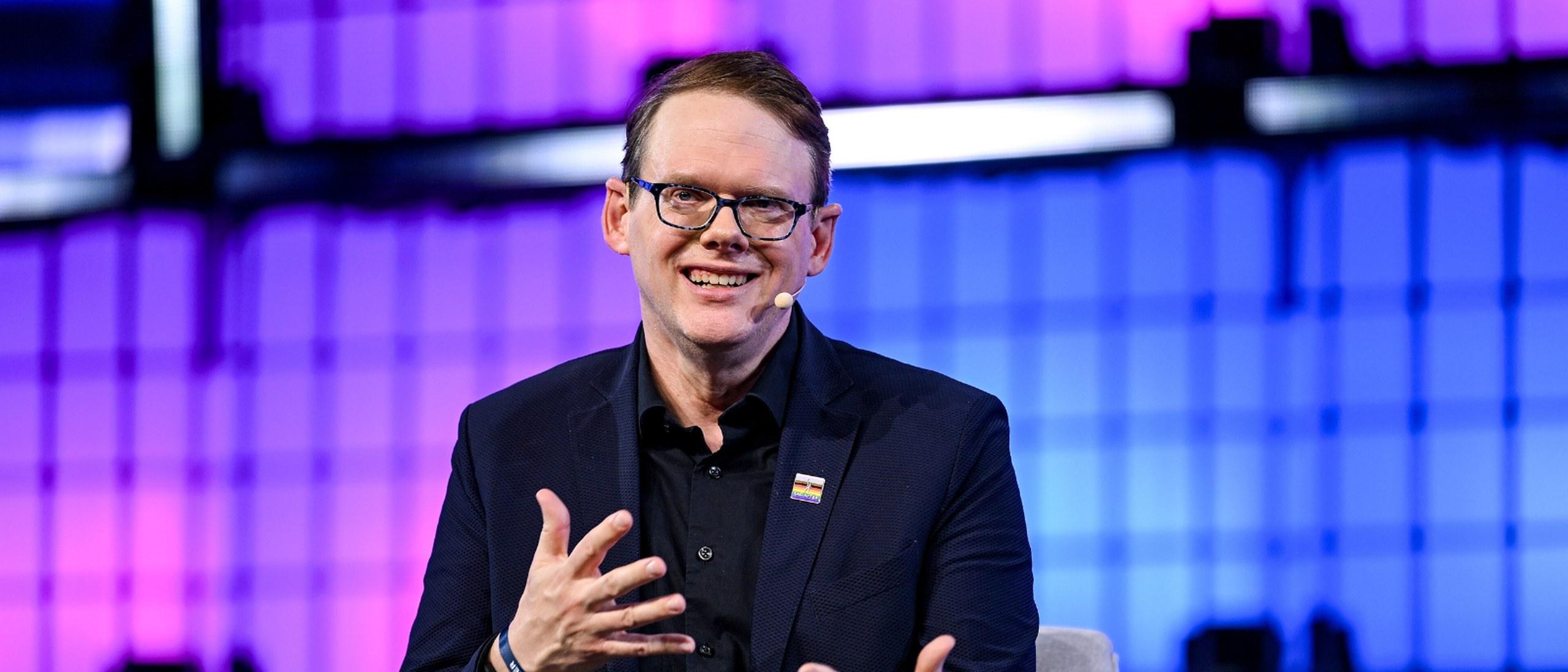
SAG-AFTRA's CEO, Duncan Crabtree-Ireland, estimated on Thursday 12 November that "something like 10 percent, maybe 15 percent" of the union's roughly 160,000 members want AI blocked outright. Speaking on Web Summit's Centre Stage in Lisbon beside Dan Neely, CEO of likeness-licensing company Vermillio, he said the union's course is to coexist with AI under basic rules.
The line that matters for creators came later. When Neely described his company's detector scoring a voice as "maybe 30 percent Duncan's voice, 30 percent of my voice and 40 percent original," Crabtree-Ireland answered with a simpler test: "If it is going to be perceived as your voice, if it clearly sounds like you or if it looks like you ... then that is a replica." The union's 2026 contract and the stalled federal NO FAKES bill both use the same recognizability test, so a similarity score cannot make a soundalike safe. Most coverage led with the percentage instead, and that is the softest number in the story.
A guess, not a poll
The estimate answered the moderator's question about what share of members would like AI completely obstructed. Crabtree-Ireland framed it himself: "If I were estimating." No survey sits behind it. Before the number came, he described the mood in blunter terms: "Some of our members would like us to block it. I hear from them every day, and they're angry that we aren't."
The only measured member sentiment on the AI terms is contract ratification. The 2023 deal that ended the 118-day strike passed with 78.33% yes on 38.15% turnout. The 2026 deal, which widened the AI rules, passed on 4 June with 91.42% yes on 19.25% turnout. Both votes covered pay and health plans too, so neither settles his figure. One post on X has already turned the remark into a claim that the overwhelming majority of members do not want AI blocked. He did not say that, and the numbers do not show it.
No video of the session has surfaced, so we have not heard the audio; every quote here comes from the one detailed trade report of the panel. The 160,000 figure is the union's round number, and the live count may be lower after it began dropping members in dues arrears in late October.
The test on paper
The union's 2026 TV and theatrical agreement, which runs to 30 June 2030, treats an independently created digital replica as one "recognizable as the voice and/or likeness of an identifiable natural performer." Producers need that performer's consent and must bargain over the use. A separate rule for AI synthetic performers, in force for productions starting on or after 1 July, requires consent when a prompt names a performer and also asks for one of their recognizable facial features.
The NO FAKES Act of 2026 uses nearly the same words: a replica is "readily identifiable as the voice or visual likeness of an individual." It would create a federal right with notice-and-takedown and exceptions for news and parody. It cleared the Senate Judiciary Committee on 18 June, but Sen. Ted Cruz blocked a fast-track vote on 30 September, and it is not law.
Crabtree-Ireland's example was Scarlett Johansson and the "Sky" voice OpenAI paused in May 2024: "They did not admit that her voice was used, but it sure sounded a lot like her." OpenAI has said Sky was a different actor. Under a perception test, that defense matters less.
The other chair on the stage
Vermillio sells detection and licensing to studios, labels, publishers and talent, and raised a $16 million Series A led by Sony Music and DNS Capital in March 2025. We found no partnership between the company and SAG-AFTRA; the pairing was the conference's programming. Neely's case for his product is fair on its own terms: "We've developed a technology that allows us to detect when unauthorized uses happen." A score helps a rights holder find a likely soundalike.
Where the two men split is what the score means. Neely's 30, 30 and 40 split was a hypothetical, and he said the field expects much more clarity within 12 months. Crabtree-Ireland's answer suggests the union will not wait for a percentage. Neely's own diagnosis of the misuse market points the same way: people attach new work to "something that already has fandom and fame," which is exactly the recognition the union's test turns on.
What it means for AI creators
- A real actor's soundalike voice or lookalike face carries the risk in any workflow, whatever a detector reports, because the contract and the bill both ask whether people recognize the performer.
- The union's own CEO separates tools from replacement: "Some of our members really want to work with AI tools for augmentation, but none of them want to be replaced by AI because they love the act of creation."
- The fear of being replaced is shared by performers and many AI creators alike, and consented, paid replicas answer it for both: a clean consent and payment record is what makes an AI creator hireable by studios and brands.
Our take
The percentage was a shrug, and the trades made it the headline. The real news is that the union's CEO told a likeness vendor, on stage, that recognition beats math. For AI creators that is good news: the rule is simple, and anyone who casts with consent and pays for real voices is already on the right side of it.
Timeline
- Date: Tue 5 Dec 2023. Event: SAG-AFTRA ratifies the deal that ended the 2023 strike: 78.33% yes, 38.15% turnout; Source: SAG-AFTRA via trade reports
- Date: Mon 20 May 2024. Event: OpenAI pauses its Sky voice after questions over its likeness to Scarlett Johansson; Source: OpenAI; trade reports
- Date: Mon 3 Mar 2025. Event: Vermillio raises a $16 million Series A led by Sony Music and DNS Capital; Source: Vermillio release
- Date: Wed 20 May 2026. Event: NO FAKES Act of 2026 introduced in the Senate as S.4591; Source: Congressional record
- Date: Thu 4 Jun 2026. Event: SAG-AFTRA ratifies the 2026 TV and theatrical deal: 91.42% yes, 19.25% turnout; Source: SAG-AFTRA via trade reports
- Date: Thu 18 Jun 2026. Event: Senate Judiciary Committee orders the NO FAKES Act reported; Source: Legal trackers
- Date: Wed 1 Jul 2026. Event: Synthetic performer consent rule applies to new productions; Source: 2026 SAG-AFTRA agreement
- Date: Wed 30 Sep 2026. Event: Sen. Ted Cruz blocks a unanimous-consent vote on NO FAKES; Source: Legal trackers
- Date: Thu 12 Nov 2026. Event: Crabtree-Ireland and Neely share Web Summit's Centre Stage in Lisbon; Source: Web Summit schedule; trade report
Sources and what is unconfirmed: the one detailed trade report of the Web Summit session, 12 Nov 2026; the Web Summit session page and schedule; the 2026 SAG-AFTRA TV and theatrical memorandum of agreement, Sections 64 and 64.1; the NO FAKES Act of 2026 as introduced; Senate status from legal trackers; ratification results from the union via trade reports; Vermillio's funding release, March 2025. We did not hear the session audio, and every quote is the trade report's text. Web Summit's own session summary is AI-generated and is not quoted. The 10 to 15 percent figure is Crabtree-Ireland's estimate, not a survey. We did not contact SAG-AFTRA or Vermillio.