Seedance now earns half its money outside China, insiders say. Its boss still calls film a sideline
Half of Seedance revenue now comes from outside China and overseas sales grew nearly fivefold in six months, according to people close to Volcano Engine. The claim rests on one briefing with no base or dollar figure. In June, president Tan Dai said overseas usage was already near half and called film a small scenario for the model.
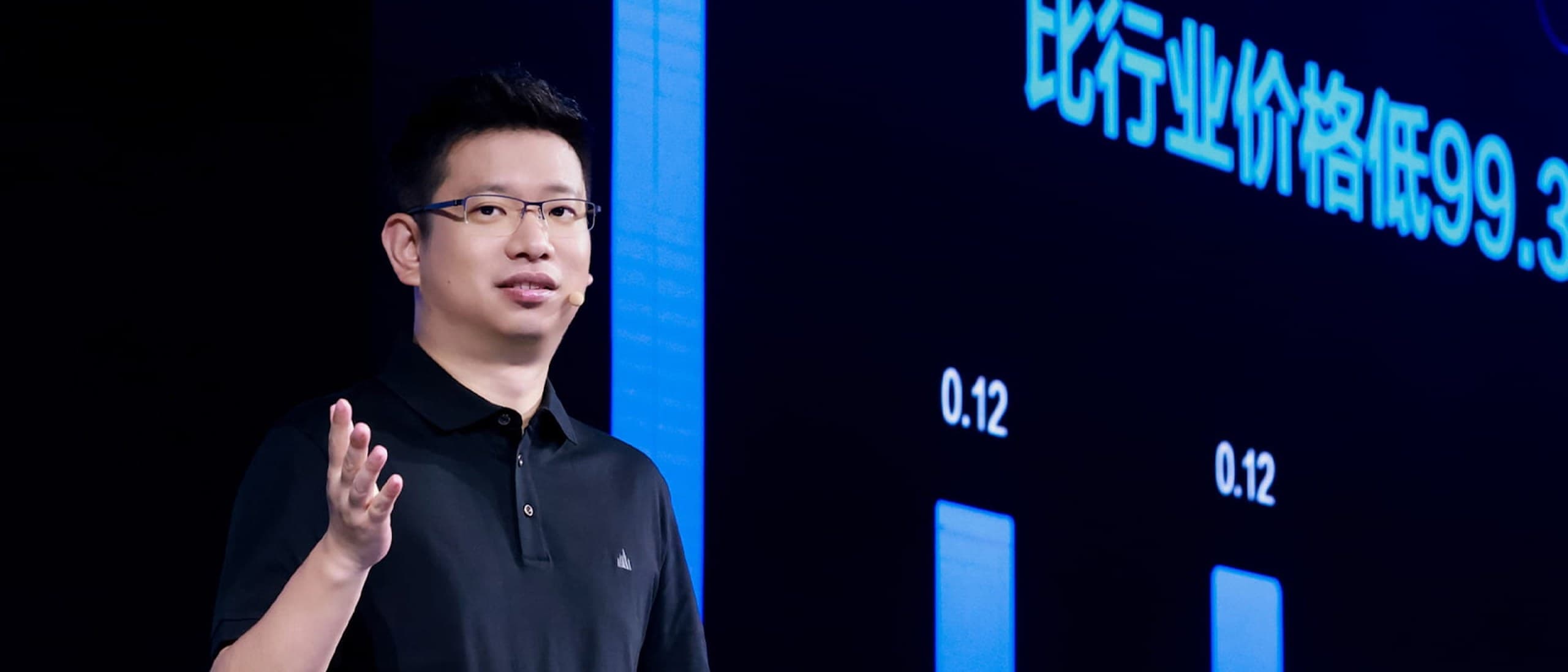
On Tuesday 23 June, at Volcano Engine's FORCE conference in Beijing, the ByteDance cloud unit's president Tan Dai was asked about a number that had been going around for weeks: that Seedance 2.0 was bringing in more than RMB 1 billion a month, about $2 billion a year. He laughed it off and said every Seedance revenue figure circulating outside the company was wrong, and too high, he said, according to Chinese coverage of the session (our translation), and he asked people to stop repeating them because finance was asking him every day whether he was hiding numbers.
Four months later, people close to his company have put a number out after all, though not an absolute one. On Tuesday 3 November, 36Kr's tech desk Intelligent Emergence reported, citing "people close to Volcano Engine," that overseas markets now account for 50% of Seedance revenue and that overseas revenue has grown nearly five times in the past six months. ByteDance has not commented on the record. If the figure holds, the best-known Chinese video model now earns as much from creators, developers and companies outside China as it does at home, while the man who runs it keeps saying film and drama are not the main event.
One briefing, four headlines
36Kr published at 16:28 Beijing time. Yicai followed at 18:43 citing "industry insiders," The Paper at 20:19, and NBD in its morning brief on Wednesday, each with the same three facts in the same order, and Jiemian's version credits NBD. That pattern reads as one briefing that reached several newsrooms, not four separate confirmations. Yicai said Tencent did not respond to its request for comment.
Nothing in the briefing gives an absolute revenue figure, a base month for the fivefold growth or a definition of overseas, which could mean developers buying API access (paying per use through code) on BytePlus, ByteDance's international cloud, or subscribers to CapCut and Dreamina, or both. The other claims sit in the same box. Insiders told 36Kr that Tencent, which runs its own Hunyuan video model, is a top-three Seedance customer in China by token use and revenue, and that Bilibili is in the top ten. Neither company has confirmed it. Customers from manufacturing, retail, healthcare, energy and other traditional industries are said to make up more than a quarter of the customer count, which is a head count rather than a share of the money.
The fivefold number needs a base
The weakest figure is the growth multiple. Six months back puts the starting point in early May, when Seedance 2.0 was still finding its feet abroad. The Information reported in March, as relayed by TechCrunch, that ByteDance had paused the model's global launch over IP concerns. CapCut began a phased rollout in seven markets, including Brazil, Indonesia and Mexico, on Thursday 26 March, and US users got access in early April. Growth of nearly five times from a ramp-up period tells you the model took off outside China. It doesn't tell you how big that business is.
The 50% share is easier to believe, partly because Tan Dai said something close to it himself. In the same June session he told reporters that more than a third of Seedance usage was overseas and that it "should be close to half" by then, again in our translation. So the November number is less a surprise than a sequel: usage reached roughly half by summer, and now people near the company say revenue has caught up.
What the reports added on their own
36Kr credits the overseas growth to ByteDance's deals with Hollywood rights holders, and part of that history is real. After Seedance 2.0 launched in February and clips of Tom Cruise fighting Brad Pitt went viral, Disney and Paramount sent cease-and-desist letters and the Motion Picture Association accused ByteDance of disregarding copyright law. On Monday 17 August the MPA and ByteDance signed a memorandum of understanding. MPA chief executive Charles Rivkin said the two sides had spent months working "to implement meaningful guardrails on Seedance and Seedream," and ByteDance general counsel John Rogovin said "responsible innovation in AI goes hand in hand with meaningful protections for rightsholders."
The order in 36Kr's account is off, though. It says the MPA recognized ByteDance's progress later, with the release of Seedance 2.5. Seedance 2.5 came out on Friday 31 July, before the memorandum, and Variety reported that the agreed protections were already reflected in that release. The second deal 36Kr cites, the short-form content-sharing agreement Disney and TikTok announced on Wednesday 5 August, lets creators use clips from Disney films and shows for TikTok and Disney+ Verts, and the Disney release never mentions AI or Seedance. The link between those deals and the revenue is the outlets' own inference, and no source is quoted for it.
Jiemian also set the story against Kuaishou's Kling, whose second-quarter revenue topped RMB 850 million, about $118 million, according to Kuaishou's results, with roughly 70 to 75% of it from overseas on figures attributed to the company. Jiemian's claim that Kling is smaller than Seedance has no source, and with Seedance revenue undisclosed there is no honest way to rank the two.
Creators pay the bill, the roadmap points at factories
Here is the tension in the story. Tan Dai said in June that film and short drama "may only be a small scenario" for Seedance in the long run, and that he would rather see the model inside industrial production: manufacturers making multilingual product videos, robotics companies generating synthetic training data, self-driving firms simulating bad weather. The 36Kr report repeats that pitch, adds that Seedance 2.5 was built to push further into those industries, and says Volcano Engine set up a team of forward-deployed engineers this year to sell it into autos and healthcare.
Yet the overseas half that grew fastest is where independent creators work: CapCut and Dreamina subscribers, small studios, and developers who reach the model through BytePlus or third-party hosts such as fal, Replicate and OpenRouter. BytePlus's own terms say its model services are not available in the United States, so American makers mostly come in through apps and resellers, and a large part of the overseas half is probably Southeast Asia, Latin America and the Middle East rather than Los Angeles. On the day of the report, several resellers on X were advertising discounted access to an overseas Seedance API aimed at AI drama studios, a small sign of where some of that demand sits.
What it means for AI creators
- The 50% is reported, not confirmed. Nobody at ByteDance has put their name to it, and there is no dollar figure behind it, so it doesn't belong in a pitch deck as fact.
- Revenue is leverage for the people paying it. If makers outside China really pay half the bill, regional pricing, access in markets like the US and English-language creator programs are the things to watch and to ask for.
- The MPA guardrails live inside the model you prompt. Rivkin's stated aim is to further fortify them, so prompts that brush against studio characters and famous faces are likely to get tighter, not looser.
- Kling and Seedance are both chasing the same overseas spend. That competition is the best protection creators have on price, which is a reason to keep workflows portable between models.
Our take
Our take: ByteDance's president calls film a small scenario while, by his own insiders' account, people making videos abroad now pay for half of Seedance. The customers funding that growth have earned pricing, access and product attention to match, and they should expect the company to show it.
Timeline
- Date (2026): Thu 12 Feb. Event: Seedance 2.0 launches in China; the Cruise vs Pitt clip goes viral; Source: Variety; availability guides
- Date (2026): 13 to 23 Feb. Event: Disney and Paramount send cease-and-desist letters; the MPA condemns ByteDance and sends its own letter; Source: Variety; LA Times
- Date (2026): Sun 15 Mar. Event: Report that ByteDance paused the global launch over IP concerns; Source: The Information via TechCrunch
- Date (2026): Thu 26 Mar. Event: Phased CapCut rollout begins in seven markets; Source: TechCrunch
- Date (2026): Early Apr. Event: Seedance 2.0 reaches US users; Source: Third-party availability guide (not checked against a ByteDance post)
- Date (2026): Tue 23 Jun. Event: FORCE: Tan Dai says overseas usage is near half, calls revenue rumors too high, calls drama a small scenario; Source: Jiemian transcript; Sina/TechWeb
- Date (2026): Fri 31 Jul. Event: Seedance 2.5 released in China; BytePlus API follows; Source: PingWest; BytePlus
- Date (2026): Wed 5 Aug. Event: Disney and TikTok short-form content-sharing deal (no AI in the release); Source: Disney release
- Date (2026): Mon 17 Aug. Event: MPA and ByteDance sign a memorandum of understanding on IP guardrails; Source: Variety; MPA
- Date (2026): Tue 3 Nov. Event: 36Kr exclusive: overseas is 50% of revenue, up nearly 5x in six months; same-day restatements; Source: 36Kr; Yicai; The Paper; NBD; Jiemian
Sources and what is unconfirmed: 36Kr Intelligent Emergence, Zhang Yuxin, 3 Nov 2026 (English and Chinese); Yicai, 3 Nov 2026; The Paper and NBD restatements; Jiemian, 3 Nov 2026, and its 23 Jun interview transcript with Tan Dai; Sina/TechWeb, 23 Jun 2026; Variety, Corbin Bolies, 17 Aug 2026; Disney release, 5 Aug 2026; TechCrunch, 15 and 26 Mar 2026; Kuaishou second-quarter results, 19 Aug 2026; BytePlus terms. Unconfirmed: the 50% share, the fivefold growth and its base, the Tencent and Bilibili customer rankings, and the outlets' link between the Hollywood deals and the revenue. Tan Dai's remarks are our translation of Chinese coverage. Dollar conversions use about RMB 7.2 to the dollar. ByteDance did not comment on the report.
Your Voice
Cost of training and running any LLM or image/video model from scratch will always be higher than revenue you generate in the start.
There’s literally no better ecosystem to train AI video model than Bytedance
For 7 months, I poured thousands into Grok Imagine and Seedance for X and YouTube.
Quoted from public posts on X and credited by handle. If one of these is yours and you want it removed, message @the__generated on X and it comes down.
Got something to say? Tag @the__generated on X