Disney's former AI executive now runs product at Utopai, a studio that also sells its engine to filmmakers
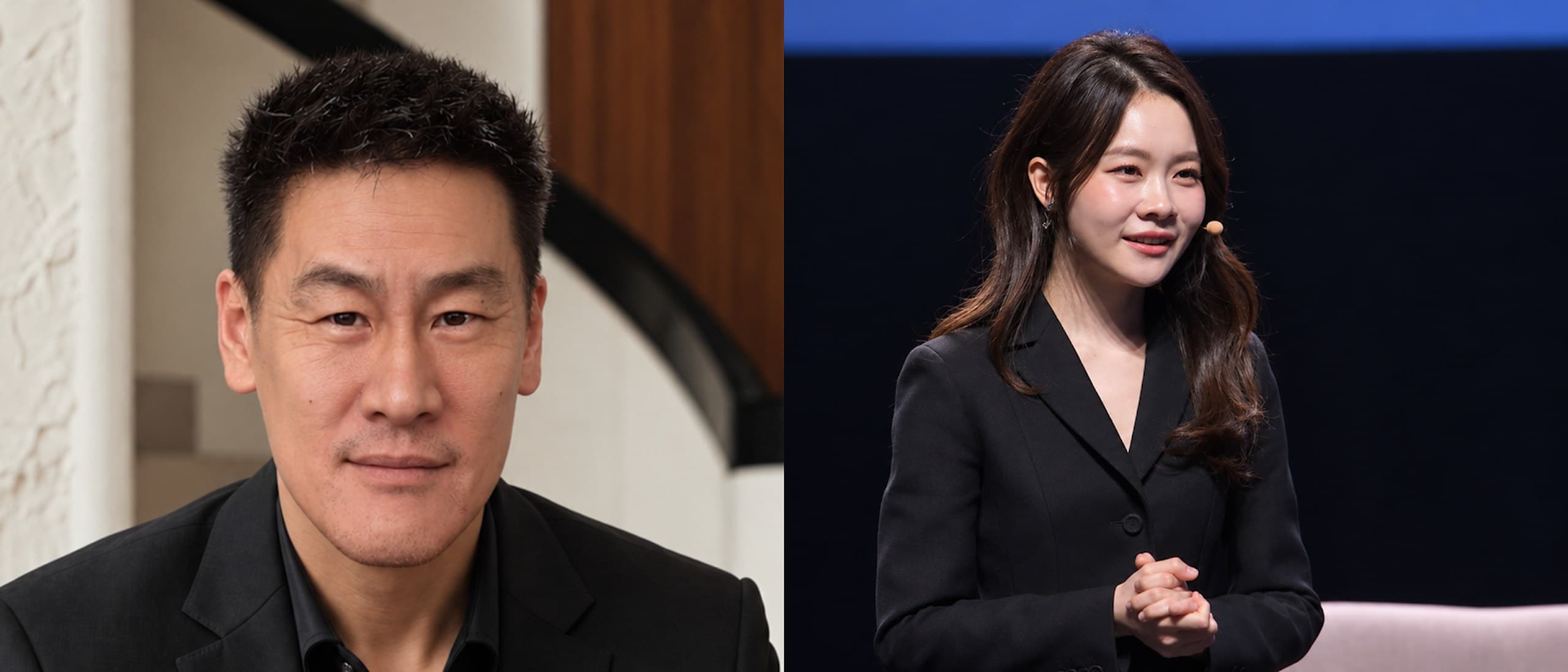
Hans Ku, Disney's vice president of AI and engineering, is now chief product officer at Utopai Studios, running the PAI platform the studio sells to outside filmmakers. The release credits him with a leadership role in Disney's Sora deal, which never closed, and the model inside PAI is built on MiniMax H3 with no public API.
Only one reader asked a real question under Variety's post about Hans Ku, and it was the right one: "Does Utopai make tools other filmmakers can use?" By Tuesday morning the post had about 13,000 views, and that reply had no answer.
The answer is yes, and it's the most useful part of this hire. Utopai Studios named Ku its chief product officer on Monday 2 November. He arrives from The Walt Disney Company, where he was vice president of AI and engineering in the Office of Technology Enablement, a job his LinkedIn dates to April 2025. At Utopai he reports to CEO and co-founder Cecilia Shen and runs product, engineering, research and business development, including PAI, the AI production platform the company uses on its own films and sells to everyone else.
Deadline had the news first at 9:08am Pacific, the BusinessWire release followed ten minutes later and Variety posted at 9:48am. All three carry the same two statements word for word, and nobody has interviewed Ku. So this piece checks the release against the record, then looks at the product he now runs.
The Sora credential
Shen's statement credits Ku with "helping lead Disney's collaboration with OpenAI on Sora," and the release says he played a leadership role in it. The collaboration was real, but it never shipped. Disney and OpenAI announced it on Thursday 11 December 2025, licensing more than 200 Disney, Marvel, Pixar and Star Wars characters for Sora alongside a $1 billion Disney equity investment in OpenAI. On Tuesday 24 March 2026 OpenAI said it was shutting Sora down, a Disney insider told Deadline that "the deal is not moving forward," and Axios reported that no money ever changed hands.
Variety describes his part more modestly: he "helped connect Disney and OpenAI team members" during what it calls a short-lived deal. Disney hasn't said anything about his role. The headline credential on this hire is a partnership that never closed, described by the company that just hired him.
His older credits hold up better, with one correction. At Walt Disney Feature Animation he created Creation Station, a paperless drawing and animation system for traditional artists moving to digital. At DreamWorks Animation he "conceived and launched" the DreamColor color-critical display with HP, which won an Academy Scientific and Engineering Award in 2015. Deadline wrote that the display "netted him" that award, but the recognized developers were four HP engineers, John Frederick, Bob Myers, Karl Rasche and Tom Lianza. The display won the plaque, and Ku's name isn't on it.
The engine is already for sale
Most coverage treats Utopai as a studio with a slate, led by Cortés with Antonio Banderas. That film is live action made with what Utopai calls AI-enabled production tools, not an all-AI feature. The other half of the company is a software business, and that is the half Ku now runs.
PAI opened to the public on Thursday 5 March 2026. At launch it handled up to 16 shots in one narrative flow, outputs up to a minute long and resolution up to 4K, with revisions made in plain-language direction rather than by restarting a sequence. When PAI 2.0 arrived on Tuesday 2 June, Utopai offered existing users a reduced subscription rate to switch and said it was targeting marketing agencies and creators making their own video. It also says PAI reached $11 million in annual recurring revenue in its first 60 days, a company figure nobody has audited.
Ku's own statement is pitched straight at that customer: "My focus is on building PAI alongside filmmakers, giving them better tools to explore ideas, refine their work, and bring their creative vision to the screen while keeping creative decisions in their hands." He also described the loop the company is selling: "We can take what we learn from real productions, turn those lessons directly into better products and workflows, and then bring those capabilities to filmmakers and studios around the world."
Whose model is it
The model inside the new PAI is Utopai X, launched on Wednesday 30 September. On Artificial Analysis's text-to-video with audio leaderboard, read on Tuesday morning, it sits second with an Elo score of 1168, six points behind Wan 3.0, and its rank range runs from first to fifth. In third place, inside that same range at 1162, is MiniMax H3. That matters because Utopai's own blog says Utopai X "builds on MiniMax H3 through post-training," adding production data and the judgments of its directors and artists.
Utopai calls Utopai X the highest-ranked model from a US-based company on that board. That's accurate about the company, and it leaves out that the base model comes from a Shanghai lab. The leaderboard also lists it with no API (no way for developers to call the model from their own software), so the only way to use it is inside PAI, on Utopai's terms.
Money is the other unconfirmed piece. Deadline and Variety both mention $60 million raised at a $1 billion valuation, a figure The Information reported on Thursday 22 October from someone close to the company, and Utopai hasn't announced it.
The timing will invite a story the facts don't support yet. On the same evening Bloomberg reported that Disney is preparing thousands more layoffs, with some managers asked to find 20% savings. Nothing connects Ku's exit to those cuts, and one executive changing jobs isn't evidence of talent draining from the majors to AI studios.
What it means for AI creators
For anyone choosing where to build a workflow, the hire is mostly a signal about priorities. A Disney executive whose job was moving AI tools into a very large company is now in charge of a product that wants your subscription.
- PAI is a closed platform built on a post-trained open model. Its quality is competitive on blind tests, but you can't call it from your own pipeline, and its nearest rival on that board is the model it was built from.
- Utopai is both a studio and a vendor, so its own productions are the first customers for every feature. Ku says real productions will shape the product, and it's worth watching whether outside filmmakers get the same tools on the same terms.
- The company's numbers, from the $11 million in recurring revenue to the reported $1 billion valuation, are its own or anonymously sourced. Judge PAI on the shots it gives you, not the press release.
Our take: a studio that sells its engine to independents can be a genuine ally, but only if the people renting it get the same tools the house productions get. Ku has promised to keep creative decisions in filmmakers' hands, and now he has to prove it in the product.
Timeline
- Date: Sat 7 Feb 2015. Event: Academy Sci-Tech award for the HP DreamColor display, to four HP engineers; Source: AWN; Oscars.org
- Date: Apr 2025. Event: Ku joins Disney (LinkedIn start date); Source: Hans Ku, LinkedIn
- Date: Thu 11 Dec 2025. Event: Disney and OpenAI announce the Sora licensing deal and a $1 billion investment; Source: Disney via Ars Technica
- Date: Thu 5 Mar 2026. Event: Utopai opens PAI to the public; Source: Utopai; TestingCatalog
- Date: Tue 24 Mar 2026. Event: OpenAI says it will shut Sora; the Disney deal is not moving forward; Source: Ars Technica; Deadline
- Date: Tue 2 Jun 2026. Event: PAI 2.0; Utopai claims $11 million in recurring revenue in 60 days; Source: Variety
- Date: Wed 30 Sep 2026. Event: Utopai X launches with the new PAI; Source: Utopai blog
- Date: Thu 22 Oct 2026. Event: The Information reports $60 million raised at a $1 billion valuation; Source: Benzinga summary
- Date: Mon 2 Nov 2026, 9:08am PT. Event: Deadline reports Ku's appointment as chief product officer; Source: Deadline
- Date: Mon 2 Nov 2026, evening. Event: Bloomberg reports Disney is planning more layoffs; Source: Deadline; Reuters
Sources and what is unconfirmed: Utopai Studios release via BusinessWire, 2 Nov 2026; Deadline (Dade Hayes) and Variety (Corbin Bolies), 2 Nov 2026; AWN and the HP release on the 2015 Sci-Tech award; Ars Technica and Deadline, 25 Mar 2026; Utopai's news page and blog; Artificial Analysis text-to-video leaderboard, read 3 Nov 2026; Variety, 2 Jun 2026; Benzinga's summary of The Information, 22 Oct 2026; X posts by Variety, Deadline and Utopai read through the X API on 3 Nov 2026. Unconfirmed: what Ku personally did on the Sora deal, the $60 million round and valuation, the $11 million recurring revenue figure, and whether his exit from Disney had anything to do with its layoff plans. All quotes are from the company's statement as published; we did not seek comment from Ku, Utopai or Disney.
Your Voice
Utopai X (based on MiniMax H3) takes #2 on AA-Video-I2V v2.1, just behind Dreamina Seedance 2.5
The #2 image-to-video model on Artificial Analysis has no API you can call. Utopai X (post-trained on MiniMax H3) scores 1144 Elo on AA-Video-I2V v2.1, just behind Dreamina Seedance 2.5 at 1152.
Quoted from public posts on X and credited by handle. If one of these is yours and you want it removed, message @the__generated on X and it comes down.
Got something to say? Tag @the__generated on X