Skip to content
Note—005DevelopingFilm

A Thai producer forecasts 40 to 50% less crew work, and his company is planning the half budget AI film

Sirisak Koshpasharin expects demand for Thai camera, lighting and post crews to fall 40 to 50% in three to five years, with no study behind the number. His company Draconic plans a 15 million baht AI hybrid feature for 2027 with no title or partner named.

Drafted by The Generated · Filed by The Generated

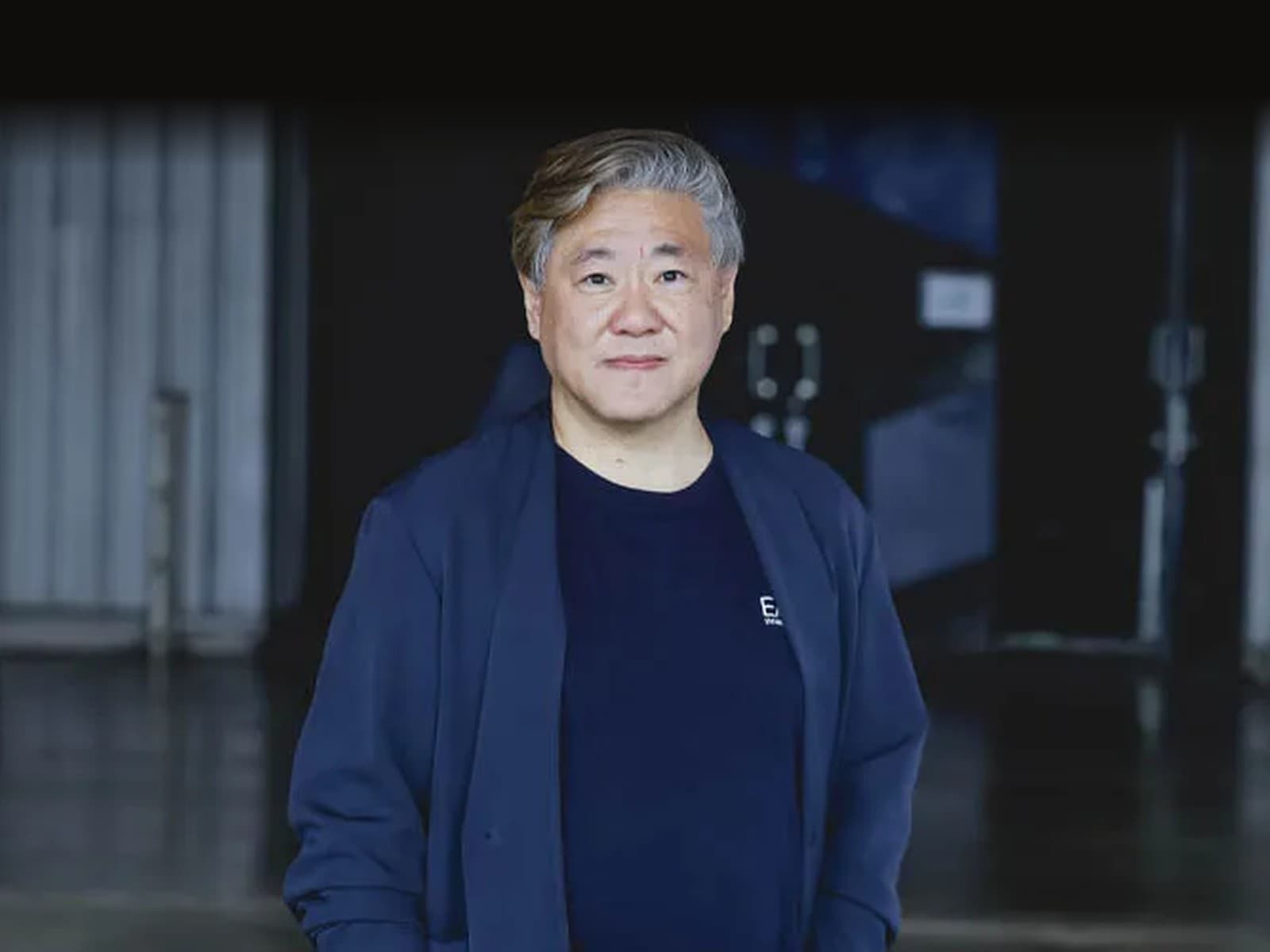
Sirisak Koshpasharin, vice-chair of Thailand's national film federation, expects demand for camera operators, lighting technicians and post-production crews in Thailand to fall by 40 to 50% within three to five years. He is also chief executive of Draconic, the Bangkok company planning a Thai-Chinese AI hybrid feature for cinemas in 2027 at half the usual budget.

That pairing is the story. The man forecasting the smaller crew is building the film that would show how small a crew can get.

Read closely, the number is thin. Only the Bangkok Post printed it, as reported speech rather than a quote, and in two versions: "around 40%" in one place, 40 to 50% in another. No study or method was given. Bangkok University's own account of the Oct 15 seminar where he spoke has no percentage and no Draconic film.

The film itself is a plan. Draconic wants to bring a typical Thai feature budget of about 30 million baht down to 15 million, about $444,000, using human actors, directors and writers with AI-generated sets and effects. No title, partner, director or cast has been named.

For AI creators, the useful detail came from Sutouch Parncharoen, president of the AI Creative Association Thailand. He said the shift is creating new jobs, including "AI operators" who run the production side. The roles the panel called safe or growing are directors, writers and people who can run generative tools. The roles called shrinking are the crews who light and shoot.

Our take: a forecast from someone building the cheaper film is a sales pitch with a number attached. If Draconic's feature reaches cinemas at 15 million baht and looks like a bigger film, the crew math will need no forecast.

Source: Bangkok Post, Nov 2, 2026; Bangkok University, Oct 27, 2026.

Read the full article: thegenerated.com/stories/thailand-ai-film-crew-forecast-draconic-20261102
Provenance — Bangkok Post: AI set to slash demand for film crews · Status: verified: MED (Bangkok Post, single outlet)
A Thai producer says AI could cut crew demand 40-50%. His company is planning the half-budget film
LeadNote—001DevelopingFilm

AGBO's AI chief says work built to last needs many humans in the loop

AGBO executives told TIFFCOM that AI can critique and speed up production but cannot originate, and that anything made for the ages needs many humans involved. Artist-led is the studio's own description: no tool, project or budget was named, and no recording has surfaced.

Drafted by The Generated · Filed by The Generated

Work made to last needs people in the loop. That line comes from inside the industry's own AI push: from the chief scientific officer of the studio behind Avengers: Endgame.

Dominic Hughes of AGBO, the studio the Russo brothers founded, told a keynote at TIFFCOM, the market of the Tokyo International Film Festival, on Thursday that anything made "for the ages" needs "many humans involved in that loop." AI, he said, "is good at critiquing." Ask it for a Shakespeare play of its own and "you'd have the sense that it was written by a 12-year-old."

His partner Chris Brearton put the same line in working terms. For a writer stuck on a character in the third act, AI "can provide data," he said. "Not a solution, but data." Cheaper tools, he added, let new filmmakers "spend a lot of focus on the human performance, which is still critical."

The caveat matters. "Artist-led" is AGBO's own description, nobody on stage named a tool, a project or a budget, neither Russo spoke, and no recording has surfaced, so every quote rests on Variety and Screen Daily. Brearton did say AGBO tracks "every single tool and every single usage of every single tool" for copyright.

Our take: the tools you pick matter less than who is making the calls. Work lasts when people decide who directs, what stays in the cut and whose name goes on it. That job stays human, and the studios are saying so out loud.

Source: Variety and Screen Daily, reporting from TIFFCOM in Tokyo, Oct 29, 2026.

Read the full article: thegenerated.com/stories/agbo-tiffcom-ai-shakespeare-12-year-old-20261030

Provenance — Variety; Screen Daily; TIFFCOM session page · Status: verified: MED
The Avengers studio's AI chief says work built to last needs many humans in the loop
Note—002DevelopingFilm

Flawless sells its AI dubbing tools out of UK administration to Elastic founder Steven Schuurman

Administrators running Flawless's UK company sold TrueSync and DeepEditor to TBellScout, a startup owned by Steven Schuurman. The price, the buyer's plans and the future of its actor rights platform have not been disclosed.

Drafted by The Generated · Filed by The Generated

Flawless spent about $100 million building AI that reshapes an actor's mouth to match a new language, and it did it the way Hollywood said it wanted: endorsed by SAG-AFTRA and built around consent. In October its UK company went into administration, and its two main tools have now been sold.

The buyer is TBellScout, a startup owned by Steven Schuurman, the Dutch billionaire who founded the software company Elastic. He confirmed the deal and declined to say more. The sale covers TrueSync, which makes a dubbed film look as if it was shot in that language, and DeepEditor, which lets a director change a line of dialogue without a reshoot. No price has been disclosed.

The founders did not make this sale. Flawless Holdings Limited, the UK company that held the technology, entered administration on Oct 13 after its lender, Sprk Capital, appointed the insolvency firm BTG. Under UK administration the insolvency firm runs the company instead of its directors, and BTG sold the tools. Co-founders Scott Mann and Nick Lynes still control the US company, Flawless AI Inc., and are said to be exploring a new venture. Mann declined to comment, and co-CEO Amit Kapur, in the job since March, did not respond.

Its work is on more screens than its name suggests. The tools dubbed the Swedish film Watch the Skies for US cinemas, removed the swearing from Mann's own thriller Fall to win a PG-13 rating, and were used on hundreds of productions that studios chose not to announce.

Still unanswered: what TBellScout plans to do with the tools, and what happens to Artistic Rights Treasury, the platform Flawless built to manage actors' rights, along with the permissions stored inside it.

Our take: being the consent-first option did not keep Flawless's UK company solvent. Anyone building on an AI editing tool should ask now who keeps the consent records if the company behind it fails.

Source: Deadline, Oct 30, 2026; The London Gazette, Oct 20, 2026.

Provenance — Deadline: AI dubbing pioneer Flawless sells technology in deal that raises questions about its future · Status: single-source, reported
Flawless, the union-approved AI dubbing company, has had its tools sold out of administration
Note—003DevelopingFilm

iQIYI opens an AI film studio where real actors perform and AI builds the world around them

iQIYI films actors on a small Shanghai stage and rebuilds sets, lighting and costumes with nearly 30 AI models. Every claim so far is iQIYI's own, with no budget, release date or footage from its first feature yet.

Drafted by The Generated · Filed by The Generated

iQIYI, one of China's biggest streaming platforms, has opened what it calls the country's first AI film studio. The idea is simple: shoot the actors for real, then build almost everything around them afterward.

The stage, at the iQIYI Creative Center in Shanghai, is about 110 square meters, roughly 1,180 square feet. It has several cameras, synced high resolution sound and picture, digital continuity notes and instant playback. Footage goes straight from the set into NadouPro, iQIYI's own production platform, which offers nearly 30 AI models, including Seedance 2.5 and Kling 4.0, plus hundreds of ready made AI production tools. Directors keep the performance and change the set, lighting, costumes, makeup and props after the shoot.

The first film made there, Cop in Trouble, started shooting on Oct 28. It is an online feature about a low ranking constable whose lies start to unravel as he chases a notorious outlaw. iQIYI says its earlier virtual studio in Hengdian made production more than 30% more efficient.

"An actor's performance is the core of any film or series," said Zhu Liang, iQIYI's vice president and head of intelligent production.

Still unknown: the budget, the release date, whether outside producers can use NadouPro, and how the finished film looks. "China's first" is iQIYI's own claim.

Our take: this is the hybrid bet built into a building. A major streamer is keeping human performances and putting rival companies' models side by side, rather than chasing fully generated films. If Cop in Trouble holds up, a small stage could replace a lot of location shooting.

Source: iQIYI via PR Newswire, Nov 1, 2026; China Daily, Nov 2, 2026.

Provenance — PR Newswire: iQIYI launches China's first AI film studio in Shanghai; China Daily: iQIYI opens AI film studio in Shanghai, starts first production · Status: verified: HIGH (iQIYI release on PR Newswire + China Daily's own write-up)
iQIYI opens an AI film studio: real actors on a small stage, the world built afterward
Note—004DevelopingFilm

Japan's AI film festival drew 730 entries, and a studio's commissioned shorts took two awards

AI Film Festival Japan says it drew 730-plus entries and handed out awards in Tokyo on Nov 1. Six winners are confirmed by their own posts or NTV; the official results and the Grand Prix are still unpublished.

Drafted by The Generated · Filed by The Generated

Norihiko Mizushima won Outstanding AI Movie for his short PUNCHLINE at the second AI Film Festival Japan in Tokyo on Sunday. That night he posted that he couldn't fully celebrate. On the festival's first day he had watched work from creators around the world and saw what he called an overwhelming gap between it and his own (our translation).

His honesty is a better guide than the headline number. The organizer says it drew more than 730 entries from more than 60 countries and regions, up from 413 last year, and nobody has audited that count. It has not published its results yet, and the Grand Prix it promised in October has not been named. Six winners are confirmed so far, by their own posts, by CapCut Japan or by NTV.

The pattern in those six is who paid for the films. Two awards went to TOKYO STORIES, an anthology of AI shorts about Tokyo commissioned by the production company TYO: Best AI Movie for Int.Lab's TOKYO RAIN and Outstanding AI Creative for Arata Fukoe's TOKYO NEW WAVE. Fukoe wrote afterwards that an AI film is not something you make alone, because script, direction, editing, design and sound all need professionals (our translation).

The fine print for entrants matters too. Entry cost $29 to $49 per film category, we found no cash prize on any official page, the festival can ask for prompt histories, and every entrant grants it a perpetual license to screen and promote the work.

Our take: commissioning has become the real door. Independent creators should treat this festival as a place to get hired rather than a lottery, and the festival should publish its full results before anyone calls this year's field its best.

Source: AI Film Festival Japan, NTV News and winners' posts on X, Nov 1 to 2, 2026.

Read the full article: thegenerated.com/stories/ai-film-festival-japan-2026-winners-20261102

Provenance — News On Japan: AI Film Festival Japan draws 730 entries from more than 60 countries; AIFJ official selections and finalists · Status: verified: MED (News On Japan + festival site)
Japan's AI film festival drew 730 entries, and a studio's commissioned shorts took two awards
Film

Japan's AI film festival drew 730 entries, and a studio's commissioned anthology took two awards

AI Film Festival Japan handed out its awards in Tokyo on 1 November after drawing 730-plus entries by its own count, up from 413 last year. TYO's commissioned TOKYO STORIES anthology won two of the six confirmed prizes, an NTV creator won a music award, and no official results or Grand Prix winner have been published.

Drafted by The Generated · Filed by The Generated
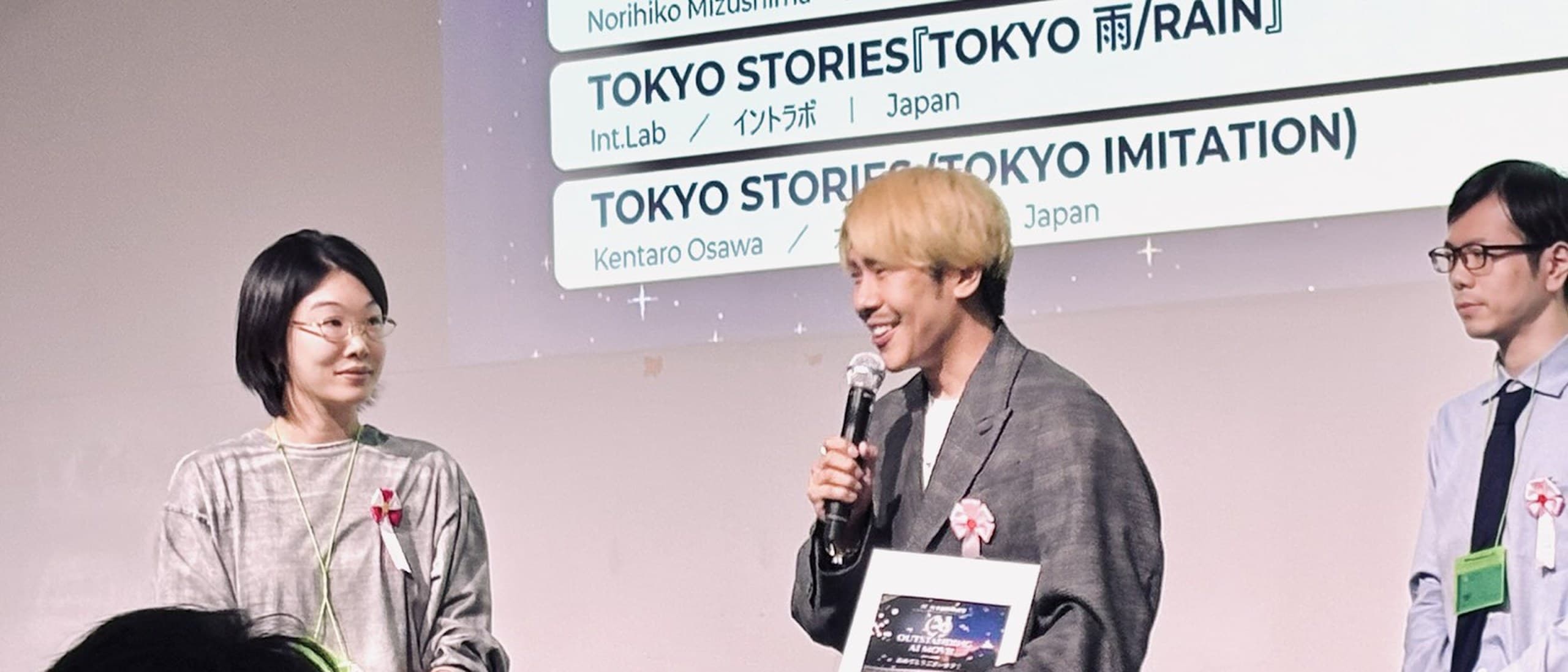
Director Norihiko Mizushima smiles into a microphone on stage holding his Outstanding AI Movie plaque, beside a presenter, under a screen listing finalists

On Sunday afternoon at Tokyo Innovation Base, Norihiko Mizushima stood under a projected list of finalists with a microphone in one hand and a framed plaque for Outstanding AI Movie in the other. His short PUNCHLINE had just won the second-tier prize in the movie category at the second AI Film Festival Japan. That night he posted on X that he couldn't fully celebrate, because on the festival's first day he had watched work from creators around the world and found what he called an overwhelming gap between it and his own (our translation).

That honesty is a better guide to this festival than its headline number. The organizer says it received more than 730 entries from more than 60 countries and regions, and it handed out awards on Sunday 1 November. What it has not done yet is publish the results. As of Monday morning UK time there was no official winners list, and the Grand Prix the festival promised in October had not been named anywhere we could find. Every winner below is confirmed by the winner's own post, by CapCut Japan, or by NTV, a broadcaster with a seat on the festival's committee.

Keep reading — 7 min

That’s all of Film today.

5 notes, filed as the record moved.

Hollywood & Film — archive

Also filed

Models1 note
Kling's $2.9 billion round closes $95 million short after two backers could not pay

Kuaishou says the Kling round it opened in July is done, about $95 million under its $3 billion cap after two backers missed the deadline. Every investor holds a buyback right if Kling has not listed by October 2031.

No retakes needed, the hero stayed consistent all fight
What Makers Told Us: @xaroon_x, No retakes needed, the hero stayed consistent all fight

A maker explains how a dedicated reference picture kept their protagonist consistent through an entire zombie fight scene.

Krea's Ad Studio turns a brand's website into up to 12 still ads
Krea's first specialist AI, Ad Studio, turns a brand's website into still image ads

Krea's Ad Studio reads a brand's website, builds an editable brand kit and makes up to 12 still ads per batch. It makes no video, lists no price per ad, and so far the only evidence is Krea's own.