The Avengers studio says AI writes like a 12-year-old. That ceiling is AI creators' opening
AGBO partner Chris Brearton and chief scientific officer Dominic Hughes set a public ceiling for AI in Tokyo: critic, cost-cutter and data source, never author. The work above that line is the gap for AI creators. Artist-led is the studio's own description, and no tool or project was named.
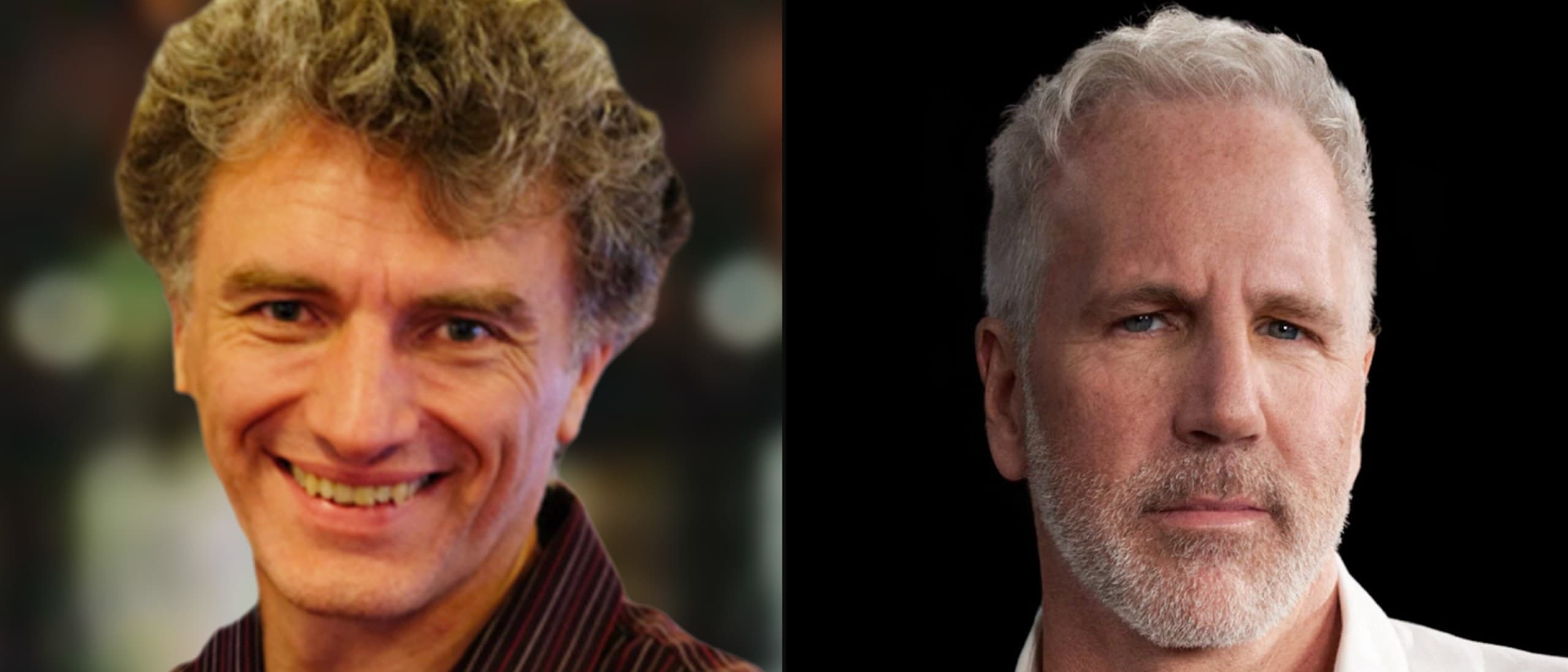
At 11:30 on Thursday morning in Tokyo, the studio behind Avengers: Endgame told a room of buyers exactly where it thinks AI stops. Dominic Hughes, chief scientific officer at AGBO, said AI "is good at critiquing" and could help judge whether a play found in an attic was really Shakespeare's. Ask it to write a Shakespeare play of its own, he said, and "you'd have the sense that it was written by a 12-year-old."
That is a ceiling, and a public one. Over a one-hour keynote at TIFFCOM, the market that runs alongside the Tokyo International Film Festival, Hughes and AGBO partner Chris Brearton placed AI below the line of authorship: a critic, a source of data and a way to speed up production, with people doing the original work. A ceiling a studio sets for itself is also a map of the work it says it won't hand to machines, and the original, human-directed work above that line is the gap independent AI creators can move into. The caveat belongs here too. AGBO called its approach "artist-led, artist-first," as Screen Daily reported it, but nobody on stage named a project, a tool, a vendor or a budget, so that description is the studio's own.
Where AGBO drew the line
The executives were specific about what sits under the ceiling. Brearton said AI will be "more impactful, particularly in the midterm, in process efficiencies," meaning the work that slows a production down rather than the work audiences pay to see. On scripts he offered a careful version of the critic role Hughes described, telling the room that if you're struggling with a character in the third act, "it can provide data," and adding: "Not a solution, but data."
Hughes put the limit in terms of novelty. Screen quotes him saying that when AGBO builds new IP, "you're not just remixing the past," and that "AI processes and machines don't have the creativity required for that degree of novelty." He also argued that a flood of AI output raises the premium on quality, since audiences "can't possibly absorb it," and that anything made "for the ages" needs "many humans involved in that loop."
Read closely, that ceiling is on machines working alone. Hughes's own condition for lasting work, many humans in the loop, describes AI filmmaking at its best, where a person directs, selects, cuts and rewrites what a model produces and owns the result. That reading is ours, but the condition is his, and it puts the creator, not the model, at the center of what AGBO says it values.
The most concrete thing either man said was about paperwork. On the worry that AI takes creators' work without paying them, Brearton told the room that AGBO tracks "every single tool and every single usage of every single tool" and is "very comprehensive about copyright and the paper trail of who did what." He didn't describe the system, and AGBO hasn't published one, but a studio that logs its own tool use is a studio that will value the same discipline in anyone it hires or buys from.
The gap Brearton pointed to himself
The keynote's creator line went further than the Shakespeare quote suggests. In Screen's report, Brearton said "we will see more young filmmakers using technology and pushing the boundaries," and in Variety's he said "we'll see new filmmakers making movies that otherwise you wouldn't have seen" because the tools fit their budgets. Screen says he compared that next wave to Kane Parsons and Curry Barker, whose YouTube shorts led to Backrooms and Obsession. Backrooms opened to $81 million in North America, the biggest debut in A24's history, according to Variety.
Neither Parsons nor Barker is an AI filmmaker, and we found nothing suggesting either film used generative AI. What they prove is that an internet-native director with a following can reach a theatrical release, and Brearton's bet is that cheaper tools widen that road, letting new filmmakers tell stories "with more novel backdrops and settings" and "spend a lot of focus on the human performance, which is still critical." Put that next to Hughes's ceiling and the opening is plain. The studio says machines won't supply the novelty, and its own partner expects the next originators to arrive from outside, on cheaper tools, with audiences already built.
He also said AGBO wants to "learn from the great Japanese creators and partner with them," with manga "absolutely going to be part of what we're doing." No deal or partner was named, but a studio shopping for original voices abroad is a studio that knows the novelty has to come from somewhere.
Who was on stage, and what rests on the record
Headlines put the Russo brothers on top of this, but neither Anthony nor Joe Russo spoke. Brearton ran MGM Studios and led its $8.45 billion sale to Amazon before joining AGBO as a partner in April 2024. Hughes co-founded the audio news app Swell (bought by Apple in 2014), led AI and language models for Apple News, and became AGBO's first chief scientific officer in October 2024. Variety's Asia editor Naman Ramachandran moderated, and the session was organized by the Motion Picture Association, Japan's producers' association MPPAJ and UNIJAPAN.
Because Variety had its own editor on stage, Screen Daily's David Opie is the closest thing to an independent account. We found no video or audio of the session, so every line here rests on the two trade reports, and they don't always agree on wording. Variety has Hughes saying AI is good at "regurgitating what has been done in the past," while Screen has him saying machines are "very good at remixing what has been done in the past." The idea is the same in both.
From two years to data, not a solution
The Russos' own record shows how the studio's line has moved. In April 2023 Joe Russo told Collider that AI could be creating movies within two years. In March 2025, defending the AI voice modulation on The Electric State, he told The Times it was "something any ten-year-old could do after watching a TikTok video" and predicted that "you'll see AI used more significantly." Around the same time Anthony Russo told The Hollywood Reporter that AI is "potentially a valuable tool, but it's the kind of tool that artists always have to remain in control of."
Read in order, the line hasn't reversed so much as narrowed, from AI making films in 2023 to a tool artists control in 2025 to process efficiency and data in Tokyo. For creators that narrowing is useful. A studio that once talked about AI making movies now talks about AI helping people make them, which leaves authorship, and the credit, with the person holding the tools. AGBO hasn't yet shown what its own AI work looks like: it lists an innovation and interactive team on its site, Joe Russo said in 2023 that he sits on "the board of a few AI companies," none of which he named, and no public figure exists for what the studio spends on AI.
What it means for AI creators
AGBO's ceiling tells everyone what a studio this close to Marvel will claim for AI in public: critic, cost-cutter, data source. Everything above that line, original stories, novel worlds and directed performance, is the part it says needs people, and AI creators who direct their tools are those people. Four ways to work the gap:
- Lead with the novelty, because Hughes said machines lack "the creativity required for that degree of novelty," so a pitch that opens on an original world or character, and shows the choices you made on top of the model, answers him directly.
- Show the humans in the loop, since AGBO's own pitch is AI for backdrops and process and people for performance, so a reel that shows real direction of actors or voices speaks the studio's language.
- Keep a tool log now, because Brearton's "paper trail of who did what" is the kind of record a studio or insurer can ask for, and logging tool, version, inputs and who did each step costs nothing.
- Build the audience before the pitch, as the directors Brearton held up, Parsons and Barker, arrived with followings, and the path he described runs through an audience you own rather than a studio inbox.
Our take
AGBO went to Tokyo to reassure, and in drawing a ceiling for AI it described the room above it. A major studio now says machines can critique, tidy a schedule and hand a writer data, but can't originate on their own. AI creators who bring the novelty, keep the trail and arrive with an audience aren't on the wrong side of that line. They are the new filmmakers Brearton expects the tools to bring.
Timeline
- Date: Mon 24 Apr 2023. Event: Joe Russo says AI could be making movies in two years and that he sits on the board of a few AI companies; Source: Collider via Variety
- Date: Mon 15 Apr 2024. Event: Chris Brearton joins AGBO as partner from Amazon MGM Studios; Source: Variety
- Date: Thu 31 Oct 2024. Event: AGBO names Dominic Hughes its first chief scientific officer; Source: Deadline, Variety
- Date: Fri 14 Mar 2025. Event: The Electric State premieres on Netflix; Source: The Ringer
- Date: Mar 2025. Event: Joe Russo calls the film's AI voice work "something any ten-year-old could do"; Source: The Times via Vulture and NME
- Date: Fri 29 May 2026. Event: Backrooms opens to $81 million in North America; Source: Variety, Box Office Mojo
- Date: Thu 17 Sep 2026. Event: TIFFCOM announces the AGBO keynote; Source: TIFFCOM, Variety
- Date: Thu 29 Oct 2026. Event: Brearton and Hughes give the keynote in Tokyo, 11:30 to 12:30; Source: TIFFCOM, Variety, Screen Daily
- Date: Fri 18 Dec 2026. Event: Avengers: Doomsday release date; Source: TIFFCOM session page
Sources and what is unconfirmed: Variety (Mark Schilling, 29 Oct 2026) and Screen Daily (David Opie, 29 Oct 2026), both read in full; TIFFCOM session page; Deadline and Variety on the Hughes hire (Oct 2024); Variety on Brearton (Apr 2024); Collider via Variety (Apr 2023); The Times interview via Vulture and NME (Mar 2025); The Hollywood Reporter; Variety and Box Office Mojo on Backrooms. Unconfirmed: exact wording where the two trades differ, as no recording of the session was found; which AI tools AGBO uses and on which productions; which AI companies Joe Russo advises; any Japanese partnership. Variety's Asia editor moderated the session.