Guadagnino made his OpenAI movie with 'zero AI'. That label now cuts both ways
Luca Guadagnino told THR that zero AI went into Artificial, his OpenAI film starring Andrew Garfield as Sam Altman, and one repost of the line drew three times the impressions of THR's own post. It is the director's own claim and no standard exists to check it, so for AI filmmakers the opening is to show their process just as openly.
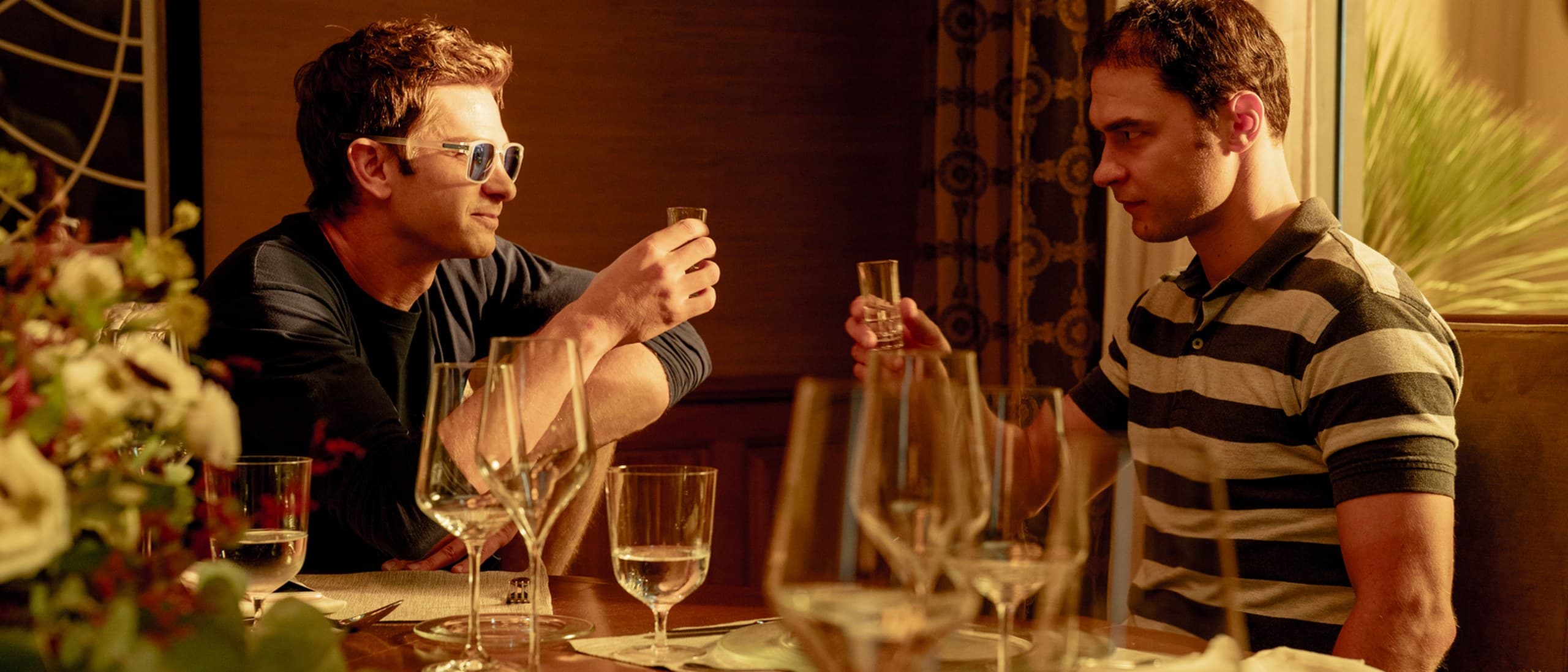
On Monday night at the New York Film Festival, at the world premiere of Luca Guadagnino's Artificial, Andrew Garfield told Variety what he first thought of the man he plays. He remembered watching Sam Altman testify to Congress: "I was like, 'This guy seems fucking great. He's honest. He's transparent. He's talking about regulation, and he has no stake in OpenAI.'" Then came the turn the whole film is built on: "And then you learn more about a person."
Artificial runs 140 minutes, was written by Simon Rich and dramatizes the five days in November 2023 when OpenAI's board fired Altman and then took him back. It played Alice Tully Hall as one of four world premieres in this year's main slate. Neon opens it in US theaters on Christmas Day, it screens as a Gala at the BFI London Film Festival this Sunday, 11 October, and it reaches UK and Irish cinemas on 22 January 2027.
The line that traveled furthest on premiere day was not about Altman at all. It was two words from the director about how the film was made, and for anyone making work with generative tools, those two words matter more than any review.
'Zero AI', on the record
Guadagnino told The Hollywood Reporter that "zero AI" was used in the making of Artificial, and that the same goes for all of his films. His reasoning was about performance rather than ethics: "I'm an old-fashioned guy. I'm analogic. I shoot on 35. I believe in good old performance." He then borrowed from Jean Renoir, who said you have to leave the door open to reality on a set, and asked: "How do you do that if you are sending prompts to a computer?"
The audience for that quote was bigger than the audience for the film news. THR's own post on X drew about 47,400 impressions and 987 likes by Tuesday morning, by our count from the X API. A repost of the same line by the entertainment news account @HollywoodHandle drew about 151,500 impressions and 9,600 likes, roughly three times the original.
The replies under that repost read like a market forming in real time. One called 35mm "the new organic label" and predicted that "zero AI" would show up in a lot more credits. Another, from an account that builds AI assistants, bet that "zero AI directors will beg for AI budgets within a year." A third pointed out that an OpenAI ad campaign had also been shot on 35mm, which is a fair reminder that a film stock is a look, and on its own it says nothing about a stance.
What 'zero AI' covers, and what nobody can check
Guadagnino's claim is his own, and nobody outside the production can verify it. That is not an accusation, because no standard exists to check it against. There is no audited "made without AI" credit, no union definition and no festival rule that says where the line sits.
The line is blurrier than the slogan suggests. Vulture reports that the team skipped blue contact lenses for Garfield and instead changed his brown eyes to blue in post, digitally "painting in a way that was specific to the light." That is conventional VFX paint work, the kind of frame-by-frame craft that predates generative models, so it does not contradict the director. It does show that "zero AI" is a statement about intent and method, made by the person who signs off the picture, and that a viewer has to take it on trust.
Guadagnino has told Vulture about his one experiment with the technology: he once prompted ChatGPT to design an outdoor lamp. His verdict was "The result was not very good."
The reactions are tweets, not reviews
The adjectives on the card that brought this story to us, "savage" and "terrifying", come from first-reaction posts on X by invited press, collected by Variety and IndieWire on Monday night. They are worth reading, and they should be read as what they are. Joey Magidson's post supplied "savage", and it opened with the only stated reservation of the night: "Artificial runs out of steam before the end." Matt Neglia of Next Best Picture called it "as entertaining as it is terrifying."
"Best film in a decade" came from Clayton Davis, Variety's awards editor, on the same evening Variety published his exclusive on Neon's Oscar campaign, which puts Garfield and Mark Rylance in supporting actor and Yura Borisov in lead. Owen Gleiberman's full review in Variety is positive. By Tuesday morning we had not found a published pan, so treat the early heat as first reactions from a premiere audience and not as a critical consensus.
Garfield's quote also needs its context. He said it at the premiere, on the night Neon launched an all-categories awards push, so it is promotion as much as candor. His memory of the hearing holds up, though. At the Senate Judiciary hearing on 16 May 2023, Altman said he had no equity in OpenAI. In December 2024 he disclosed a past stake held through a Sequoia fund, and he told Vanity Fair on Monday that he holds "no direct equity", only a small indirect slice through an old Y Combinator investment.
Follow the money behind the release
The film's route to Christmas Day is its own story about who owns the screens. Amazon announced a $50 billion investment in OpenAI on 27 February. In June, Amazon MGM dropped the nearly finished film, saying it would be "better served if it were released by a different studio." THR reports that Netflix, Searchlight and A24 then saw it and passed, and that only Neon and Mubi bid. That bidder list rests on THR alone. A24 had signed a reported deal of about $75 million with Google to develop AI filmmaking tools that same month.
Neon took the film in an unusual deal, paying nothing up front and committing to a $15 million marketing spend, according to THR. Nobody has shown that any buyer passed because of an AI-lab investment, and THR presents that as one of several theories alongside the budget, which THR and Variety put at $40 million and Vulture at $45 million. The pattern still deserves a plain statement: the two companies with the largest disclosed AI-lab ties did not release the year's biggest film about an AI lab.
Altman himself has not seen it. He told Vanity Fair it "will not be good as an accurate depiction", though he allowed that Garfield got the walk right. OpenAI did not respond to Vulture's request for comment, and neither Altman nor the company had posted about the film on X by Tuesday morning.
What this means if you make work with AI
In practice, for anyone making work this week, the useful lesson from Monday night is that disclosure has become a selling point, and it works in both directions. A prestige director just used the absence of AI as marketing, and one repost of that line drew more than 150,000 impressions in a day. That same audience is now primed to ask every other film what it used, and makers who answer that question openly are in a stronger position than those who hide it.
- Publish your process. One reply to the quote asked Guadagnino to share behind-the-scenes and concept work so viewers could "see the truth". AI filmmakers can do that today: a process thread, a breakdown reel or a credit block that lists the human roles next to the tools.
- Credit people before software. The label fight is about authorship. A card that names the director, writer, editor and composer first and lists the generators in a separate production line answers the "prompts to a computer" jibe better than any argument.
- Know who funds your buyer. Amazon is tied to OpenAI and A24 to Google. When you pitch a distributor, a festival or a brand, their AI investments are now part of the room you are walking into.
- Expect the question at festivals and awards. Artificial will be in front of guild and academy voters from now until March. The climate it sets is the one every AI-made short will be judged in this season.
The film plays London on Sunday and opens in US theaters on 25 December. What remains unresolved is whether OpenAI says anything about it before then, and whether "zero AI" turns up next in a studio's marketing or in a guild's rulebook.
Timeline
- Date: Tue 16 May 2023. Event: Altman tells the Senate he has no equity in OpenAI; Source: Senate Judiciary hearing
- Date: Fri 17 Nov 2023. Event: OpenAI board removes Altman; he is reinstated five days later; Source: CNBC
- Date: Jan 2024. Event: Simon Rich pitches the film to Amazon MGM; Source: Vulture
- Date: Dec 2024. Event: Altman discloses a past stake held through a Sequoia fund; Source: TechCrunch
- Date: Fri 27 Feb 2026. Event: Amazon and OpenAI announce a $50 billion investment; Source: aboutamazon.com; Amazon 8-K
- Date: Fri 19 Jun 2026. Event: Amazon MGM drops the nearly finished film; Source: Variety; Deadline
- Date: Mon 22 Jun 2026. Event: Google signs a reported deal of about $75 million with A24 for AI filmmaking R&D; Source: Variety citing WSJ
- Date: Late Jun 2026. Event: Neon acquires the film; Source: Screen Daily; THR
- Date: Tue 8 Sep 2026. Event: Neon sets the 25 December US date and releases the trailer; Source: Screen Daily
- Date: Mon 5 Oct 2026. Event: THR runs the "zero AI" quote; world premiere at NYFF; Neon awards campaign announced; Source: THR; Variety
- Date: Sun 11 Oct 2026. Event: BFI London Film Festival Gala; Source: Deadline; Radio Times
- Date: Fri 25 Dec 2026. Event: US theatrical release; Source: Neon via trades
- Date: Fri 22 Jan 2027. Event: UK and Ireland release; Source: Radio Times
Sources and what is unconfirmed: Variety (premiere report, first reactions, Gleiberman review, Neon campaign exclusive, Amazon statement, Google and A24 report); IndieWire first reactions; The Hollywood Reporter feature (5 October); Vulture; Vanity Fair's Altman interview (5 October); Film at Lincoln Center's NYFF listing; Screen Daily, Deadline and Radio Times on dates; aboutamazon.com and Amazon's 8-K; the Senate Judiciary hearing of 16 May 2023; TechCrunch; X API counts pulled on 6 October. We have not seen the film or the premiere Q&A, and Garfield's quote is as Variety transcribed it. The bidder list and the $15 million figure come from THR alone. "Zero AI" is the director's own claim. We did not contact Neon, OpenAI or the filmmakers for this draft.
Your Voice
ARTIFICIAL starts out very funny and gets increasingly more disturbing without losing its sense of humor. I cannot think of another filmmaker who could have pulled off this balance.
zero AI directors will beg for AI budgets within a year
an analog purist in 2025 is honestly so refreshing. the man said 35mm and meant it
Quoted from public posts on X and credited by handle. If one of these is yours and you want it removed, message @the__generated on X and it comes down.
Got something to say? Tag @the__generated on X