Austin's AI film festival puts the workflow on stage, mostly on Friday
The second Austin AI Film Festival runs 16 and 17 October at the Topfer at Zach Theatre. Friday's summit is where working directors walk through their workflows, with Dreamina and Beeble sessions on the bill. Saturday screens 40 films in five blocks, and the drop from 2,000 entries to 700 follows a switch from free to paid entry.
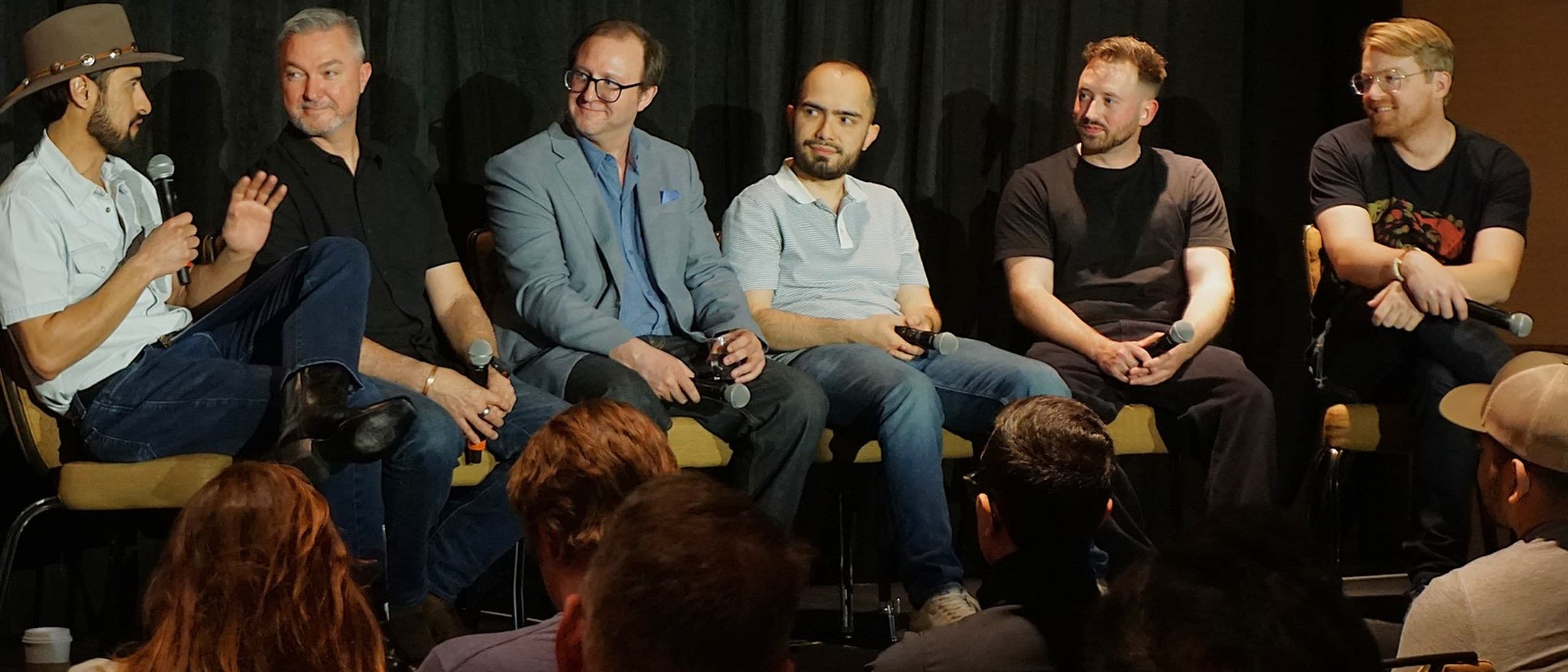
Just after noon on Friday, a director named Billy Boman will walk onto the stage of the Topfer Theater in Austin to give a talk with a title most AI filmmakers would happily tattoo somewhere visible: "If It Looks AI, We've Failed." Four hours later Henry Daubrez follows with "Hot or Slop". Between them sit a panel called "The Superhuman Director" and a masterclass on hybrid production, and that run of sessions is the reason to pay attention to this weekend in Texas.
The Austin AI Film Festival returns for its second edition on Friday 16 and Saturday 17 October at the Topfer at Zach Theatre, a house of a little over 400 seats on South Lamar. The festival's Official Selection has 40 films across 11 competitive categories, plus 28 honorable mentions. Passes run from $79 for screenings only to $199 for all access. The organizer is a registered Texas nonprofit, with founder and president Aaron Sanchez and executive director Ayca User opening the summit at 9:30 on Friday morning.
Friday is where the process lives
The festival pitches itself on a format that puts makers in front of the room to explain how the work was made. The agenda shows where that actually happens. Friday is a summit of masterclasses and panels from invited speakers, and it is the day to go if you want to hear working directors defend a pipeline in public.
- 9:50 AM, the Dreamina MasterClass: PJ Accetturo of Genre.ai on how he built original IP that has drawn more than 400 million views. His series Nexus is a Dreamina Original, so this session is a sponsor showcase as well as a craft talk.
- 11:00 AM, "The Superhuman Director", a panel with Brian Taylor (co-director of Crank), Conrad Curtis of Beeble, Jennifer Hutchins and Amaru Zeas-Sigüenza of Griptape at Foundry.
- 12:10 PM, Boman's "If It Looks AI, We've Failed", followed at 1:40 PM by Curtis again for the Beeble Masterclass on hybrid production.
- 2:50 PM, a brands and commercials panel with Adrienne Lahens, Boman, Rupert Cresswell and Michelle Zauzig.
- 4:00 PM, Daubrez with "Hot or Slop", then at 4:35 PM Joni Dobrov on building The Zim into an ongoing IP, and mentor tables from 5:05 PM.
Two of those six headline sessions carry a sponsor's name. The festival calls Dreamina, the CapCut-owned video tool, its main sponsor, and Beeble is a presenting partner with both a masterclass and a panel seat. Sponsored sessions are normal at festivals of every kind, and they can still be useful, but it is worth walking in knowing whose stage you are sitting in front of.
Saturday is 40 films in five blocks
Saturday is the screening day, and it runs differently from the way the festival's pitch reads. The 40 films play in five blocks: trailers, series and documentary at 9:30 AM; brand films, student and avant-garde at 10:45 AM; features at 11:55 AM; hybrid and music video at 3:55 PM; and micro-shorts and short films at 5:05 PM. The Texas Film Commission listing says there will be director Q&As after each block, and the festival's own event page says the filmmakers will be in the audience. That works out to one Q&A for roughly every eight films, so expect a conversation per block, not a breakdown of every film.
One scheduling detail needs an answer before anyone plans around it. The features block is 75 minutes long, while the festival's rules define a feature as anything from 30 to 90 minutes, so either a single short feature plays or the longer ones are excerpted. The festival has not said which.
In between, a 2:25 PM fireside brings together Pinar Seyhan Demirdag, Jason Fisher and C. Sean Yuksel, and at 3:25 PM the winners of GenJam, the 48-hour virtual hackathon the festival ran with Machine Cinema and AITX from 8 to 10 October, get their screening. Awards begin at 7:15 PM Central, hosted by Robert Parks-Valletta, with a jury of Louie Schwartzberg, Rick Carter, Jon Flynn of Fox, Sarba Das, Seema Mathur and BLVCKL!GHT. Each category winner gets a cash prize, in an amount the rules leave for the festival to decide.
The fine print: speakers, submissions and rules
The lineup has shifted since the 1 October announcement. Three featured speakers named in that release, including one billed for a step-by-step masterclass, no longer appear on the festival's agenda or event schedule, and the festival has not announced a change. Check the agenda on the day rather than an older listing.
The submission numbers need context too. The festival says its 2025 edition drew more than 2,000 entries and this year's drew more than 700, which reads like a collapse until you look at the terms. A 2025 calendar listing for the festival's call shows free entry with a $5,000 prize per category, while the 2026 rules require an entry fee. A free call against a paid one explains most of that gap, and both counts come from the festival alone.
The entry rules themselves are worth reading if you make this kind of work. A majority of a film's visual shots must be AI-generated, the underlying script must be mainly written by a human, and sponsors, festival workers and their affiliates may screen films but cannot win. That pairing of machine-made images with a human-written script is a fair summary of where most festival-minded AI filmmakers already sit.
What this means for anyone making AI work
In practice, for anyone making work this week, Friday in Austin is a rare chance to hear people who ship AI films and ads argue about craft out loud, and a talk called "If It Looks AI, We've Failed" sets the bar most clients now expect.
- If you can get to Austin, the Friday summit pass ($99) buys the masterclasses and the mentor tables, where most of the networking value sits.
- If you can't, watch who wins on Saturday night. Festival selections are the closest thing this scene has to a quality bar, and the winners' process notes will travel next week.
- Read the entry rules against your next project: majority AI visuals, a mainly human-written script and a paid entry are becoming the standard terms for this circuit.
The awards begin at 7:15 PM Central on Saturday, which is 1:15 AM on Sunday in London. The question worth carrying into the weekend is whether the films on screen live up to Boman's title, or whether the room spends the Q&As explaining what they had to work around.
Timeline
- Date: 2025 (date unconfirmed). What happened: First edition at the AT&T Conference Center; festival reports 2,000+ submissions, 50 finalists, 300 attendees; Source: Festival history page
- Date: 15 Feb 2025. What happened: 2025 call closes, free entry, $5,000 per category; Source: PentoPix listing
- Date: 15 Apr to 15 Aug 2026. What happened: 2026 entry period, paid entry; Source: Festival rules and terms
- Date: Thu 1 Oct 2026. What happened: Official Selection and speakers announced: 40 films, 700+ submissions; Source: PR Newswire release
- Date: Thu 8 to Sat 10 Oct 2026. What happened: GenJam virtual hackathon with Machine Cinema and AITX; Source: Festival event page, release
- Date: Fri 16 Oct 2026. What happened: Summit day: masterclasses, panels, mentor tables, Topfer Theater; Source: Festival agenda
- Date: Sat 17 Oct 2026. What happened: Five screening blocks, fireside, GenJam winners, awards from 7:15 PM CT; Source: Festival agenda, event page
Sources and what is unconfirmed: the festival's site, agenda, rules and history pages and its event page (read 15 Oct); the festival's PR Newswire release (1 Oct); the Texas Film Commission event listing, which repeats festival copy; ProPublica's Nonprofit Explorer for the nonprofit registration; Zach Theatre for the venue; the PentoPix festival calendar for the 2025 call. Nearly every claim here comes from the festival itself, so agreement between listings counts as one source. Submission counts are festival figures, 2026 prize amounts are unpublished, whether features screen in full is unconfirmed, and the reason three announced speakers left the agenda is unknown. KVUE's 14 Oct preview could not be read and is not used. We did not contact the festival for this draft, and no film in the selection was watched.