Danny Boyle didn't ask Thatcher's estate. Here's his case for the AI face in 'Ink'
At the London Film Festival, Danny Boyle said he used an AI face swap to put the real Margaret Thatcher into 'Ink' and declined to ask her estate. He wanted the scene to cut straight into real news headlines. The relationship he cites checks out, the late-night visits are hearsay, and the credits question is still open.
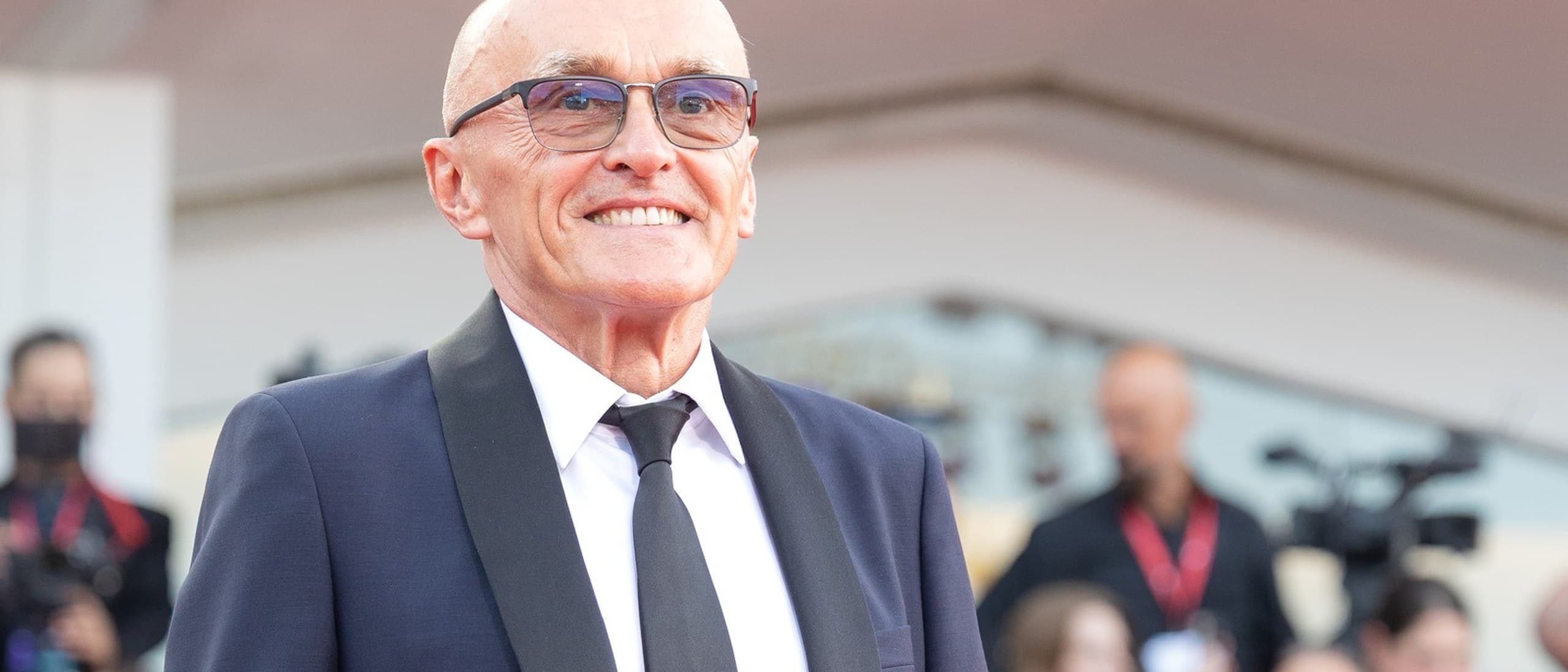
Matthew Belloni had seen 'Ink' and missed the AI entirely. "I didn't even notice watching the movie," the host of The Town told Danny Boyle at the BFI London Film Festival on Friday 9 October, after asking where the director stood on AI given "a Margaret Thatcher head swap and a couple of other little things" in his new film, 'Ink'. Boyle answered the question nobody had quite put to him yet: "I, gotta be honest, I declined to ask the estate for permission to do that."
The conversation was recorded live for Belloni's podcast and published on Saturday. Variety, The Hollywood Reporter and Deadline all wrote it up from the same room, so it is one source, and the quotes here come from our own transcript of the published episode rather than the trade copy. That matters, because the line every write-up dropped is the one that explains the shot.
What was actually done
'Ink' is Boyle's film of James Graham's play about the 1969 relaunch of Rupert Murdoch's Sun, with Jack O'Connell as the editor Larry Lamb, Guy Pearce as Murdoch and Claire Foy in the cast. It opened the Venice Film Festival on Wednesday 2 September, is financed by Studiocanal, and reaches US theaters on 11 December before Netflix streams it in the US and Latin America from 8 January.
The AI use isn't new information. Critics at Venice spotted what looked like generated Kray twins and an oddly smooth Thatcher, and World of Reel put her screen time at "at most 10 seconds". Boyle confirmed it at Telluride on 5 September: about 30 seconds of AI across the film, covering a couple of animated archive photographs (the Krays and a Fleet Street that "is gone"), the Thatcher face and some AI mice in The Sun's newsroom, which he justified by citing PETA's complaint about the chimps in '28 Days Later'. He told IndieWire the same week how the face was made: "We paid an actor and then just replaced the head." On Friday he put it more plainly. "So we got an impersonator in to play the whole scene out," he said, and when Belloni summed it up as a face swap, Boyle agreed.
The film's visual effects house is Union VFX in London, which Boyle thanked on stage for working on a tight budget. Nobody has said Union made the Thatcher face, or which tool was used, and the performer underneath it hasn't been named anywhere.
Why he wanted the real face
Boyle's first answer was the one he gives every interviewer. AI is "a part of the toolbox that the visual effects companies use now," he said, and "we used it very sparingly and we, um, we were very careful to make sure it didn't replace anyone." Then he got specific about Thatcher: "It was very important for us that I didn't want a Thatcher imitator because the point at which she appears in the film, it's a, it's documented that she used to visit his office, Larry Lamb's office, late at night after the edition had gone out and they'd drink whiskey together. And she did organize his knighthood."
The reason the trades cut came next, and it is the craft argument for the whole decision. By his account, the Thatcher scene is where the film turns from period drama toward the present, and Boyle wanted the turn to land on a face the audience knows from the record: "Because then you move very quickly into real people from the news headlines today, so I wanted her to be very much part of that." An impressionist, however good, would have kept the scene inside the drama right at the moment he wanted it to cross into fact.
His case for skipping the estate is an artist's case, not a legal one: "I don't think the estate of people like Margaret Thatcher should have control over our ability to insist on ideas in art about what her influence was on our lives."
What checks out, and what rests on "that's what they say"
The relationship itself is real: Lamb was knighted in the 1980 Birthday Honours on Thatcher's recommendation, the Margaret Thatcher Foundation archive holds her letter of Thursday 24 May 1979 thanking him ("your encouragement meant so much"), and when Lamb died in 2000 she said he had given her "great advice and support" as Leader of the Opposition.
The late-night office visits are softer than Boyle made them sound. It was Belloni who added the detail that she kicked her shoes off, and Boyle's reply, "That's what they say," is not a citation. When he told the story to IndieWire in September, the scene was set in Murdoch's office rather than Lamb's. We couldn't find the document behind "it's documented". It may sit in Lamb's own memoir or in Graham's research for the play, but for now it is Boyle's account, and the factual premise for the face swap rests on it.
The backlash, in numbers
Variety's post of the estate quote on X had 377,140 impressions by Monday, with 229 quote posts against 134 likes and 97 replies, according to the X API (the platform's own data feed). Quotes outnumbering likes is what a pile-on looks like. One reply read, simply, "They're called actors, Danny", while others pointed to Gillian Anderson's Thatcher as proof that a human performance does the job, or argued that "you should absolutely never puppeteer the dead."
The strongest objection was the simplest: "He's just using an inhuman imitator instead of a human one." Every other real person in 'Ink' is an actor in a role, Murdoch and Lamb included, so the question for Boyle is why Thatcher alone had to be "real". His answer is the cut into the headlines, and it is a better answer than the one that went viral. Whether it justifies taking a dead woman's face without asking her family is the argument the film will carry into its release.
Paid, or not asked
There is a precedent for the same move done the other way. For 'Rogue One', Peter Cushing's face was rebuilt over the actor Guy Henry; the producers believed they didn't need permission and paid Cushing's estate anyway, under an agreement from 2016 described in a 2024 High Court judgment. In the UK there is no general right to your own image, alive or dead, and claims usually run through passing off or false endorsement. Read that way, an estate's permission is mostly a matter of courtesy and reputation, and Boyle has chosen to spend some of his reputation on the point of principle.
The working rule hiding in his answer
In practice, for anyone making work this week, Boyle's own split is a usable rule. He kept generative work to archive that no longer exists and animals, he put a hired and paid performer under the one replaced face, and when asked he said exactly what he had done. That is a defensible position to take into a commission, and it costs one extra day rate, not a lawsuit.
What he didn't address is the credit. Whether the end titles of 'Ink' name the performer under the swap, or disclose the AI shots at all, hasn't been confirmed by the production since Deadline asked in September. That is the open question to put to Studiocanal and Netflix before the film reaches theaters on 11 December. Boyle's own view of where this goes is generous to the people reading this: "It matters what young people think and what they're gonna do with it."
Timeline
- Date: Thu 24 May 1979. What happened: Thatcher, newly prime minister, thanks Larry Lamb by letter; Source: Margaret Thatcher Foundation archive
- Date: Jun 1980. What happened: Lamb knighted in the Birthday Honours on Thatcher's recommendation; Source: BBC, 2000
- Date: Wed 2 Sep 2026. What happened: 'Ink' world premiere, opening night of Venice; Source: Deadline, Netflix Tudum
- Date: Sat 5 Sep 2026. What happened: At Telluride, Boyle confirms about 30 seconds of AI in the film; Source: Vanity Fair via Deadline; IndieWire
- Date: Fri 9 Oct 2026. What happened: LFF talk with Matthew Belloni: face swap, "declined to ask the estate"; Source: The Town episode, our transcript
- Date: Sat 10 Oct 2026. What happened: The Town episode published; Source: Ringer podcast feed
- Date: Fri 11 Dec 2026. What happened: US theatrical release; Source: Netflix Tudum
- Date: Fri 8 Jan 2027. What happened: Netflix (US and Latin America) and UK theatrical release; Source: Netflix Tudum, Variety
Sources and what is unconfirmed: The Town with Matthew Belloni, episode published 10 Oct, transcribed by machine and checked against Variety, The Hollywood Reporter and Deadline (9 Oct), which all report the same talk; IndieWire, Deadline (Vanity Fair interview), TheWrap and World of Reel, all 5 Sep; Art of VFX on Union VFX; BBC (2000) and the Margaret Thatcher Foundation archive on Lamb; Tyburn Film Productions v Broughton, High Court, 2024, on the Cushing payment; X API metrics read 12 Oct. We have not seen the film. Unconfirmed: the source for the late-night office visits, who performed under the face swap, which company or tool made the face, whether the credits disclose AI, and any response from the Thatcher estate, Studiocanal or Netflix. We did not contact them for this draft.
Your Voice
We went for more than a century of films and tv using actors who don’t look 100% like the real person they are playing, through just make up and costume and we worked it out fine.
Boyle insisted on an Australian actor for Rupert Murdoch. What's the difference here where using actors is unthinkable?
A person’s likeness - face and voice - should be protected.
Quoted from public posts on X and credited by handle. If one of these is yours and you want it removed, message @the__generated on X and it comes down.
Got something to say? Tag @the__generated on X