Thirty seconds, or a two-month wait: the two AI arguments Hollywood is actually having
Danny Boyle disclosed about 30 seconds of generative AI in Ink, and Guillermo del Toro argued the tools skip the struggle that produces good work. They are two different arguments, and only the disclosure one gives creators a rule they can follow yet.
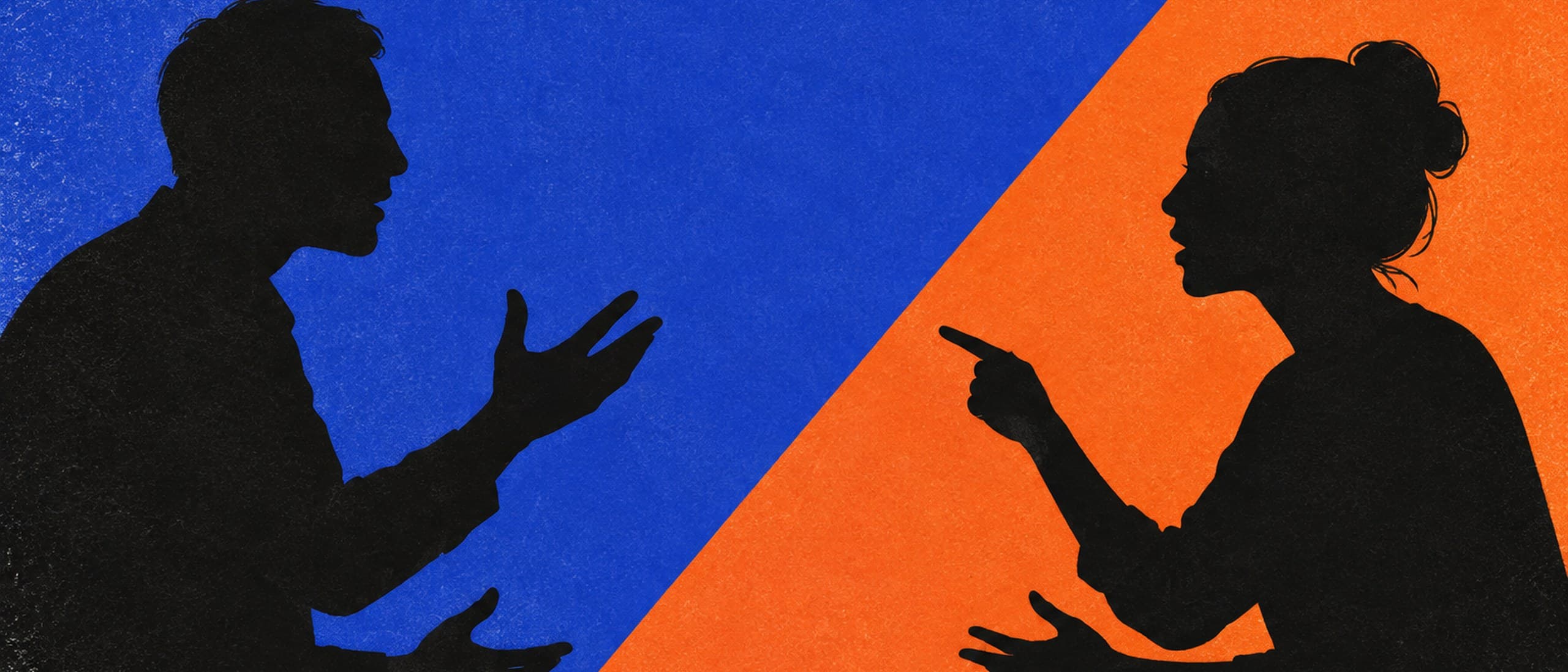
Within about 30 hours of each other in early September, two directors with nothing to prove gave the clearest statements yet on generative AI in feature films, and they were not arguing about the same thing.
Danny Boyle, at Telluride, told Vanity Fair that his Rupert Murdoch drama Ink contains "about 30 seconds" of generative AI: a couple of animated archival photographs, plus AI mice running around The Sun newsroom. Guillermo del Toro, answering a question in an r/movies AMA posted on 9 September, said the thing a machine takes from you is not a job but the route to your best work: "AI can get you to the middle really fast, but there's a dialectic with the process that gets you to that top 10%."
One of those statements is a disclosure, the other is a theory of craft. Put them side by side and you get the two separate arguments that are usually mashed into one, plus a practical read on which one is going to shape how AI creators are asked to work.
Boyle put a number on it, and that is the news
Boyle's remarks were reported by Deadline and TheWrap on 5 September, and reached wider circulation when PetaPixel picked them up on 10 September. The quote is short: "There's about 30 seconds of it in our movie where we animate a couple of old photographs. Oh, and there's some mice. It's very good for animals, and we had some mice that run around The Sun newsroom."
He also stated a condition, unprompted: AI is "a very useful tool in many ways, provided you use it respectfully and provided you pay actors if you're going to replace them."
Two things make this different from the usual festival AI answer. The first is the unit. Ink runs 116 minutes, per StudioCanal's listing, so 30 seconds is 0.43% of the film. That figure is our arithmetic rather than anything Boyle or a distributor published, and it is the reason the quote travels: it converts an unfalsifiable question, did you use AI, into an answerable one, how much and where. Every director on a press tour now has a number they can be asked to match, and refusing to give one will read worse than giving a small one.
The second is that he volunteered it. The recent precedent ran the other way. The Brutalist's use of Respeecher voice work and generative imagery in its closing sequence came out through its editor in January 2025 and required a clarifying statement from Brady Corbet afterwards. By March 2025 the film's producer was telling reporters at the Oscars that the Academy was already asking whether AI had been used, and on 1 May 2026 the Academy's rules for the 99th Oscars formalized it: screenplays must be human-authored, acting eligibility is limited to performances demonstrably performed by humans with consent, and the Academy reserves the right to ask about the nature of any AI use. Boyle has pre-answered a question his own awards campaign could now be asked formally.
The why, which arrived a day later, matters as much as the what. Speaking to IndieWire at Telluride, Boyle said the photographs were animated because the production could not afford to rebuild the location: "We couldn't afford to recreate Fleet Street. You have to use photographs and animate them, because it's gone." He also said he brought Margaret Thatcher to life "with a bit of AI" because "I didn't want an imitation Thatcher." Until that interview, the Thatcher and Kray brothers photographs were viewer inference; Boyle has now confirmed Thatcher himself. This was a film that struggled to raise money, financed by StudioCanal after others passed, and the AI shots sit exactly where the budget ran out.
What this means for AI creators: the defensible use of a generative tool in a funded production is currently the shot that could not otherwise exist, described in public in units of screen time. If you work in or adjacent to features, the artifact to have ready is a shot list with tools, durations and the reason each shot was generated, written before anyone asks for it.
The criticism that survives the transparency
The most quoted objection to Boyle's answer is the gap inside his own condition. He said pay the actors you replace. He said nothing about animators, and animating a still photograph and adding background mice is precisely the kind of small job a junior artist used to be handed. That charge, aggregated by HuffPost UK on 7 September, is criticism worth carrying, and it is also unevidenced: no animator, vendor or union has been named as having lost work on Ink. Run it as an argument being made, not as a fact established.
Two other things are still unconfirmed. Nobody knows which tool or model was used, and no VFX house has been credited. And the widely repeated claim that Ink's end credits disclose the AI use rests on social media posts; Deadline says the production would not confirm it when asked, and no photograph or transcription of the credit has been published. Boyle's "about 30 seconds" is also a director's self-report, unaudited. That is not an accusation, it is the limit of what a press quote can establish.
Del Toro's objection is about the two months you don't spend
Del Toro's answer came in the AMA he did to promote the Pan's Labyrinth 20th anniversary 4K and 3D re-release, in theaters 9 October. He was asked what is lost when a computer generates an image instead of a human hand, and he answered with a worked example rather than a slogan.
The Pale Man, he said, was sculpted as an old man with a face. "And then I said, Let's take out the face. This happened because I saw a photo of a manta ray and the poster for Don Coscarelli's Phantasm. That combination, which happened at two different times during a week or a month, are not permutations that are chemically part of an equation. They are alchemy. And then I said, Take out the face, and then I said, Let's put the eyes on the hands. This triangulation happens because I spent a month or two months living with the idea of this creature. And it's not linear."
Then the definition: "AI is like a super-fast engine that makes semi-sentient permutations of things that are already done. Creation is things that have never been done. Coming to exist."
Then the part most coverage cut, which is the sharpest craft claim in the answer. "You're gonna find that 30% of a great image occurs accidentally. You know, either a drop of water hits the lens, or the camera shakes." He tells it through Jim Cameron showing him the Terminator 2 shot where Robert Patrick punches through a car window: "He said, 'You see those flares?' I said yeah. He said, 'We put them there, because the audience thinks an image is real, if you put an accident in it.' That's true. And I agree. The accident is vital. And the best accidents are things you don't court. They just occur from the interaction with reality."
The Cameron exchange is a 30-year-old recollection, and the Christopher Nolan story del Toro tells in the same answer, that Nolan put Matt Damon in an actual storm at sea for The Odyssey, is sourced entirely to del Toro's account of a private screening. Neither has been confirmed by anyone else. Quote them as his recollections.
His second point is the one with teeth: "the loss of the apprenticeship that one has as an artist. You're never a master; you're always an apprentice." Whether AI is actually removing that apprenticeship rung is not settled. The CVL Economics study for the Animation Guild and the Concept Art Association, as reported by The Hollywood Reporter, found around three quarters of 300 surveyed industry leaders said AI tools had already supported eliminating, reducing or consolidating jobs, with a third expecting more than 20% of entertainment jobs to be cut by 2026. California employment figures reported this year show Los Angeles County motion picture and sound recording down about 6,700 jobs in the year to May 2026. Both are consistent with del Toro's claim and neither isolates AI from the post-strike contraction, the production exodus from Los Angeles and the green-light slowdown. If you read that data as proof that AI closed the entry-level door, that is an argument, ours included, not a verified finding.
He is also arguing it with a receipt. The Pan's Labyrinth conversion he is promoting used about 1,000 artists, by his own Comic-Con account, and the re-release site sells the 4K and 3D work as "created by human hands." Nobody covering the AMA connected those two facts.
The two arguments do not cancel
Boyle's disclosure answers a governance question: what was used, how much, on what terms. Del Toro's answers a development question: what does the process give you that the output cannot. A director can satisfy the first completely and still lose everything del Toro is describing, because 30 seconds of animated photographs is a procurement decision, and two months living with a creature design is a working method.
That is the useful split for anyone making work with these tools. The disclosure argument is becoming a compliance skill, and it is cheap: log the shots, name the tools, state the durations, publish before you are asked. The apprenticeship argument is a bet on where scarcity moves. If the middle of the quality curve is now free, the remaining premium sits in the top 10% del Toro describes, and getting there is a function of time spent, iterations survived and accidents you were present for. Seed variance and diffusion noise are accidents too, but they are accidents nobody had to be in the room for, and del Toro's point is about presence rather than randomness.
Ink screened in Competition at Venice on 2 September, took a five minute ovation, and plays select US theaters from 11 December before Netflix on 8 January, with UK theatrical the same day. The Venice Competition prizes were awarded as the festival closed on 12 September, after the reporting cited here. Pan's Labyrinth returns to theaters on 9 October, converted by hand.