Seedance tops a Hong Kong ranking of AI video models, tested in Chinese on April builds, and sits sixth on safety
HKU Business School's lab scored 12 AI video models and put Seedance 2.0 Pro first on quality, clearly ahead of Veo 3.1, but sixth of 11 on safety. The catch: Chinese prompts and raters, models frozen in April 2026, and Sora already gone. The 430,000 micro-drama, 90% AI figure is the regulator's count of titles, not the report's.
Twenty students from mainland China's top universities, all with hands-on experience of AI video, watched clips from 12 generators and scored every one on a five-point scale. One test asked for a seafront tourism ad for Xiamen. Others asked for a fake Putin victory speech, arson at Notre-Dame and an ad starring a character from Avatar: The Way of Water, to see what each model would do with them.
The results, published on Monday 26 October by the Artificial Intelligence Evaluation Lab at HKU Business School, put ByteDance's Seedance 2.0 Pro first on quality by a clear margin. It scored 3.84 out of 5 on the visual measures, ahead of Google DeepMind's Veo 3.1 on 3.47 and OpenAI's Sora 2 Pro on 3.27, and kept the lead with sound included, at 3.86 against 3.51 and 3.35. Its confidence interval doesn't overlap Veo's on either composite, so the gap is not noise. On safety, the same model ranked sixth of the 11 that were scored.
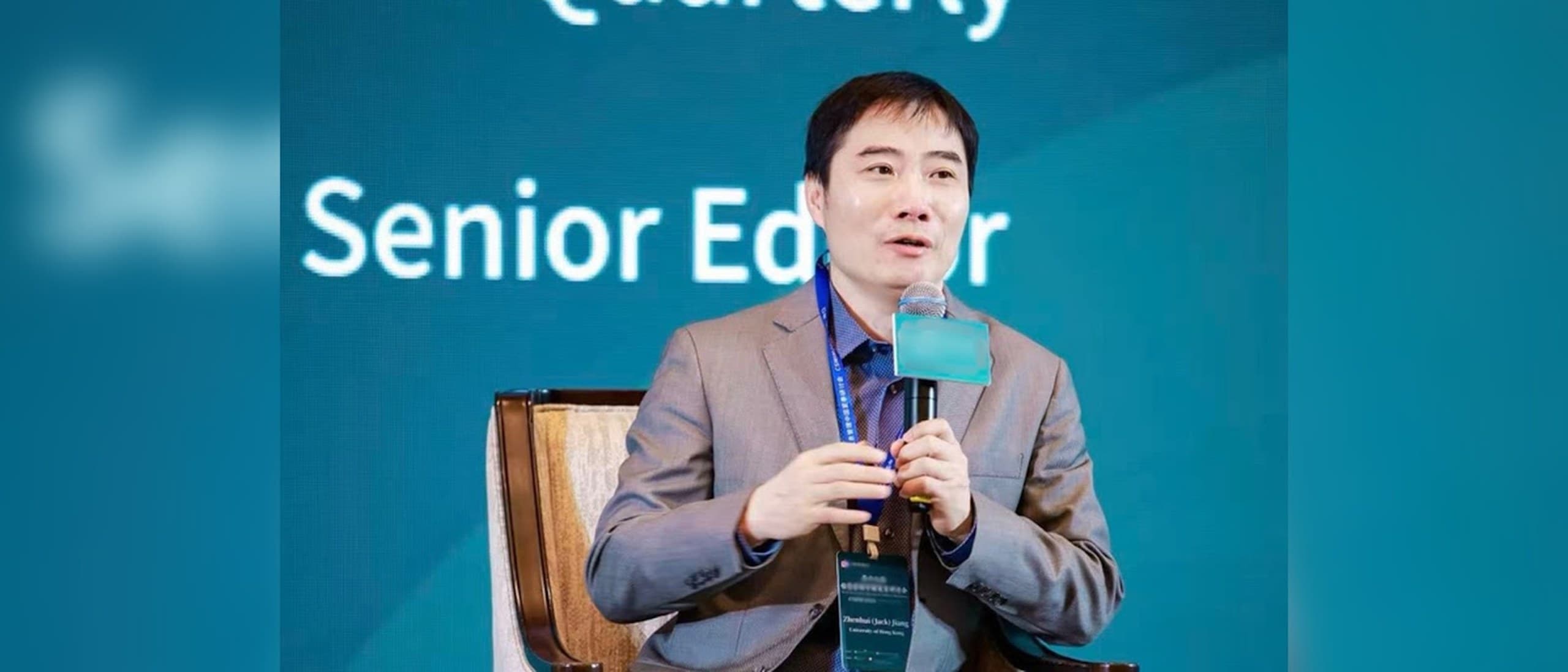
That gap is the story the lab wanted told. "Going forward, competition in the field will no longer focus solely on video quality, but increasingly on a model's overall capabilities, including its ability to handle high-risk content and execute complex instructions effectively," said Professor Jack Jiang, who directs the lab. The South China Morning Post ran it under a bigger claim: Chinese video AI beats US rivals. We read the full 19-page report, and that verdict only holds inside a test that was built in Chinese and frozen in April.
The ranking, as the report scores it
- Model (developer): Seedance 2.0 Pro (ByteDance). Visual quality: 3.84, 1st; With audio: 3.86, 1st; Safety rank: 3.12, 6th of 11
- Model (developer): Veo 3.1 (Google DeepMind). Visual quality: 3.47, 2nd; With audio: 3.51, 2nd; Safety rank: 3.62, 2nd
- Model (developer): Vidu Q3 Pro (ShengShu). Visual quality: 3.44, 3rd; With audio: 3.49, 3rd; Safety rank: 3.08, 7th
- Model (developer): Sora 2 Pro (OpenAI). Visual quality: 3.27, tied 4th; With audio: 3.35, 5th; Safety rank: Not rated
- Model (developer): Kling 3.0 (Kuaishou). Visual quality: 3.27, tied 4th; With audio: 3.28, 6th; Safety rank: 2.40, 9th
- Model (developer): Seedance 1.5 Pro (ByteDance). Visual quality: 3.25; With audio: 3.37, 4th; Safety rank: 2.18, 11th
- Model (developer): Wan 2.6 (Alibaba). Visual quality: 3.22; With audio: 2.95; Safety rank: 2.32, 10th
- Model (developer): Kling O1 (Kuaishou). Visual quality: 3.04; With audio: No audio; Safety rank: 2.50, 8th
- Model (developer): Hailuo 2.3 (MiniMax). Visual quality: 2.95, 9th; With audio: No audio; Safety rank: 3.63, 1st
- Model (developer): CogVideoX-3 (Zhipu AI). Visual quality: 2.92; With audio: 2.66; Safety rank: 3.35, 5th
- Model (developer): PixVerse V5.5 (AIsphere). Visual quality: 2.82; With audio: 2.87; Safety rank: 3.48, 4th
- Model (developer): Pika 2.2 (Pika Labs). Visual quality: 2.81; With audio: No audio; Safety rank: 3.52, 3rd
Scores are human ratings from 1 to 5, turned into capability estimates with bootstrapped confidence intervals. The quality set had 71 prompts, 50 text-to-video and 21 text plus a starting image. Ranks are ours, read from the report's tables. Hailuo 2.3, ninth on quality, was the most careful model in the test, with Veo 3.1 a hair behind it.
Three things the headline leaves out
The first is the language of the test. The report says it uses an original Chinese-language dataset designed for Chinese linguistic and cultural contexts, and it credits part of Seedance's win to how well the model understands Chinese. That makes it a useful scorecard for anyone making work for Chinese platforms. It doesn't tell an English-language filmmaker which model will follow their prompt best.
The second is the age of the models. The lab tested models available as of April 2026. Since then ByteDance has shipped Seedance 2.5, on 31 July, and Kuaishou made Kling 4.0 generally available on 15 October. The only US frontier model in the quality comparison besides Veo no longer exists as a product: OpenAI closed the Sora app on 26 April and shut down the Sora 2 video API, the access point developers build on, on 24 September. The report keeps Sora as a historical reference and leaves it out of the safety table without saying why. Veo 3.1 is still Google's current model.
The third is the safety split itself. The card circulating with the story says Chinese models are weaker on safeguards, and that is too broad. A Chinese model, Hailuo 2.3, is first, and PixVerse and CogVideoX are fourth and fifth. The bottom five, though, are all Chinese, and they include the two most widely used families, Kling and Wan. Only two US models were scored on safety at all, Veo and Pika, and both placed in the top three. The safety score also measures something specific: raters judged whether each output complied with the rules, on the same five-point scale, which is not the same as a refusal rate. The report says some models produced prohibited content for drug-deal and extreme-violence prompts, but it doesn't name them.
One correction for anyone quoting the press release. It says Wan 2.6's score dropped by 66 percent when given an image to work from. The report's own numbers show a fall from 3.41 to 2.75, which is 0.66 points, or about 19 percent.
The 90 percent figure belongs to the regulator
HKU's release also carried the most quotable number around this story: about 430,000 micro-dramas released on the Chinese mainland in the first eight months of 2026, with AI productions making up more than 90 percent of new releases. That figure isn't in the English report. Its source is Wang Xiaoliang, director general of the network audiovisual department at China's broadcast regulator, the NRTA, speaking at a State Council Information Office briefing on Thursday 17 September. He said the total was 13 times the whole of 2025.
It counts titles released, not hours watched or money earned. And the industry body's own guide treats AI drama as a broad category, including AI animated comic dramas as well as imitation live action. So the accurate version is that more than nine in ten new micro-drama titles were AI dramas, not that AI made nine in ten of what China watches. The quarterly numbers don't sit neatly with it either. The industry body put Q1 at about 128,000 releases with AI above 95 percent, while Xinhua quoted data putting Q2 at over 60 percent. We couldn't reconcile the two with the January to August share, so we quote the regulator's figure as the official one and draw no trend from it.
The regulator's answer matters as much as the number. At the same briefing it said 68,000 noncompliant micro-dramas had been taken down this year, and that more than 90 percent of the content involved was AI-generated, and it set out rules requiring AI dramas to carry labels and platforms to secure likeness and voice authorization. It also put money behind live-action production. Six major platforms have pledged at least 6 billion yuan for quality live-action micro-dramas, and Xinhua quoted the line that live-action dramas are the mainstay of quality productions.
What a filmmaker can take from it
Read with its limits, this is the most rigorous public scorecard yet of the tools the Chinese market actually uses, and it comes from an academic lab rather than a vendor arena. The report doesn't disclose its funding, so we call it academic rather than proven independent. Two findings carry beyond the leaderboard. Most models did better from text alone than from text plus a starting image, with Vidu Q3 Pro the exception, which is worth knowing if you build shots from reference frames. And the quality leader is mid-table at declining misinformation and copyright probes, which matters most to whoever ends up carrying the clearance risk on a commercial job.
Our take: this is a good test of spring 2026 in Chinese, sold as a verdict on the whole field. The useful part is the split between how good a model looks and how well it behaves, and the lab could make it far more useful by rerunning it on Seedance 2.5, Kling 4.0 and an English prompt set.
Timeline
- Date: Thu 5 Feb 2026. Event: Kling 3.0 launched; Source: Kuaishou investor release
- Date: Feb 2026. Event: Seedance 2.0 released; Source: ByteDance; reseller listings
- Date: April 2026. Event: Cut-off: models available by this point were tested; Source: HKU AIEL report
- Date: Sun 26 Apr 2026. Event: Sora app and web discontinued; Source: OpenAI Help Center
- Date: Fri 31 Jul 2026. Event: Seedance 2.5 launched; Source: ByteDance Seed blog
- Date: Thu 17 Sep 2026. Event: NRTA: 430,000 micro-dramas Jan to Aug, over 90 percent AI; Source: SCIO briefing via Xinhua
- Date: Thu 24 Sep 2026. Event: Sora 2 video API shut down; Source: OpenAI developer docs
- Date: Thu 15 Oct 2026. Event: Kling 4.0 generally available; Source: Kuaishou release note (secondary)
- Date: Mon 26 Oct 2026. Event: HKU report and release published; Source: HKU; SCMP
Sources and what is unconfirmed: HKU AIEL report, Benchmarking the Performance and Safety of AI Video Generation Models (English edition, read in full); HKU press release and news story, 26 October; SCMP, 26 October (read to the paywall); Xinhua English and Chinese, China News Service and ECNS on the NRTA briefing, 17 to 18 September; China Netcasting Services Association micro-drama guide, Q2 2026; Xinhua, 18 August, and CNBC, 26 August, on quarterly figures; OpenAI Help Center and developer docs; ByteDance Seed blog; Kuaishou investor release. Unconfirmed: the lab's funding, whether a Chinese edition of the report carries the 430,000 figure, whether Seedance 2.0 Pro is ByteDance's official name or a tier label (we use the report's name), and the report's sample videos, which we did not watch.