IATSE puts a crew technician in charge of AI ahead of 2027 talks
The crew union's new Labor and Technology Intelligence Officer wants members helping build worker-centric AI tools, but no program, vendor or budget exists yet. Her real job is the contract that expires in July 2027, which already lets producers require AI and gives crew a consultation right, not a veto.
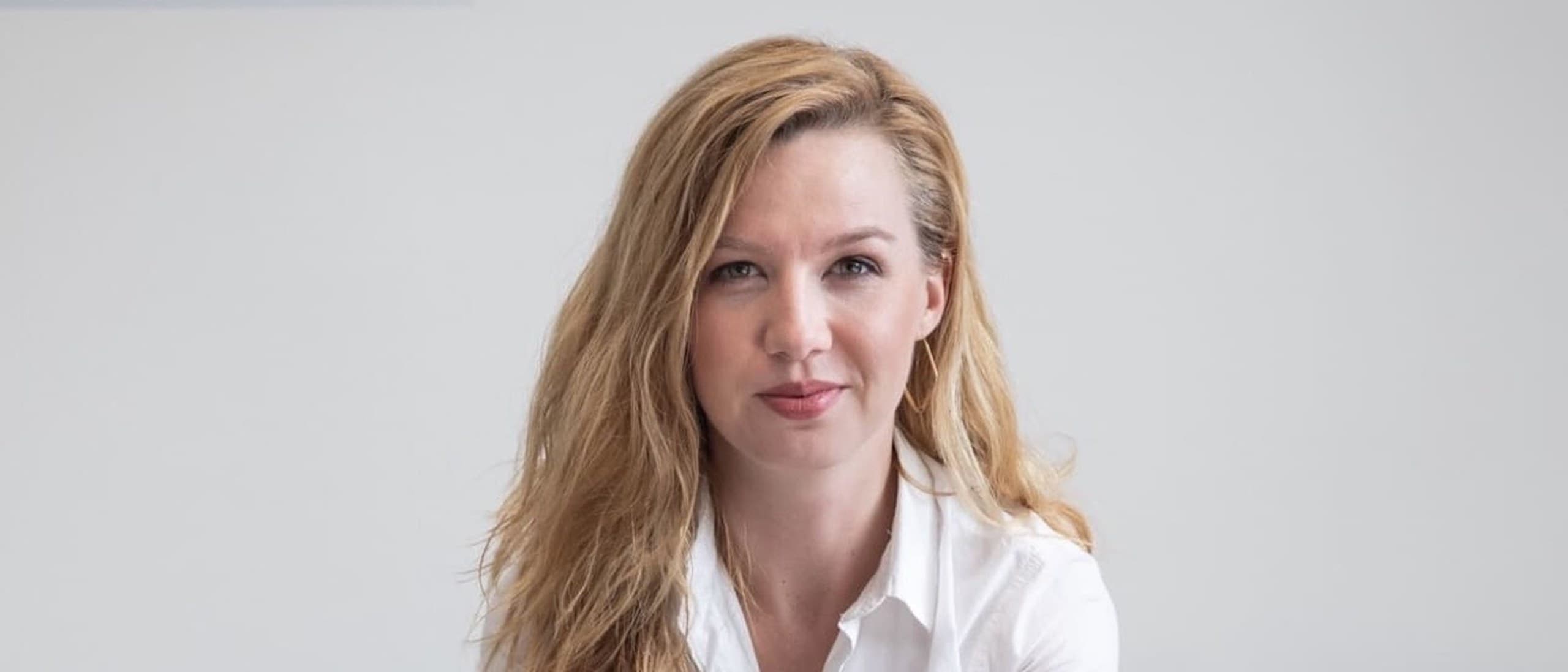
In July, Jillian Arnold stopped working as a video engineer. She had spent years on the technical side of the camera, with credits that run from NASA's Mars Curiosity Rover landing and the Juno mission to live broadcasts of the Oscars, the Emmys and the MTV Video Music Awards. As she told The Hollywood Reporter: "I officially retired from being a video engineer in the field in July and within a week my new position was announced to IATSE, to all of leadership."
That position went public on Friday 23 October. IATSE, the crew union that says it represents more than 170,000 workers in the US and Canada, has named Arnold its first Labor and Technology Intelligence Officer. The union sent out its own release that day, and Deadline, Variety and TheWrap rewrote it within hours. The Hollywood Reporter's Katie Kilkenny got the only interview, and it is where every useful line lives.
It would be easy to read the hire as a union switching from fighting AI to building it. The record doesn't support that. What IATSE has done is give its AI policy a full-time technician and a department, roughly a year before it sits down to renegotiate the contract that already governs how producers can use AI on set. For anyone who works on a crew, or who makes films with AI and hires crew, that contract and the person now writing its next version matter more than the headline.
A technician, not a newcomer to the fight
Arnold is a former president of IATSE Local 695 and the first woman to hold that job. In 2024 she chaired the union's AI subcommittee during the talks with studios and streamers, and she kept working part-time for the International while still in the field. She told THR that International President Matthew Loeb "wanted to start a tech department and felt that it was the best time, especially getting in preparation for next year's negotiations."
Her own writing shows where she started. In a column for her local's magazine after her appointment as subcommittee chair, she wrote that she had worked with OpenAI president Greg Brockman in 2021 and that his talk "changed my thinking of everything to come." She told members that AI "is inevitable at this point and we can greet it with either terror or curiosity," and she argued for curiosity. That Brockman meeting is her own account, and we haven't checked it independently.
Why this is not a change of sides
IATSE has treated AI as a workplace tool for at least two years. In April 2024, as subcommittee chair, Arnold told Variety: "We are focusing on AI as a tool... We look at it more as a challenge and as a tool within our workplace." The Basic Agreement that members ratified in July 2024 put that view into contract language, in a new Article XLIX that we read in full in the AMPTP's memorandum of agreement.
The article opens by conceding the point that the switching story treats as new. It says a producer "may require employees to use any AI System or resulting output of such systems for use in connection with the performance of covered work," and that crew who prompt those systems stay covered by the contract. It also already names retraining as "the preferred method of addressing impact resulting from new technologies" and set up a joint training committee that was due to meet within 90 days of ratification. We found no public record of what that committee has produced.
Arnold's own priorities point the same way. Asked what comes first in the new job, she told THR that "negotiations are next spring, so that's the number one priority." The current agreement expires on Saturday 31 July 2027. A fair reading is that IATSE is staffing up for a bargaining round, with tool-building as one goal inside it.
What the contract already gives crew
Most crew members have never read Article XLIX, so it is worth setting out what it does and doesn't do. A producer can't make an employee provide prompts "in a manner that results in the displacement of any covered employee." A decision to require AI use is subject to consultation "at the employee's request, provided that the requirements of production allow time for the consultation." That is a conversation, and the contract stops well short of a veto.
If a producer agrees to use an employee's own AI system, the two sides "shall negotiate for reasonable reimbursement for such use," which matters for freelancers paying for their own subscriptions. The producer also defends crew against claims arising from AI use on the job, subject to conditions set out in the article. Likeness scans need separate signed consent that can't be a condition of employment. The limits cut the other way too: an arbitrator "shall have no authority to prohibit or restrict the use of any AI System or the resulting outputs."
The copyright argument crew can use now
The most practical thing Arnold said came when THR asked about crew jobs that move into AI work. She pointed to the consultation right and to copyright, which she said matters to employers who own the intellectual property "but it's important to us, too." In that consultation, she wants members to be able to argue that "some of those more analog workflows are still considered more economical and produce a unique, copyrightable solution. So AI models may not always be the best tool for the job."
That turns a legal uncertainty into leverage. A studio that owns a film wants to be sure it owns every shot, and human-made work is the safer bet on that front. A camera operator, an editor or a VFX artist who raises it in a pre-job consultation is making a business case rather than a plea, and it's a case a producer has its own reasons to hear.
Building tools, so far one answer in one interview
The most exciting idea in the coverage is crew helping design AI tools, and Arnold did say it. She told THR the union wants members "to upskill and re-skill and also to help them engage in the creation of artificial intelligence tools that are very worker-centric," adding that IATSE wants "to make sure that we are a part of the deployment and integration of any AI within our craft so that we make tools that are for workers, not displacing workers."
Nothing published yet backs that sentence with a program, a vendor, a budget or a named craft. Arnold said leadership has picked the crafts "on the first wave" but declined to name them: "I really don't want to create anything that I don't have a data set to substantiate at this time." She said the union is "talking to potential education partners" without naming any, and that it had just rolled out a class for local leaders "on how to talk to members about AI," with no syllabus or date published. On which models are ethical to use, her answer was short and clear: "At this time, we're not endorsing any model per se."
Some of the training is already happening lower down. Vancouver's Local 891 ran an AI-learning pilot with a vendor called Scholé, which published a case study on 2 October. That is vendor marketing, but it shows locals are buying training before the International names a partner.
One union, several positions
IATSE is a federation of crafts with very different exposure to AI, and its locals don't speak with one voice. In June, the Art Directors Guild, which is IATSE Local 800, called Martin Scorsese's advisory role at Black Forest Labs a "betrayal." In 2024 the rank-and-file caucus CREW asked that AI use not be a condition of employment, and the contract that followed lets producers require it. Even the release announcing Arnold's job says IATSE is committed to keeping productions "authentically made for humans, by humans."
Arnold's job is to hold those positions together at the table. Her own line in the release puts it in worker terms: "I've also seen why workers need a meaningful voice in determining how technologies are developed and integrated into the workplace." John M. Lewis, IATSE's director of Canadian affairs, added a cross-border worry: companies "may choose to deploy certain AI technologies in different jurisdictions but not in others."
What crew and AI filmmakers can do with this
- The consultation right is yours to use: if a production wants you to use AI, ask for the conversation before the job starts, while there is still time to have it.
- If you bring your own AI subscription to a job, the contract says reimbursement is negotiated, so raise it rather than absorbing the cost.
- Copyrightability belongs in your pitch for a human workflow, because producers care who owns the shot.
- Proposals for 2027 are being collected now. Arnold said "we're still fielding proposals for members," so talk to your business agent this winter if you want a say.
- If you build AI tools for production, the union's AI lead says crew should help design them. Nobody has published how that would work, which leaves room for whoever brings a serious offer.
Our take: this hire is good news for creators on both sides of the camera, because it puts someone who has engineered live television and NASA missions in the room where AI rules get written. The test comes next spring, when IATSE has to turn "worker-centric" into contract language that a producer signs.
Timeline
- Date: 2021. Event: Arnold says she worked with OpenAI's Greg Brockman (her own account); Source: Local 695 magazine
- Date: Fall 2023. Event: Named chair of IATSE's AI subcommittee for Basic Agreement talks; Source: Local 695 magazine; THR
- Date: Wed 3 Apr 2024. Event: Arnold tells Variety IATSE is "focusing on AI as a tool"; Source: Variety
- Date: Thu 18 Jul 2024. Event: Members ratify the 2024 Basic Agreement with new AI Article XLIX; Source: IATSE release; AMPTP MOA
- Date: Nov 2024. Event: Talks with the AMPTP on an upskilling and reskilling program begin; Source: Local 695 magazine, Spring 2025
- Date: Tue 9 Jun 2026. Event: Art Directors Guild (Local 800) calls Scorsese's Black Forest Labs role a "betrayal"; Source: Variety; Deadline
- Date: Jul 2026. Event: Arnold retires from field work; new role announced internally within a week; Source: THR interview
- Date: Fri 23 Oct 2026. Event: Public announcement, THR interview, trade rewrites; Source: IATSE release; THR; Deadline; Variety
- Date: Spring 2027. Event: Basic Agreement negotiations, Arnold's "number one priority"; Source: THR interview
- Date: Sat 31 Jul 2027. Event: 2024 Basic Agreement expires; Source: AMPTP MOA
Sources and what is unconfirmed: The Hollywood Reporter (Katie Kilkenny, 23 Oct 2026, read in full); IATSE's release on IATSE Canada's site (23 Oct); IATSE's leadership bio page; the AMPTP's 2024 IATSE Basic Agreement memorandum, Article XLIX, read in full; Local 695 magazine columns by Arnold; Variety (3 Apr 2024); Variety and Deadline on the Art Directors Guild (Jun 2026); Scholé's Local 891 case study; CREW's 2024 demands report; X API pull on 26 Oct. Unconfirmed: any tool-building program, vendor or budget; which crafts are in the "first wave"; the leadership class's syllabus and date; what the 2024 joint training committee has produced; the Brockman meeting. The 170,000 membership figure is IATSE's own.