Four Indian studios made AI films with YouTube's backing. Here's what they built
India's state-backed creative-tech institute and YouTube screened Chekavar, DEVI: The Nine Astras, Chanakya and Laika for ministry officials on 7 October. The support was Google tool credits, facilities and mentors with no published amount, the studios were already making AI work, and only two of the four films are on YouTube so far.
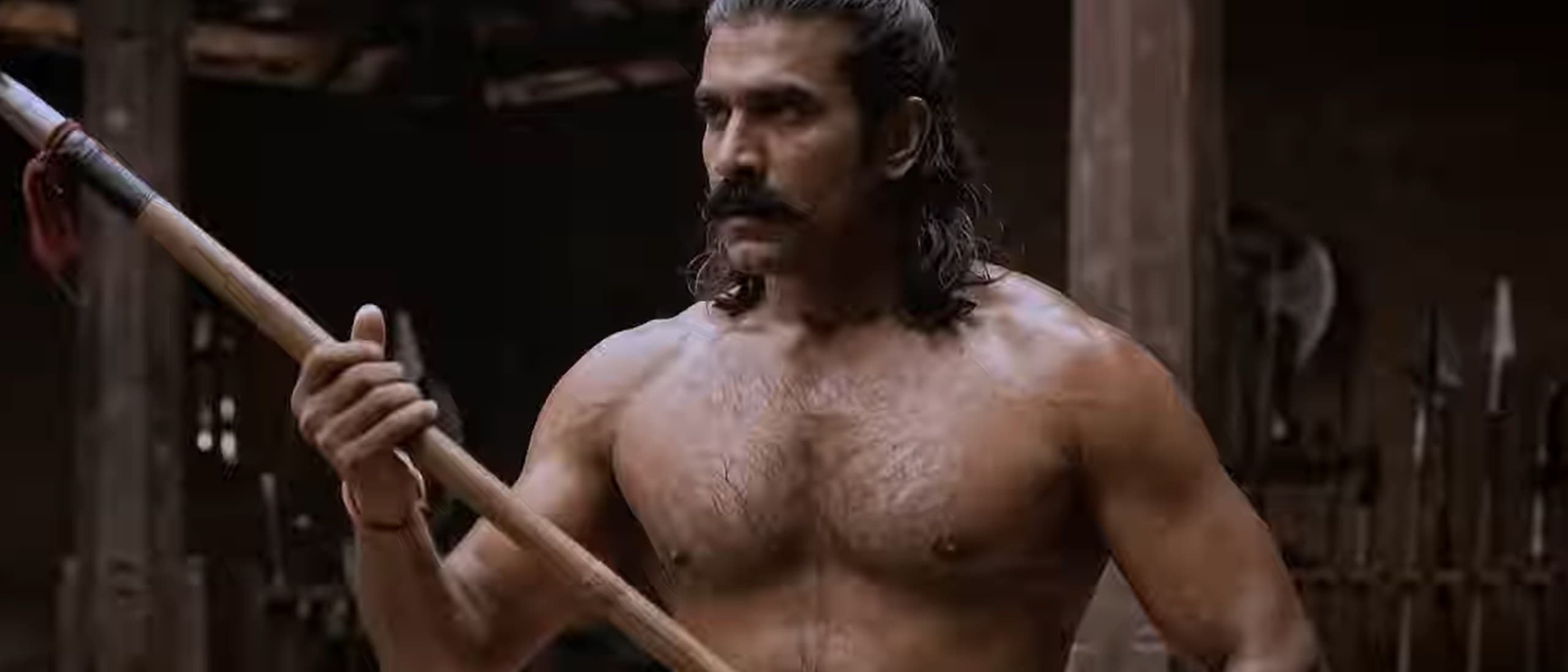
On Wednesday evening, in a screening room on the National Film Development Corporation campus in Mumbai, senior officials from India's Ministry of Information and Broadcasting sat down with the heads of the NFDC and the national film certification board to watch four films that had been made largely with generative AI. At the same time, according to the government's own release, the filmmakers put the films out on their YouTube channels.
The four titles came out of Create with AI, a program run by the Indian Institute of Creative Technologies (IICT), the state-backed creative-tech school in Mumbai, and YouTube. They are Chekavar, a Hindi period drama set around the 1741 Battle of Colachel; DEVI: The Nine Astras, a mythological series; CHANAKYA: The Mind of an Empire; and Laika. The pitch from the stage was big. "Our partnership with IICT demonstrates what happens when fearless Indian storytelling meets frontier technology to produce world-class cinema on an independent scale," said Gunjan Soni, managing director of YouTube India. IICT's chief executive, Dr Vishwas Deoskar, went further: "India has the opportunity to lead the next chapter of AI-led filmmaking."
Underneath the speeches sits a more useful story for anyone making AI work. It covers who got picked, what they were actually given, and the craft choices that make two of these films worth studying.
What the program actually gave the makers
Create with AI was announced on Monday 17 November 2025 as part of an agreement between IICT and YouTube. Google's own post at the time called it "a new funding commitment to support creative projects that use artificial intelligence", but it named no amount, and nobody has published one since. The government release for this week's screening describes the support as YouTube's AI software, tools and credits, plus IICT's facilities and faculty mentors. No budget for any of the four films is public.
So read "backed by YouTube" as tool credits and a stage, not a check you can apply for. IICT's chief operating officer, Ninad Raikar, framed it as a test rather than a fund: "The question for us was never whether AI will replace creativity, but what becomes possible when we equip creators with these new tools." Every tool the makers have named is a Google product, including Veo, Flow, Gemini, NotebookLM, Google Vids and Flow Music. That's normal for a vendor showcase, and it means the films tell you what YouTube wants on YouTube, not which tools win.
Four films, four very different shapes
The early coverage called them short films. Two of them are not short at all, and two of them could not be found online. Here's where each one stood when we checked YouTube's data on Friday morning, roughly a day and a half after release.
- Film and studio: Chekavar, Avium Studios with Garuda X Media. What it is: Hindi period drama, written and directed by Gijo Uthuppu; Where it is (YouTube data, 9 Oct): Live on Avium's channel, 30 min 17 s, about 1,700 views; Tools the makers name: Gemini and Flow, plus real Kalari fighters filmed as reference
- Film and studio: DEVI: The Nine Astras, Kalpanik Films. What it is: Nine-episode series of about 4 minutes each, directed by Vishal Yoman and Ayushi Anand; Where it is (YouTube data, 9 Oct): Live, eight episodes public, about 4,500 views in total; Tools the makers name: NotebookLM for the script, Google Vids and Veo for visuals, Flow Music for the title track
- Film and studio: CHANAKYA: The Mind of an Empire, Eleventh Door Studio. What it is: Created and directed by Nishith Dayal; Where it is (YouTube data, 9 Oct): Not on the studio's channel or in search; a first look from October 2025 has about 7,700 views; Tools the makers name: None named
- Film and studio: Laika, Karthik Kult Kreations. What it is: Studio led by producer Karthik Sabareesh; Where it is (YouTube data, 9 Oct): Not on the studio's channel or in search; Tools the makers name: None named
The two missing films may be unlisted or simply late, and IICT hasn't said. Until IICT or the studios point to them, "released on YouTube" is true for two of the four. DEVI's descriptions also promise episodes "dropping daily" through Navratri, which runs from Sunday 11 to Monday 19 October, though all nine were uploaded on Wednesday.
These were not first-timers
The program picked studios that were already making AI work, and some that had shipped conventional films too. Karthik Sabareesh produced Gaami, the crowdfunded Telugu feature that reached cinemas in 2024. Kalpanik Films had a 2025 AI Holi song, billed as the world's first, that has passed 563,000 views. Eleventh Door showed a Chanakya first look in October 2025, before Create with AI was even announced. Avium is the outlier, with a channel of 18 videos and 25 subscribers, and it is the team that took home a Create with AI recognition from Minister of State Dr L. Murugan when a showcase reel of all four films played at the YouTube Impact Summit in New Delhi on Tuesday 29 September.
No open call or selection criteria were published that we could find. That matters if you're reading this as a door that might open for you. The first cohort was chosen, not applied for.
The craft worth stealing
In practice, for anyone making work this week, the two live films show two different answers to the question every AI filmmaker gets asked about performance. The Chekavar team filmed real Kalari practitioners, the martial artists of Kerala, performing genuine movements, weapons work and combat as reference, and generated the battle around that footage. "Can a small team can make a big movie like this? But with AI, we proved that it's possible," a member of the team said at the screening, as transcribed by Indiantelevision. Avium has also posted a two-minute making-of and built a companion site with a browser game, which is more audience-building than the other three teams have shown.
DEVI went the other way and put a real actor at the center. Nyrraa M Banerji, credited as the star, lent a digital likeness for the series, and co-director Ayushi Anand described a script built by feeding source texts into NotebookLM: "We ingested all the Puranic books to NotebookLM, where we made the script." Her answer to the emotion question was simple: "It will come through our actresses and actors." The series' YouTube description calls this "India's first ethical AI casting pipeline". That's the makers' own claim, and the consent, pay and reuse terms behind it have not been published.
Both approaches are open to a solo maker. Shoot the movement you cannot fake, cast a person whose consent you can document, and put the method on screen in a making-of, because process is now part of the pitch.
The numbers from the stage
The release also quoted research by the consultancy Public First, commissioned by Google, claiming a 20% productivity boost for creative workers in India, or roughly 390 hours. Public First's own published summary from February gives 20% and 390 hours as a global average estimate for individual creators, not an India figure, and puts India's generative-media potential at over INR 240 billion by 2035. Larger figures said from the stage, Rs 750 billion of GDP and 400,000 jobs, appear in no Public First document we could find. Treat all of them as vendor-commissioned estimates.
Audiences are still small. Chekavar and the first DEVI episode were each around 1,700 views on Friday, and the government's own post about the event on X drew under 11,000 impressions. The interesting part is that a ministry, a national film school and the world's biggest video platform chose to put AI films in front of the country's film establishment at all. The next useful facts are where Chanakya and Laika went, what the tool credits were worth, and whether a second cohort will be open to anyone.
Timeline
- Date: Tue 28 Oct 2025. What happened: Eleventh Door posts a Chanakya first look; Source: YouTube, Nishith Dayal LinkedIn
- Date: Mon 17 Nov 2025. What happened: IICT and YouTube announce Create with AI, a funding commitment with no amount; Source: Google India blog
- Date: Mon 16 Feb 2026. What happened: Public First publishes its research for Google, 20% and 390 hours as global averages; Source: Public First
- Date: Wed 16 Sep 2026. What happened: IICT names the four studios; Source: IICT LinkedIn
- Date: Tue 29 Sep 2026. What happened: Showcase reel of all four films at the YouTube Impact Summit, New Delhi; Chekavar director recognized; Source: Avium Studios
- Date: Wed 7 Oct 2026. What happened: Full screening in Mumbai and release on the makers' channels; Source: Government release (PIB Mumbai)
- Date: Fri 9 Oct 2026. What happened: Chekavar and DEVI live; Chanakya and Laika not found; Source: YouTube Data API
- Date: Sun 11 to Mon 19 Oct 2026. What happened: Navratri, the window DEVI's descriptions name for daily episodes; Source: Episode descriptions
Sources and what is unconfirmed: PIB Mumbai release 2320332 (7 Oct); Indiantelevision event report (7 Oct), the only reporting from the room, which is where the maker quotes come from; Economic Times (8 Oct) for the Raikar quote; Google India blog (17 Nov 2025); Avium Studios and chekavars.com; YouTube Data API for runtimes, upload times and views, read 9 Oct; Public First (16 Feb 2026). We have not watched the films. No funding amount, film budget or likeness terms are public, and the whereabouts of Chanakya and Laika are unconfirmed.