Kerala's CM wants tougher AI laws. A copyright order already says who owns AI work
Kerala's CM V D Satheesan asked for tougher piracy and deepfake laws, and copyright is Delhi's call anyway. The real answer sits in a 31 August order from India's Registrar of Copyrights: DABUS cannot be an author, the human behind it could be. It covers one artwork, not a film, and leaves AI authorship to Parliament.
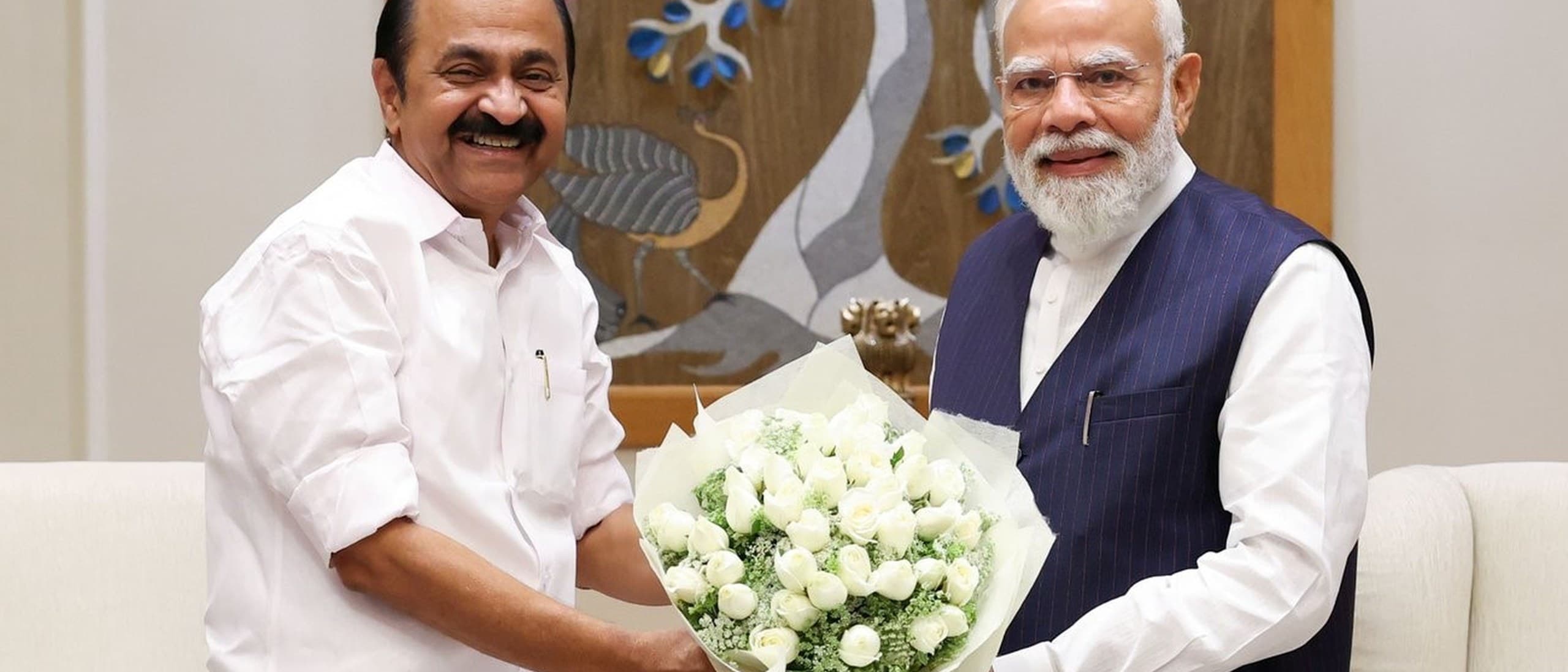
The AI video that pulled Kerala's new Chief Minister into the copyright debate was a video of him. Someone had made V D Satheesan dance, and when he opened a law seminar in Kochi on the evening of Friday 11 September he joked that his synthetic self moved better than Mohanlal, the state's biggest film star. Then he turned serious: piracy was bleeding an industry built on big money and collective labor, he said, and AI-made music, images and video had brought deepfakes and security threats that existing laws should be amended to handle.
The headlines that followed bundled his remarks into a bigger question, the one every AI filmmaker eventually asks a distributor: who actually owns this footage? Satheesan never asked it. The Press Trust of India report, carried word for word by India Today, Mint, Mathrubhumi and The New Indian Express, is about piracy, deepfakes and fake images of public figures. The more useful answer to the ownership question arrived quietly eleven days earlier, in a 48-page order from India's Registrar of Copyrights that most coverage read as a story about a stubborn American inventor.
What the Chief Minister asked for, and what he can't do
Satheesan, a Congress leader who was sworn in on 18 May after the UDF took 102 of Kerala's 140 seats, also holds the state's law portfolio. He spoke at "Music, Cinema and Law", a three-day seminar run by the Kerala Judicial Academy and the National University of Advanced Legal Studies, with Supreme Court Justice V Mohana as chief guest. No draft bill, cabinet note or policy paper came with the speech, and we found none in the three weeks since.
There is also a hard limit on what any state can do here. Copyright in India is a Union subject, and both the Copyright Act of 1957 and the IT Act of 2000 are central laws, so a Chief Minister can lobby Delhi and shape state film policy but cannot rewrite the statute that decides ownership. Read his remarks as pressure from a film state on the center, which is real, and not as a law in the making.
India already polices synthetic video harder than most
The deepfake half of his ask is partly answered already. India's IT Amendment Rules 2026, notified on 10 February as GSR 120(E) and in force since 20 February, define "synthetically generated information" as audio or video made or altered by a computer so that it looks real and could pass for a real person or event. Lawful synthetic content must carry a prominent visible label and, where technically feasible, permanent provenance metadata (a hidden tag recording where the file came from) that platforms are barred from letting anyone strip. Takedowns on actual knowledge now have to happen within three hours, down from 36, according to the MeitY FAQ on the rules.
Routine editing, color correction, noise reduction and compression are carved out as long as they don't change what a scene shows. For anyone posting AI shorts to Indian audiences, that means a realistic generated scene needs a visible label on the platform, and a big platform may ask you to declare it before upload. Law firm Bhatt & Joshi Associates calls the rules the first binding provenance mandate anywhere, while Outlook Business has reported the cost for India's two million or so active creators, most of whom earn nothing from their channels.
The order that answers more than the speech
On Monday 31 August the Registrar of Copyrights, Prof Unnat P Pandit, rejected Stephen Thaler's 2022 application to register "A Recent Entrance to Paradise", an image Thaler says his AI system DABUS made on its own, with DABUS named as the author. We read the full order, published by the legal blog SpicyIP. The interesting parts are the findings that went Thaler's way.
First, the Registrar held that the image clears the originality bar in section 13 and wrote that a work is not deprived of originality "merely because technology played an indispensable role in its production." Second, applying section 2(d)(vi), which makes the author of a computer-generated work "the person who causes the work to be created", he found that on Thaler's own account Thaler is that person. Thaler built the system, set up the process and started it, and that was enough to make him the statutory author. The application failed only because Thaler refused, at a hearing on 24 June, to swap his name in for the machine's.
That is a long way from the US position. In practice, for anyone making work this week, the Indian reading points to the human who designs and runs the generation as the author of an AI-made image, without requiring that person to have drawn each pixel. The order is one administrative decision on one artwork, not a court ruling, and it leaves two things open on purpose: whether AI use should be disclosed in the register, which it says may need a policy or new forms, and whether machines should ever be authors, which it calls a decision for Parliament.
Where a film sits: the producer is the author
Films have their own rule. Section 2(d)(v) makes the producer the author of a cinematograph film, and section 2(uu) defines the producer as the person who takes the initiative and responsibility for making it. The DABUS order spends a paragraph on why, describing the producer as the "maker-conceiver" who finances, hires and steers the project from development to distribution, and it notes the producer can be a person or a company.
Our reading, which no court or registrar has yet applied to a film full of generated shots, is that this makes chain of title in India friendlier to AI-assisted film than in the US. The question a sales agent asks shifts from who made each frame to who took the initiative and the responsibility, and a producer who can document that has a cleaner story to tell.
The US split
In the United States the same Thaler lost for good on 2 March, when the Supreme Court declined to hear Thaler v Perlmutter and left standing the DC Circuit ruling that copyright needs a human author. The US Copyright Office's January 2025 report on copyrightability adds the working rule: AI-assisted work is protectable where a human determined the expressive elements, through their own material in the output or through creative selection, arrangement or modification, and prompts alone are generally not enough. Registrants must disclose AI-generated material that is more than de minimis.
Popular primers often say purely machine-made output falls into the public domain, which is loose. In the US it is unclaimable material that nobody can register, which is close in practice and different in law, and India's Registrar has just found a human author for exactly the kind of image the US refused.
The paper Delhi still hasn't published
The document that would settle authorship for India is not the one Kerala is asking for. A committee formed by the commerce ministry's DPIIT on 28 April 2025 published Part 1 of its working paper on 8 December 2025, proposing a mandatory blanket license for AI training with statutory payment to rightsholders. Part 2, covering copyrightability and authorship of AI outputs, was described that month as about two months away. Nearly ten months later we could find no published version.
What to keep on file
None of this waits on a statute. Distributors, sales agents and errors-and-omissions insurers want a clean chain of title, and a generator's terms of service give you contract rights against the platform rather than copyright against the world. The leverage sits with the creator who keeps a paper trail: a human-written script, a shot log of what was generated, with which tool and why, the edit decisions that show human selection and arrangement, the tool's terms as they stood on the day you used them, and a list of the AI elements you would disclose to the US office.
Indian law now gives that file a second use, because the person who causes the work and the producer who takes the responsibility are both roles you can prove on paper. The filmmakers who build that record now will have the easiest conversation when Delhi finally writes the rule.
Timeline
- Date: Wed 29 Jan 2025. Event: US Copyright Office report: human authorship needed, prompts alone generally not enough; Source: US Copyright Office
- Date: Mon 28 Apr 2025. Event: DPIIT forms its committee on generative AI and copyright; Source: PTI
- Date: Mon 8 Dec 2025. Event: DPIIT Working Paper Part 1 proposes a blanket training license; Source: DPIIT working paper
- Date: Tue 10 Feb 2026. Event: IT Amendment Rules 2026 notified, defining synthetic content; Source: Gazette GSR 120(E)
- Date: Fri 20 Feb 2026. Event: Rules in force: labels, provenance metadata, three-hour takedowns; Source: MeitY FAQ
- Date: Mon 2 Mar 2026. Event: US Supreme Court declines Thaler v Perlmutter; Source: SCOTUSblog docket
- Date: Mon 18 May 2026. Event: V D Satheesan sworn in as Kerala Chief Minister; Source: New Indian Express
- Date: Wed 24 Jun 2026. Event: Thaler declines to name himself as author at the Registrar's hearing; Source: Registrar's order
- Date: Mon 31 Aug 2026. Event: Registrar rejects DABUS as author, finds the work original; Source: Registrar's order
- Date: Fri 11 Sep 2026. Event: Satheesan calls for law changes on piracy and AI deepfakes in Kochi; Source: PTI
- Date: Thu 1 Oct 2026. Event: DPIIT Part 2 on AI authorship still not published; Source: Our searches
What is still open
Kerala has published no draft text, and the PTI copy does not show whether Satheesan's remarks were prepared policy or an off-the-cuff speech. The DABUS order covers one artwork and can still be challenged, and no Indian court or registrar has ruled on a film made with generated footage. Whether DPIIT Part 2 exists in draft is unknown; we can only say it has not been published as of 1 October on the sources we could reach.
Sources and reporting notes
The Registrar's order of 31 August was read in full as published by SpicyIP, and the IT Amendment Rules were checked against the gazette text and MeitY's FAQ. The Copyright Act was read on WIPO Lex, the Thaler cert denial on SCOTUSblog's docket and the US position in the Copyright Office's 2025 report. Satheesan's remarks come from one PTI report carried by four outlets, plus an Asianet Newsable piece for the deepfake detail, and the DPIIT timing from PTI in December 2025. The deepfake video itself was not viewed. We did not contact the Chief Minister's office, DPIIT or Thaler's representatives for this draft.