Marion Cotillard says AI actors still act like potatoes, and she's teaching her kids to spot them
At the press conference for Nicole Garcia's Milo, Marion Cotillard said she would be afraid the day an AI actor moved her. The wire stopped at the joke; reporters in the room heard more, including a detection habit she is passing to her children. That habit, not image quality, is the bar synthetic performers now face, and it points independent filmmakers toward performance, writing and disclosure.
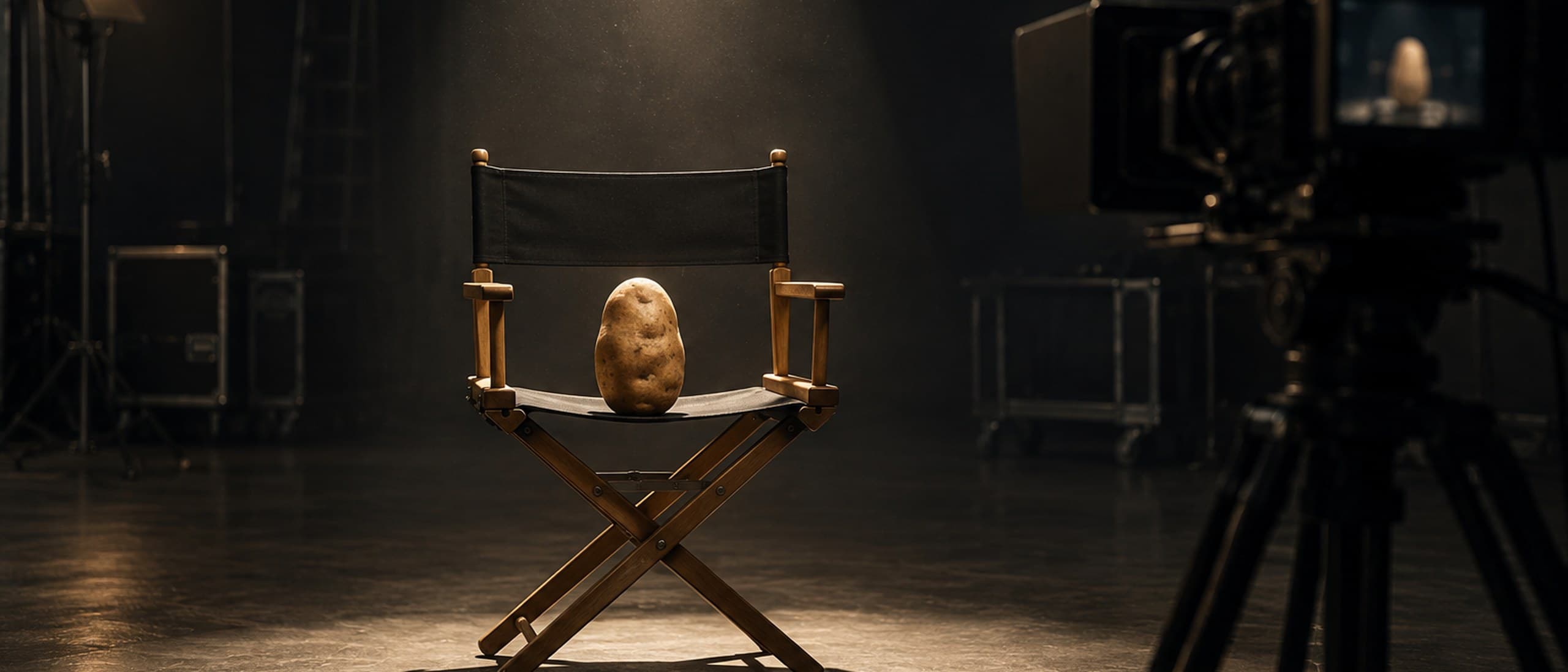
Marion Cotillard came to the San Sebastián Film Festival on Thursday 24 September to talk about a woman getting out of prison, not about software. In Nicole Garcia's Milo she plays Alice, a former radical-left militant who takes a café job near the son she gave up. Somebody at the film's press conference asked her about artificial intelligence anyway, and the Oscar winner answered laughing, according to El Correo, which had a reporter in the room. "I think I would be very afraid the day I was moved by an AI actor," she said, in AFP's translation from the French. "For now, I find that they act like potatoes, and that reassures me."
The line traveled fast, and the festival helped it along: its own post of the press conference on X led with the AI answer in English, Spanish and Basque. "Jouer comme une patate" is everyday French slang for acting badly, stiff and wooden, which is why the Spanish agency EFE rendered it simply as "they act terribly." It is a put-down, but a casual one, delivered by an actor promoting a human drama rather than by someone reviewing a particular AI film.
What the wire left out
The AFP story that most English readers saw stopped at the potatoes. Spanish outlets that were in the room, including Europa Press, El Correo, El Periódico, Ara and EFE, carried a longer answer, and it is more interesting than the joke. According to Europa Press, Cotillard said she always tries to detect AI, "which today is still detectable", and that she teaches her children to detect it too. She wondered whether a day will come when "an AI will erase me from the screen" without her realizing it is one, and end up moving her. Those lines are translated here from the Spanish reports, which were themselves working from the French interpretation, so the exact English wording should be read as approximate.
She is also not the blanket AI skeptic some headlines made her. Europa Press quotes her saying AI "can be formidable in many trades" and only becomes "disconcerting" when it touches the artistic side. Her objection is specific to synthetic performers, and she framed it as a question about why anyone would make films with fake actors at all. Nothing, she said, can replace a beating heart and a soul that has been through a life.
The audience is hunting for the seam
The detail worth keeping is the detection habit. The usual argument about AI performers runs on image quality: skin, eyes, lip sync, whether the hands hold together through a shot. Cotillard is describing something else, a viewer who sits down already looking for the trick and is raising her children to do the same. For anyone building a synthetic performance, that is the real bar, because the work does not only have to be good, it has to survive an audience that is searching for the moment it breaks.
This week offered a public demonstration of how that search plays out. Tilly Norwood, the AI performer built by Particle6 and its Xicoia studio, glitched into Cantonese during an appearance on Piers Morgan Uncensored while discussing her announced feature, Misaligned, and Euronews reported on Monday 21 September that the clip had passed 14 million views on X. The Observer interviewed Norwood two days later and found her "laggy and buggy", while Synthesia's Alexandru Voica called her "a gimmick". Cotillard did not mention Norwood in any account of the press conference we read, and the connection some outlets drew was their own. The timing still helps explain why an offhand answer at a festival presser traveled as far as it did.
Where the rules already sit
In the US, the question of when a synthetic performer can take a role is already written into a union contract. SAG-AFTRA members ratified their 2026 TV and theatrical agreement on Thursday 4 June, with 91.4% voting yes on a 19.3% turnout, according to Variety. Producers can use a synthetic performer only after notice and bargaining, and only if it brings "significant additional value" over a human actor or that actor's digital replica, according to the union's member FAQ. Cotillard's instinct and the contract point in the same direction, since both make a synthetic performer justify itself against a person rather than simply prove it can be done.
What this means for people making work
In practice, for anyone making work this week, Cotillard's answer reads as a brief more than a verdict. What she concedes is that the gap is performance, not pixels, and she located it in lived experience, childhood and "everything that ends up building an actor", in Europa Press's account. That is a directing and writing problem, and it is exactly where independent filmmakers using these tools can pull ahead of companies chasing a synthetic star. A short that gives a generated character a specific want, a history and a reason to be on screen will hold up differently under a suspicious viewer than a photoreal face reciting lines.
Disclosure belongs to the same craft. Our inference from her answer is that an audience trained to hunt for AI punishes the hidden reveal more than the tool itself, so work that says what it is up front, and credits the people who wrote, directed and voiced it, leaves a viewer nothing to catch. Nothing she said rules out an AI performance moving her one day. She said she fears the day it happens, which is a different sentence, and the filmmakers most likely to get there first are the ones treating the performance as the work rather than the render.
Timeline
- Date: Sat 27 Sep 2025. Event: Tilly Norwood unveiled at the Zurich Film Festival; SAG-AFTRA and actors push back; Source: The Cut, AP
- Date: Sat 14 Feb 2026. Event: Studiocanal launches sales on Nicole Garcia's Milo at the EFM; Source: Deadline
- Date: Thu 4 Jun 2026. Event: SAG-AFTRA ratifies a contract with synthetic-performer terms, 91.4% yes; Source: Variety, SAG-AFTRA FAQ
- Date: Mon 6 Jul 2026. Event: Particle6 announces the Norwood feature Misaligned, in early development; Source: Deadline, Televisual
- Date: Fri 4 Sep 2026. Event: San Sebastián confirms Cotillard will accompany Garcia's film; Source: Festival news release
- Date: Mon 21 Sep 2026. Event: Norwood's Cantonese glitch clip passes 14 million views on X; Source: Euronews
- Date: Thu 24 Sep 2026. Event: Milo press conference and the potato answer; the festival leads its post with the AI quote; Source: Festival YouTube and X, AFP, Europa Press, El Correo
- Date: Sat 26 Sep 2026. Event: Festival closes and announces its awards; Source: Straits Times (AFP), EFE
What is still open
Nobody reported who asked the question or how it was phrased, and nothing suggests she has watched a particular AI film, so the potato verdict is a general impression rather than a review. No prior public AI action by Cotillard, such as a petition, tribune or union statement, turned up in our research. Milo is in the festival's Official Selection, and the jury announces its awards when San Sebastián closes on Saturday 26 September.
Sources and reporting notes
The potato quote is AFP's English translation, checked against AFP's French wire as carried by France 24, RTL and La Presse. The detection, children, erase-me and formidable-in-many-trades lines are from Europa Press, read in full, with El Correo (Javier Álamo), El Periódico, Ara and EFE reporting from the same room; they are our translation of Spanish reports of a French answer. The press conference audio (festival YouTube, 45 minutes 33 seconds) was not heard for this draft. AFP's syndicated copy gives the film's title as "7h40 ce jour-là"; the festival catalogue lists it as "7h40 ce matin-là", international title Milo, which is used here. Norwood details are from Euronews (21 September) and The Observer (23 September); Misaligned from Deadline (6 July). Contract terms are from Variety (4 June) and the SAG-AFTRA member FAQ. The festival's X post was read directly on X.