Reality TV throws away 99% of what it shoots. An AI startup wants the leftovers
Reality TV airs well under 1% of what it shoots, but most of that is duplicate multicam coverage rather than unseen story. Quickture, profiled by the Ankler, says AI can turn the rest into new programming while fans are still talking. Its product is an assistant inside Avid and Premiere, its CEO says the decisions stay with story producers, and networks are already hiring for that hybrid job.
Under a column about the future of reality television, a commenter who says they run reality shows left a blunt objection on Wednesday: "AI's don't have a point of view." A few hours later the chief executive of the company the column was about replied, and he mostly agreed. "Our goal is to help AEs, story producers, editors build their story faster and better," Irad Eyal wrote, "not make the decisions for them." That exchange, sitting below the paywall line of a trade column, is a better guide to where AI is actually landing in unscripted TV than the headline above it.
The column is Erik Barmack's Reel AI piece in The Ankler, published on Wednesday 23 September under the headline "Reality TV Trashes 99% of Footage. AI Can Turn It Into More TV." Its subject is Quickture, an AI editing company founded by Eyal, the creator and executive producer behind Southern Charm and Floor Is Lava, and Matt Hanna, a former network executive. The idea it carries is Quickture's, and Barmack says as much on X, where he described the piece as being about "how reality TV could be changed completely by Quickture and AI in general."
The pitch, in the startup's own terms
According to the Ankler, Quickture's real ambition is not a faster version of the same episode. It is that one reality shoot could yield four, five or more pieces of programming, including shows built around whichever character, relationship or scandal viewers happen to be fixated on that week. The column argues this could change what a show is worth and lift the library value of existing catalogs. The hinge sentence is conditional, though, and the piece says so itself: "And if that works."
The timing is worth knowing too. Quickture 2 launched on stage at IBC in Amsterdam on Friday 11 September, the company posted its "Introducing Quickture 2" blog on Monday 21 September, and the Ankler column followed two days later. Quickture has raised $6.4 million across a $1.9 million pre-seed in December 2025 and a $4.5 million seed in May 2026, both led by Kickstart Ventures. It counts ITV and Paramount among its clients; Paramount's part in that rests on Quickture's own seed announcement, and no Paramount statement confirms it. No disclosure of any relationship between the columnist and the company appears in the free portion of the piece, and we found none.
What the 99% really measures
The number in the headline holds up as an order of magnitude. Reality producers have talked about shooting ratios of 200 to 250 hours for every hour aired on The Real World and Survivor, and 150 to one on smaller shows, which puts the unaired share somewhere above 99%. The column does not source its figure, but nobody in the business would argue with it.
What the figure counts is camera hours, and that matters. A modern reality scene is covered by four to eight cameras recording at once, so most of that 99% is the same argument seen from another angle, plus dead time, B-roll and audio nobody can use. The honest version is that most of what gets shot is redundant coverage, and some unknown slice of it is genuinely unseen story. Nobody, including Quickture, has put a number on that slice, and it is the slice the whole thesis depends on.
What the tool is doing today
The documented use is narrower than the pitch. In July 2025 ITV chief executive Carolyn McCall told investors that a smart editing assistant had doubled senior editors' output on Love Island casting reels, from four to eight clips per session. An ITV spokeswoman then told the Press Association that generative AI makes no casting decisions and that Quickture, alongside an Adobe editing program, cuts hundreds of hours of audition tape into highlight reels for commissioners. Quickture says a broader partnership with ITV Studios followed.
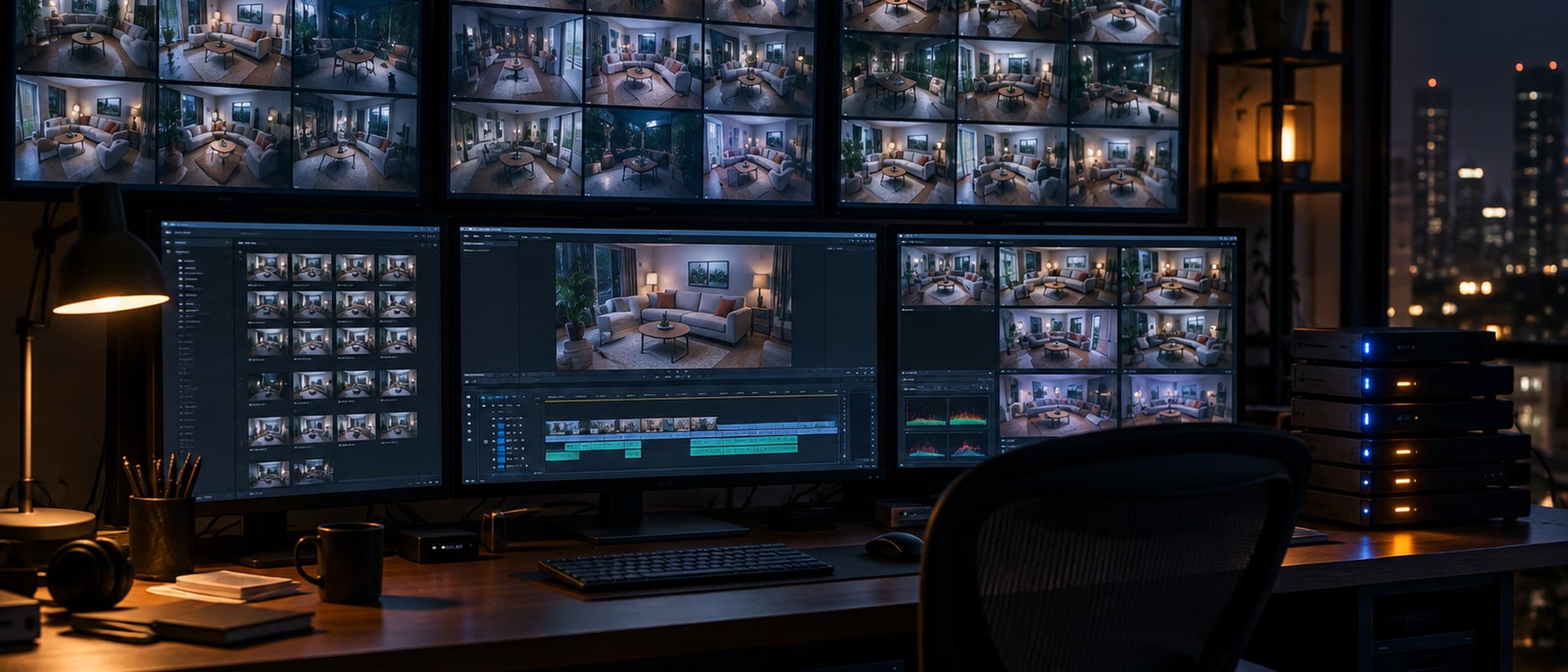
Quickture 2 itself reads as an assistant for the edit bay rather than a show factory. It breaks footage down into story beats, gives editors a window where they can drag lines and beats into order, and sends the resulting sequence to Avid Media Composer or Premiere Pro in one step. The company's copy is explicit on this point: "Quickture 2 does not replace your NLE," meaning the editing software, and "You make the choices." Eyal's reply to the skeptical showrunner is the same message in plainer words.
No network, streamer or production company is reported, in the column or anywhere we could find, making new episodes or spin-offs from unaired footage with AI. The nearest real deployment is a different job entirely. Banijay signed Moments Lab in September 2025 to index more than 200,000 hours of finished archive for clips, and its stated goal of taking the cost of a clip from $800 to $10 is a target rather than a result.
Speed, not the archive
The Ankler's lead example is Summer House, where Amanda Batula and West Wilson confirmed their relationship in a joint statement on Tuesday 31 March after weeks of speculation, and the argument is that Bravo cannot turn footage into TV fast enough to join the conversation while fans are still having it. That is really a story about speed with this season's rushes, not about mining decades-old tape, and it is only partly true. Bravo shot new sit-downs on Wednesday 13 May and streamed them on Peacock as a bonus episode, Summer House: The Aftermath, from Wednesday 17 June, alongside extended cuts of the reunion. The gap between the scandal and the television is weeks rather than days, but it was closed by people, without any AI in the reporting.
- Date: Thu 24 Jul 2025. What happened: ITV says an editing assistant doubled Love Island casting clips, four to eight per session; Source: Deadline; The Independent (PA)
- Date: Tue 30 Sep 2025. What happened: Banijay signs Moments Lab to index 200,000+ hours of archive; Source: Banijay
- Date: Tue 2 Dec 2025. What happened: Quickture announces a $1.9M pre-seed led by Kickstart Ventures; Source: Quickture
- Date: Tue 31 Mar 2026. What happened: Batula and Wilson confirm their relationship in a joint statement; Source: Bravo; NBC News
- Date: Tue 5 May 2026. What happened: Quickture announces a $4.5M seed, again led by Kickstart; Source: Quickture
- Date: Wed 17 Jun 2026. What happened: Summer House: The Aftermath streams on Peacock, shot on 13 May; Source: Peacock
- Date: Fri 11 Sep 2026. What happened: Quickture 2 launches on stage at IBC in Amsterdam; Source: Quickture
- Date: Mon 21 Sep 2026. What happened: Quickture publishes its Introducing Quickture 2 post; Source: Quickture
- Date: Wed 23 Sep 2026. What happened: The Ankler runs the Reel AI column; Eyal replies to a showrunner in the comments; Source: The Ankler
The job this creates
In practice, for anyone making work this week, the useful reading is the one Eyal gave in the comments. A tool that can find every clip of two cast members arguing across eight cameras and forty shoot days does not know what the argument means, or which version of it is the story. That call belongs to a story producer, and if the pitch works it becomes the scarce skill in the building. Networks are already hiring for the hybrid version of that job. Fox posted an AI production supervisor role for unscripted content in August, since filled, and a producer role for AI unscripted work in Brooklyn lists a salary of $114,000 to $150,000. Editors and AI filmmakers who can drive these tools with a point of view are pitching for work that did not have a job title a year ago.
There is a harder question that the pitch does not answer. More versions from the same rushes means more chances for a cast member's worst unaired moment to become product. Reality contracts already give producers sweeping rights, including consent to portrayals that are disparaging or embarrassing, according to a Vanderbilt Law review in February, and cheaper editing makes those clauses cheaper to use. No production is reported doing this, so it stays a question for now. It is the first one a cast member's lawyer will ask once somebody announces a show built from the leftovers.
Sources and reporting notes
The column, its dek, the Quickture pitch and the reader comments, including Irad Eyal's reply, are from the free portion of The Ankler piece of 23 September 2026, read directly; the paywalled remainder was not read and nothing here relies on it. Barmack's framing is from his X post of 24 September. Product details and quotes are from Quickture's own posts of 2 September and 21 September 2026, and funding and client claims from its posts of 2 December 2025 and 5 May 2026. ITV details are from Deadline and the Press Association, 24 July 2025. Shooting ratios are from Variety (2005) and Sports Video Group (2011). Summer House dates are from Bravo, NBC News, Page Six and Peacock. Banijay and Moments Lab figures are from Banijay and Advanced Television. Job listings are from Fox Entertainment and MFI Technologies postings. Quickture's usage and time saving figures are company claims and are not repeated here.