Voice actors get a vote on AI. They don't get the AI clause yet
SAG-AFTRA's animation voice actors vote until 29 October on a four-year deal with 3% raises and better streaming residuals. The union says it imports this year's live-action AI terms, but that text exempts non-human characters and its human-preference test expires in 2030, and the animation clause itself is not yet public.
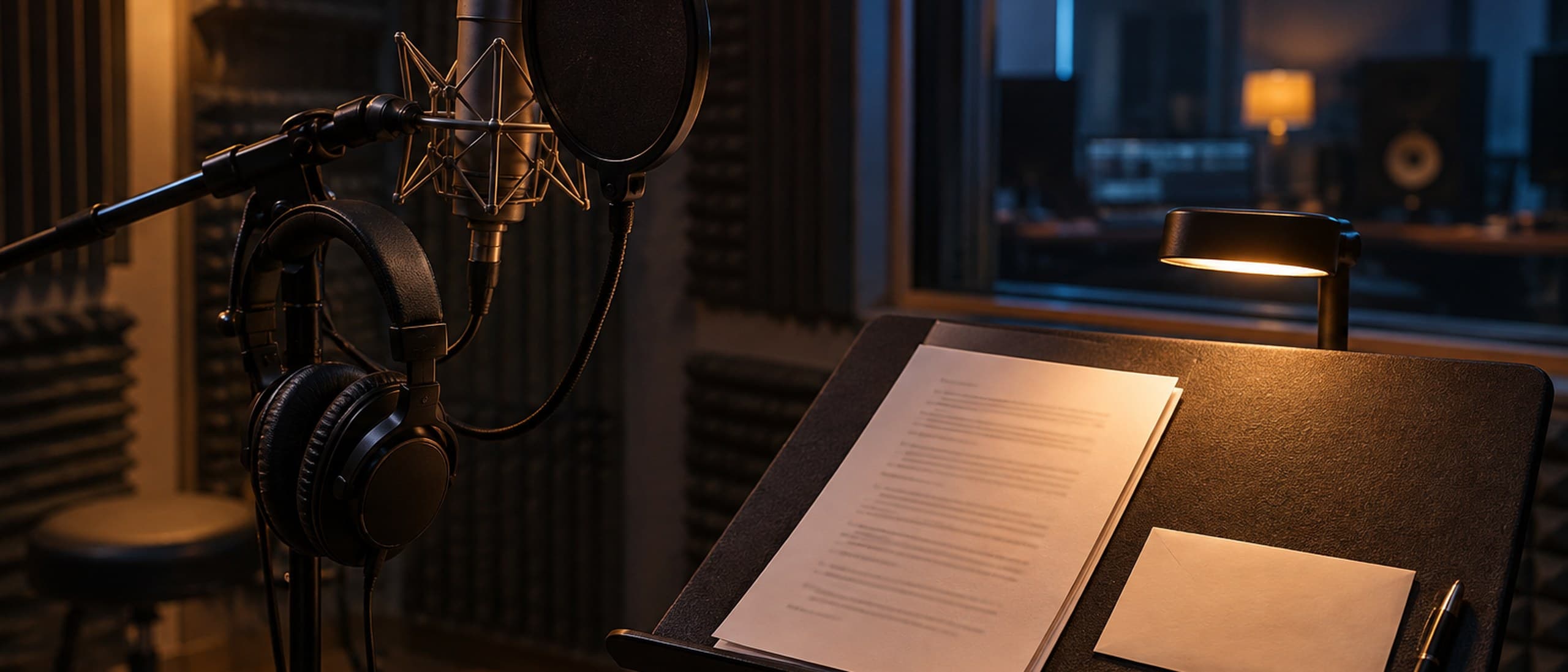
On Thursday, postcards with voting instructions start landing in the mailboxes of SAG-AFTRA's animation voice actors. By 5pm Pacific on Thursday 29 October they will have decided whether to ratify a four-year TV Animation Agreement that their Executive Committee approved unanimously on Monday. The money terms run to a full page of the union's release. The part every headline has led with, the AI protections, runs to a single sentence.
Here is that sentence in full: the deal "expanded the AI guardrails to include the improvements from the 2026 live action agreements while retaining the existing enhanced terms for animated programs." No clause text has been published that we could reach, and the union's details page sits behind a bot wall. So voice actors are being asked to vote on AI terms described by reference to two other contracts. We read both of those contracts, and the gap between them is the story.
What the release actually says
The release is dated Monday 5 October and is the only primary account of the deal so far. Cartoon Brew, AWN and the smaller sites carrying the news all rewrite it, with the same quotes and the same bullet list, so treat the coverage as one source. Duncan Crabtree-Ireland, the union's national executive director and chief negotiator, calls the AI terms "crucial AI protections". Negotiating committee co-chair David Jolliffe says the negotiators worked "from the perspective of protecting and celebrating human performers".
The economics get far more detail. Minimums rise 3% a year, with the first step backdated to Sunday 5 July because the old contract expired on Tuesday 30 June and actors worked about eleven weeks without a new one. Health Plan contributions go up 1%, pension contributions go up 1% from July 2028, and a new 0.25% contribution from the same date starts a paid parental leave fund. Streaming moveover residuals are matched to live action, which the union puts at an average 5% increase, and free ad-supported animated shows get their own high-budget category for the first time.
Members can ask questions at an informational Zoom on Friday 9 October at 3pm Pacific. That meeting is the first realistic chance for the clause text to surface.
Animation already had the line live action wanted
The "existing enhanced terms" date from the 2024 animation deal, which members ratified with 95.52% voting yes. That contract, which we read in full on the producers' association site, contains a sentence live-action performers never won: "the term 'voice actor' under this Agreement includes only humans." It also requires separate, "clear and conspicuous" consent and pay before a studio builds or uses a digital replica of a real actor's voice, and it bars prompting an AI system with a named actor without that actor's consent.
It is weaker on everything else. A synthetic voice that resembles no identifiable actor needs only notice to the union and "an opportunity to bargain in good faith over appropriate consideration, if any". On training, producers agree to "meet regularly" to discuss pay for past soundtracks, again "if any". Every AI claim is limited to money damages. So the 2024 baseline is consent for your own voice, and a conversation about everyone else's.
The live-action terms exempt non-human characters
This is the weakest point in the "expanded protections" headline. The live-action contract members ratified on Thursday 4 June adds "a principle strongly favoring human performances". A studio can still use a synthetic performer when it "reasonably concludes" the synthetic "brings significant additional value". It has to give written notice and bargain within ten business days, and the union can then arbitrate the pay, which goes into the Health or pension plan rather than to any actor.
Two clauses in that text bite harder in animation than in live action. Section 64.1.A.(2) exempts uses that "generate non-human characters without the services of a performer", and talking animals, robots and monsters make up a large share of what voice actors play. Section 64.1.A.(1), the human-preference test itself, "expires on June 30, 2030" and falls back to the older notice-and-bargain wording. A four-year animation deal starting in July 2026 would end around that same date. That end date is our inference, because the release does not give one.
We don't know whether either clause came across. The union says it imported the live-action improvements, and it would be strange to import the preference without its limits, though nobody outside the bargaining room can confirm which way it went. Live action ratified with 91.4% yes on 19.3% turnout, and the dissent focused on exactly this language. Erik Passoja, a former co-chair of the union's Los Angeles New Technology Committee, asked Variety who decides what counts as significant value: "A studio lawyer." Crabtree-Ireland's answer at the time was that studios "can and will use synthetics only in edge cases".
- Issue: Who counts as a performer. 2024 animation (in force): Voice actors are human by definition; 2026 live action: No such definition; 2026 animation: Union says retained
- Issue: Synthetic in place of a human. 2024 animation (in force): Notice, bargain over pay "if any"; 2026 live action: Favors humans unless "significant additional value"; 2026 animation: Union says live-action gains added; text not public
- Issue: Who gets synthetic pay. 2024 animation (in force): Not specified; 2026 live action: Union Health or pension plan; 2026 animation: Unknown
- Issue: Non-human characters. 2024 animation (in force): Not addressed; 2026 live action: Exempt from the synthetic rules; 2026 animation: Unknown
- Issue: Replica of a real actor. 2024 animation (in force): Clear consent plus pay; 2026 live action: Same, plus limits on scans, strikes and minors; 2026 animation: Likely carried over, unconfirmed
- Issue: Sunset. 2024 animation (in force): Term ended 30 Jun 2026; 2026 live action: Human-preference test ends 30 Jun 2030; 2026 animation: Unknown
Why animation is the pressure point
Animation is where studios are already testing AI pipelines in public. In late May, Amazon MGM's GenAI Creators' Fund greenlit three animated series built on its in-house Project Nara pipeline, which IndieWire reported runs on models trained on Amazon MGM IP. Director Jorge Gutierrez pulled his show, Punky Duck, within days after backlash, and the creator of the character behind BuzzFeed's Cupcake & Friends objected in public. Bob Bergen, who has co-chaired the negotiating committee with Jolliffe since 2010, put the stakes plainly in the release: "TV Animation is one of the few voiceover contracts that has stayed mostly union."
Who this covers, and who it doesn't
The agreement binds signatory studios such as Disney Television Animation, DreamWorks, Warner Bros Animation and Sony Pictures Animation. It says nothing about independent producers or AI-native animation studios, so it does not set the rules for most of the people reading this. It does set the going rate of trust. In practice, for anyone making work this week, the 2024 replica terms are a workable template for casting: if you hire a human voice and plan to extend it with a model, get separate written consent for the replica and pay for its use, because that is what union actors already expect from the biggest studios. That is our reading of the contract, not anything the union has said about indie work.
The vote itself is unlikely to be close, since the 2024 deal passed with more than 95% and no organized no campaign has surfaced. Reaction on X has been thin, with the union's own announcement drawing three replies by Wednesday morning. The more useful question is what the text says when members finally see it.
What to watch before 29 October
- Whether the non-human-character exemption appears in the animation text, because that decides how much of the job the human preference reaches.
- Whether the 2030 sunset came across, which would put the human-preference test on the clock for the life of this deal.
- Whether the Basic Cable Animation Agreement, covered by the September tentative deal, goes to the same vote.
- Whether any synthetic-voice pay reaches actors directly, since the live-action version sends it to union funds.
- Date: Fri 22 Mar 2024. Event: Members ratify the 2023 animation deals, 95.52% yes, first voice-actor AI terms; Source: THR; Variety
- Date: Wed 9 Jul 2025. Event: Video game agreement ratified, ending an 11-month strike over AI; Source: Deadline
- Date: Fri 29 May 2026. Event: Gutierrez quits Amazon's AI animation program after backlash; Source: IndieWire
- Date: Thu 4 Jun 2026. Event: Live-action contract ratified, 91.4% yes, 19.3% turnout; Source: Variety
- Date: Tue 30 Jun 2026. Event: 2023 TV Animation Agreement expires; Source: 2023 Animation MOA
- Date: Thu 17 Sep 2026. Event: Animation tentative agreement reached; Source: SAG-AFTRA release
- Date: Mon 5 Oct 2026. Event: Executive Committee approves, deal sent to members; Source: SAG-AFTRA release
- Date: Thu 8 Oct 2026. Event: Voting instructions mailed; Source: SAG-AFTRA release
- Date: Fri 9 Oct 2026. Event: Member informational meeting, 3pm PT; Source: SAG-AFTRA release
- Date: Thu 29 Oct 2026. Event: Voting closes, 5pm PT; Source: SAG-AFTRA release
- Date: Sun 30 Jun 2030. Event: Live-action human-preference test expires; Source: 2026 SAG-AFTRA MOA, Sec 64.1
Sources and what is unconfirmed: SAG-AFTRA releases of 17 September and 5 October 2026, read in full via a verbatim reprint because sagaftra.org blocked automated access; @sagaftra posts on X; the 2023 TV Animation Agreement MOA and the 2026 SAG-AFTRA TV/Theatrical MOA, both read on amptp.org; Variety (12 May and 4 June 2026); THR; IndieWire and Wired (29 May 2026). The 2026 animation AI clause text, the contract's end date, whether Basic Cable Animation votes on the same ballot, and the number of covered actors are unconfirmed. We did not contact SAG-AFTRA or the AMPTP for this draft.