The AI short that won a government film prize without the word AI
Bharat Arora and Rajesh Bhatia's generated film won MIFF's Special Award for short film on its Viksit Bharat theme in June, judged in the National Competition beside camera films. The makers' tools are unnamed, nobody has said whether selectors knew it was AI, and the prize rewards fit to a government brief as much as filmmaking. For creators, that brief is the open door.
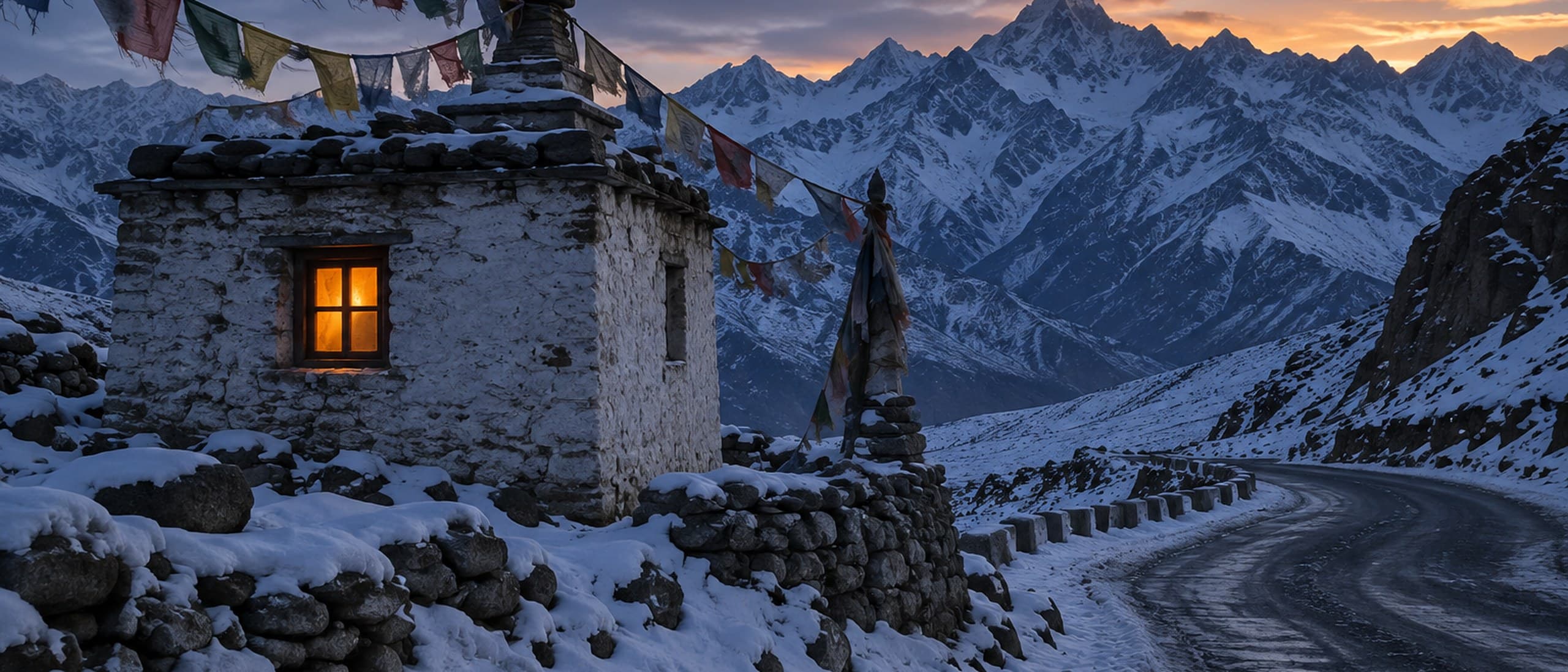
A woman in a headscarf stands inside a whitewashed stone shelter on a snowbound road in Ladakh, where prayer flags snap over a sign that reads "Winter Help Shelter" and an older woman watches the weather from a window. Inside, a man sits beside a patient breathing through an oxygen mask. None of it was shot. There is no camera and there are no actors in "The Last Shelter", an 11-minute Hindi short that took a cash prize in the National Competition of the Mumbai International Film Festival in June, and the official citation praising it never mentions how it was made.
The film went up on YouTube on Saturday 26 September, on a channel called OpenFrame AI Lab that was created nine days earlier. By Monday morning it had 35 views and no comments. Its title calls it an "Award-Winning AI Short Film" and the description says it won Best Short Film at the 19th MIFF. That second claim needs correcting before anything else, because the real story is more interesting than the overclaim.
What the prize actually was
MIFF is a Government of India festival, run by the National Film Development Corporation under the Ministry of Information and Broadcasting. Its own winners page lists "The Last Shelter", directed by Bharat Arora and Rajesh Bhatia, as the winner of the Special Award for Best Short Film on its "Viksit Bharat / 150 Years of Vande Mataram / Bharat@2026" theme, which carries a certificate and Rs 1 lakh. The government's press release from the closing night on Sunday 21 June says the same. The festival's top short fiction prize, the Silver Conch and Rs 3 lakh for Best Indian Short Fiction, went to "Small Clouds" by Shubham Sumit, a Film and Television Institute of India production.
So this is a thematic award given for fit to a national brief, not the festival's best short. The makers know the difference, since their own blog post names the category correctly in the body before headlining it "Wins Best Film at MIFF 2026". Even so, the smaller prize is still a genuine first-hand result: a generated narrative film was judged in a state festival's National Competition, and the jury's citation described its portrait of hardship in Leh and of "inclusive development and better social support" without a single word about AI.
How it was made, and what nobody has said
The first person to say it out loud in print was the critic Siraj Syed, who wrote in a festival roundup on Tuesday 30 June that the film "was made with AI. There is no camera, or actors, involved." He noticed that most of the dialogue is delivered off-camera and guessed that the models are not yet good at Hindi lip-sync. That reads as a sensible workaround to us, and the frames we sampled agree with his description: faces, weather and one location carry the continuity across eleven minutes, which is long for a generated story, before a coda cuts to a marble summit hall of national flags and suited delegates that lands the government theme.
The credits are thin, and we have kept them that way. Arora and Bhatia are named as directors by the festival, with Bhatia credited as writer on a festival schedule elsewhere, and the description mentions only "AI-assisted filmmaking tools". A sister film on the same channel lists a full stack of image, video and voice models, but nothing ties that list to this film, so we are not transferring it. The studio's claims to be India's first AI filmmaking studio and to be incubated at FTII appear only on its own site, and we could not confirm either. Nobody has said publicly whether MIFF's selectors knew the film was generated when they chose it.
The other festival line in the description, an Official Selection at AI FilmFest Serbia, is real and worth reading in proportion. The festival's own schedule lists it among 209 films in its base selection tier, below the winners, finalists and quarter-finalists, from more than 1,700 entries, and the cut it screened ran 9 minutes 4 seconds rather than the 11 minutes 28 seconds now on YouTube.
Analysis: the side door is open
In practice, for anyone making work this week, the lesson is less about the model and more about where the film was entered. Most AI filmmakers send their work to AI festivals, where they compete with thousands of other generated shorts for base-tier laurels. Arora and Bhatia pointed a film at a government brief inside a mainstream national competition, built it around the theme the category asked for, and came home with a prize that sits on an official winners list next to films shot on cameras. Thematic and sponsored categories at public festivals are written as briefs, and a brief is exactly what a small generative team can answer faster than a crew.
The counterweight is that a brief-driven prize rewards fit as much as filmmaking, and "The Last Shelter" wears its brief openly, from the Vande Mataram lyrics in its captions to the summit-hall finale. That is not a knock on the directors, whose film holds together over a running time most generated narratives cannot sustain. It is a reason to describe the win accurately, because the accurate version is the one other creators can actually copy.
Timeline
- Date: Mon 8 Jun 2026. What happened: Makers announce selection for the MIFF National Competition, thematic category; Source: Makers' blog
- Date: Mon 15 Jun 2026. What happened: 19th MIFF opens in Mumbai; Source: PIB
- Date: Sun 21 Jun 2026. What happened: The Last Shelter wins the Viksit Bharat Special Award, Rs 1 lakh; Small Clouds wins the Silver Conch; Source: miff.in; PIB
- Date: Tue 30 Jun 2026. What happened: Critic Siraj Syed reports the film was made with AI, with no camera or actors; Source: FilmFestivals.com
- Date: Wed 8 Jul 2026. What happened: A 9:04 cut streams in the AI FilmFest Serbia Official Selection; Source: Festival schedule
- Date: Thu 17 Sep 2026. What happened: OpenFrame AI Lab YouTube channel created; Source: YouTube Data API
- Date: Sat 26 Sep 2026. What happened: The 11:28 cut is uploaded to YouTube as an award-winning AI short; Source: YouTube Data API
Sources and reporting notes
The award name, prize value, citation and full winners list come from the festival's winners page and the government press release of Sunday 21 June 2026. The AI production detail is from Siraj Syed's roundup on FilmFestivals.com, published Tuesday 30 June, and from our own sample of ten frames from the YouTube upload. The film was watched with the sound off, so no dialogue is quoted and we have not confirmed whether the Vande Mataram lyrics are sung or only captioned. Upload date, runtime and view counts are from the YouTube Data API, pulled Monday 28 September. The Serbia runtime and writer credit are from the festival's published schedule. The makers have not been interviewed, no tool is named for this film, and the film appears here by embed only.