AI made dubbing Chinese microdramas almost free. The dubbing company's own books show who pays
A cloned-voice dub of a Chinese microdrama now lists at about $1 a minute. Transn, profiled for localizing 20,000+ titles, grew film translation revenue 29.8% while its margin fell 13 points, which its filing blames on AI-era prices. Most of those titles were likely subtitled, not dubbed, and voice consent terms are unpublished.
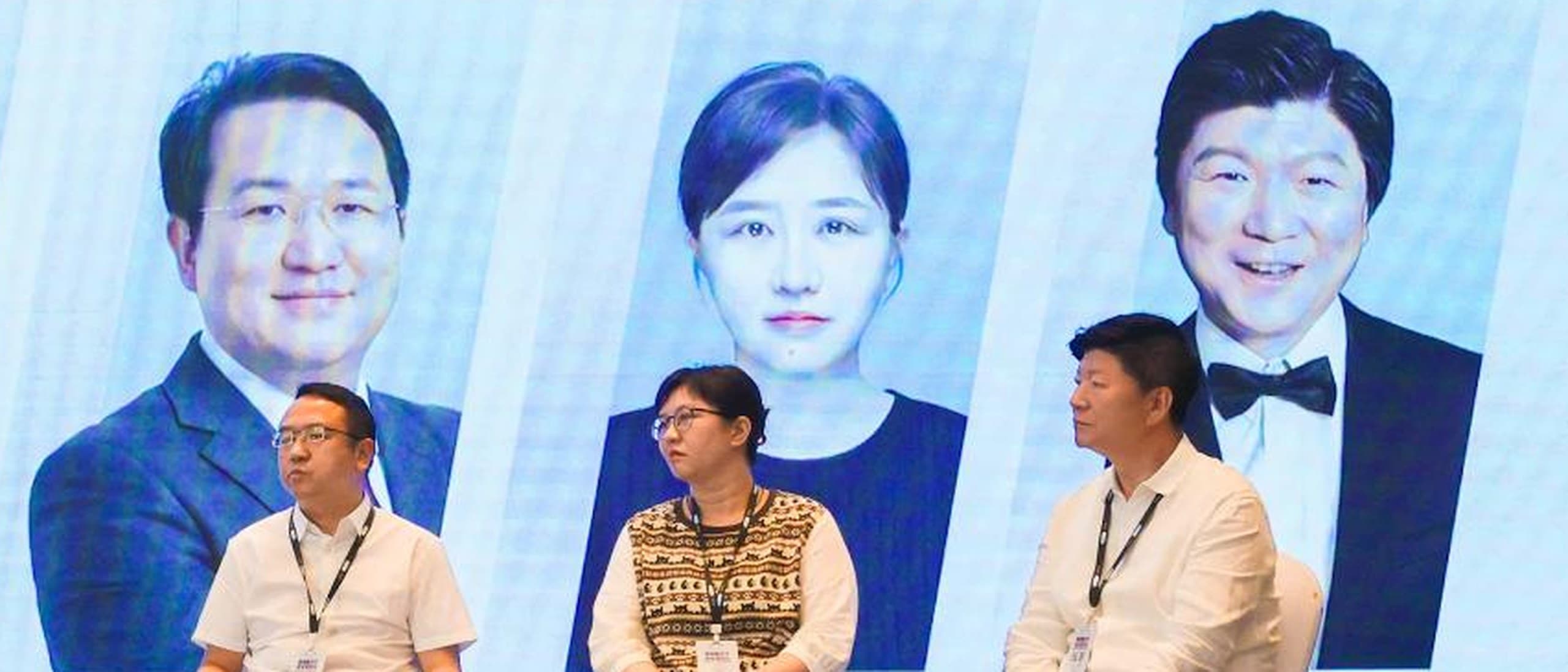
Transn, a Chinese translation and AI company, says it has localized more than 20,000 Chinese microdramas for overseas apps, using a pipeline called TaiHow Video that clones the original actors' voices. China Daily profiled it on Friday 6 November. Transn's own half-year filing tells the sharper story: revenue up 29.8%, margin down 13 points.
For anyone making or selling vertical series, that gap is the news. A cloned-voice dub now lists at about 6.8 yuan a minute (roughly $0.95), so a 100-minute series costs under $100 per language at list price. The profile reads as an export success. The filing, which blames AI adoption across the industry for lower prices per order, shows the savings flowing to the buyers of dubbing rather than the company doing it. Translation has stopped being the bottleneck. What stays scarce is cultural judgment and clear consent for the voices being cloned.
What Transn says TaiHow does
The workflow comes from the company. TaiHow Video separates dialogue from the music and effects, translates the script in context, clones each original voice in the target language and rebuilds the mix. Co-founder Shi Xin told Jiupai News on Friday 30 October that the automated pass produces multilingual versions of a drama within about an hour (our translation). China Daily's version turns that into processing an hour of video in about an hour, a throughput claim the Chinese interview never makes.
Humans then review the output. Shi says a version for market testing ships in one to two days and a polished one in three to five, against at least two weeks for a fully manual job. Vice-president Fu Qiang told China Daily that several AI agents cross-check the machine translation, which he called "machines checking machines", before language experts run two rounds of review. That quote appears in China Daily only. Transn's interim report does confirm the engine underneath, an in-house language model called Rendu that runs all of its language services, though nothing public shows it was built for microdramas specifically, as Fu described it.
The 20,000 figure, checked
China Daily says Transn has "translated and dubbed" more than 20,000 microdramas. The Chinese reports use a single word, yizhi, which covers subtitle translation as well as dubbing, and Transn gives no breakdown. Its own case study on Tencent Cloud's developer site, published Tuesday 14 July, says AI translation and AI dubbing for a large client it does not name only began in December 2025, with batch delivery from March 2026. Most of the 20,000 are therefore likely subtitle jobs. Treat the number as a company count of localized titles, not dubbed ones.
Two more lines rest on China Daily alone. The claim that AI cut Transn's overall translation and dubbing costs by around 30% appears in no Chinese coverage we found and not in the filing. And the context figure on the original story card, AI dubbing in six to seven hours, came from Tinghua Island in People's Daily Overseas Edition on Monday 7 September, which Xinhua reprinted.
What the filing shows
Transn's interim report for the first half of 2026, approved on Wednesday 26 August, is the primary record here. The film and cultural translation segment earned 33.85 million yuan (about $4.7 million), up 29.80%. Costs in the same segment rose 59.42%, so gross margin fell 13.19 points to 29.04%, from about 42.2% a year earlier. The filing gives the reason plainly: industry-wide adoption of AI pushed down the price per order, while Transn spent more on microdrama translation, content review and post-production to win the new work.
Scale matters here as well. Transn is listed on the New Third Board (China's over-the-counter market for smaller companies), booked 226 million yuan in total revenue and 4.15 million yuan in net profit for the half, and its whole film segment is a rounding error against DataEye's estimate that overseas microdrama spending will top $6 billion this year. It is a translation house riding the boom. It isn't a microdrama major.
The price floor is public
Rival price lists show how far the floor has dropped. All Voice Lab, a Shenzhen dubbing service, lists subtitles at 1.6 yuan a minute, dubbing with library voices at 3.8 yuan and dubbing with cloned original voices at 6.8 yuan, and says a drama of about 100 minutes runs through in roughly two hours. A financial outlet, Yicai, reported on Wednesday 9 September that one freelance translator's rate fell from 10 to 15 yuan a minute to 5 within months, and quoted a vendor putting AI localization at 300 to 500 yuan per drama, against 1,500 to 3,000 yuan by hand. These are vendor and interview figures, not audited costs.
Cheaper dubbing has not made the market richer at the same pace. Sensor Tower, an app analytics firm, puts short-drama app downloads above 850 million in the first quarter of 2026, up 140%, while in-app purchase revenue grew only 20% to about $750 million. DataEye vice-president Lin Qiwen told Yicai that AI has cut production costs by about 90% while the cost of buying traffic more than doubled. Translation is no longer the scarce input; attention is.
Whose voice is it?
Both Transn's own description of TaiHow and the Tencent case study describe cloning the original actors' voices. Neither says how Transn or its clients get those actors' consent, and Transn hasn't addressed it publicly. China's broadcast regulator, the NRTA, said at a forum on Wednesday 2 September that any AI use of a performer's face or voice needs the rights holder's explicit authorization, and the country's 2023 deep synthesis rules already require separate consent to edit biometric data such as a voice. We have not put the question to Transn, and a cloned performance that travels to five markets is exactly where that consent gets tested.
What it means for AI creators
- Budget localization as a line item rather than treating it as a barrier. At list prices a 100-minute series with cloned voices runs about 680 yuan (around $95) per language, so testing a series in a second or third market is now a workflow decision rather than a financing one.
- Write a series bible before you localize: names, titles, honorifics and recurring terms. The examples in the profile, rendering the imperial "bengong" as a plain "I" and keeping palace ranks consistent across a series, are the places a machine pass slips.
- Get voice consent in writing before anyone clones a performance, and make it cover every language you plan to ship. The regulator's line on explicit authorization applies to the producer, not only the vendor.
- Treat genre maps as one vendor's opinion. Shi's split (romance and fantasy for North America, family stories for Southeast Asia, romance and inheritance plots for the Middle East) is useful, but it is not audience data.
Our take
China Daily frames AI dubbing as Transn's export win, but the company's own numbers say the win belongs to whoever buys the dub. For creators that is good news with a condition. When any series can speak five languages for the price of a dinner, language stops being the advantage, and the story, the cultural fit and a clean voice license become the things left to compete on.
Timeline
- Date (2026): Dec 2025 to Mar. Event: Transn starts AI translation and cloned-voice dubbing for a large short-drama client; batch delivery from March; Source: Tencent Cloud case study, Tue 14 Jul
- Date (2026): Fri 12 Jun. Event: Sensor Tower: short-drama app downloads above 850M in Q1, up 140%; in-app revenue up 20%; Source: Sensor Tower report
- Date (2026): Wed 26 Aug. Event: Transn H1 report approved: film translation revenue +29.8%, margin -13.19 points; Source: Transn interim report
- Date (2026): Wed 2 Sep. Event: NRTA forum: AI use of a face or voice needs the rights holder's explicit authorization; Source: NRTA, Fri 4 Sep
- Date (2026): Mon 7 Sep. Event: Tinghua Island says AI localization takes six to seven hours; Source: People's Daily Overseas Edition, reprinted by Xinhua
- Date (2026): Wed 9 Sep. Event: Yicai reports translator rates halving and AI localization at 300 to 500 yuan per drama; Source: Yicai
- Date (2026): Sun 20 Sep. Event: Transn launches the TaiHow commercial line, including TaiHow Video, in Beijing; Source: 36Kr contributor post, Mon 21 Sep
- Date (2026): Fri 30 Oct. Event: Jiupai News interviews Shi Xin: 20,000+ dramas, the TaiHow Video workflow; Source: Jiupai News
- Date (2026): Fri 6 Nov. Event: China Daily English feature on Transn; Source: China Daily
Sources and what is unconfirmed: China Daily, Liu Kun and Zhou Lihua, 6 Nov 2026; Jiupai News interview with Shi Xin, 30 Oct 2026 (Chinese, our translation); Transn H1 2026 interim report, NEEQ 835737, approved 26 Aug 2026; Tencent Cloud developer community case study, 14 Jul 2026; 36Kr contributor post on the TaiHow launch, 21 Sep 2026; Sensor Tower, State of Short Drama Apps 2026, 12 Jun 2026; The Paper on DataEye, 3 Aug 2026; People's Daily Overseas Edition, 7 Sep 2026; Yicai, 9 Sep 2026; All Voice Lab public price list, read 6 Nov 2026; NRTA, 4 Sep 2026. Unconfirmed: how many of the 20,000 titles were dubbed rather than subtitled, the 30% cost cut, Fu Qiang's quote (China Daily only), TaiHow's prices, client names and voice-consent terms. We did not contact Transn and did not test TaiHow.