Travis Knight's AI line is about consent, and even he can't vouch for his vendors
Travis Knight's viral line at the Academy Museum was blunt, but his interviews draw a narrower line: tools in an artist's hands are fine, systems trained on other artists' work are theft. Asked whether Wildwood is AI-free, he told THR he can't be sure what big VFX houses do, and his last film's concept vendor said it uses AI.
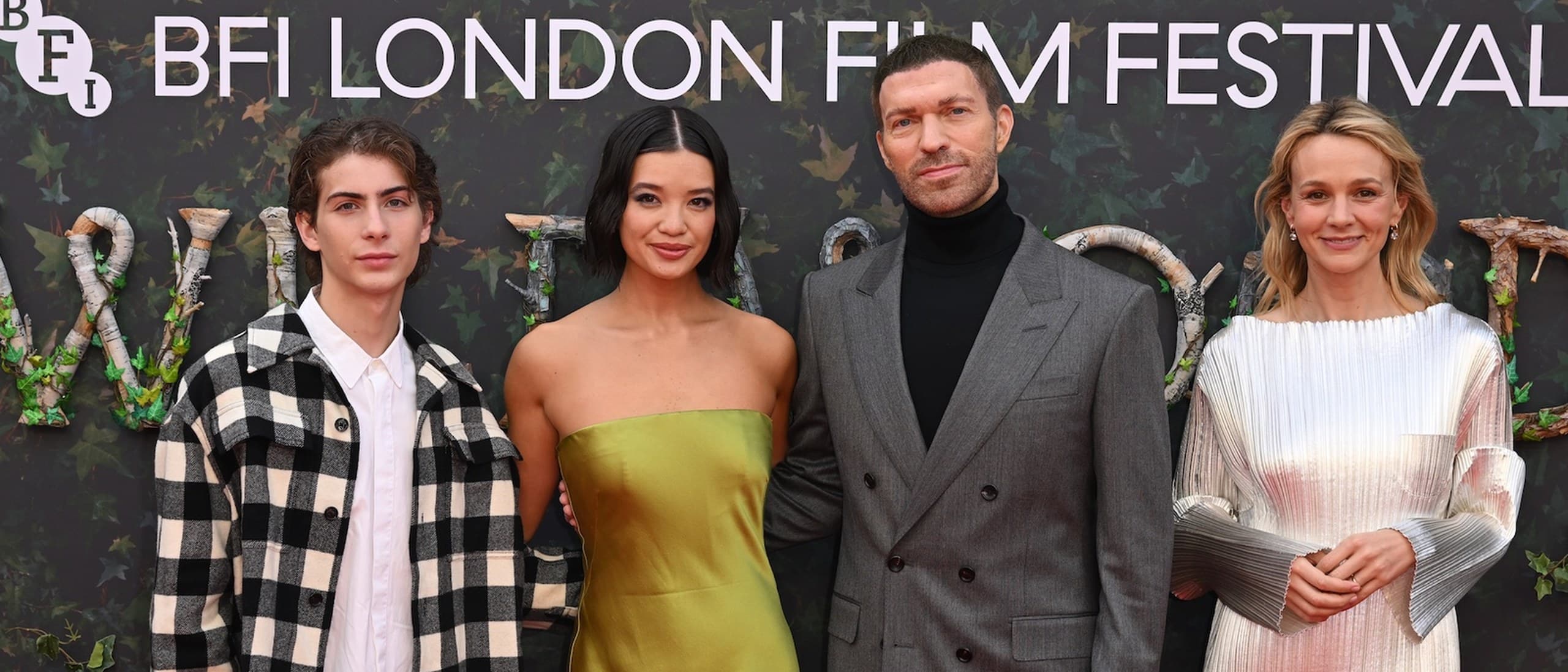
The lights had come up on Wildwood at the Academy Museum's David Geffen Theater on Monday 19 October when Travis Knight, Laika's chief executive and the film's director, got the question everyone in animation is being asked this year. His answer, according to a transcript PopCultureNews published from Digital LA's video, started with the tools on his own studio floor and ended somewhere else: "A pencil is a tool. A paintbrush is a tool. A 3D printer is a tool. A digital capture is a tool. AI is not a tool. AI can go fuck itself."
That line, captured by people in the room rather than by any trade, is the version of Knight's stance that spread. CultureCrave's post of it on 21 October has about 526,000 impressions and 42,000 likes on X, and ToonHive's has about 532,000 and 36,600. The trade interviews that followed were a quieter echo. Variety's red carpet clip from the AFI Fest premiere has about 62,000 impressions, and The Verge's interview, published on Thursday 22 October as the film opened in Italy and Australia, drew a headline that Deadline then rewrote: generative AI is "antithetical to everything that we are at this studio."
Wildwood opens in the US and UK today. Read in full, the interviews show that Knight's line isn't drawn around computers at all. It's drawn around whose work goes into the machine, and that is a line every filmmaker can use, whatever they think of AI.
What he says he's against
Knight told The Verge's Andrew Webster that Laika is not against technology: "A pencil is technology, a paintbrush is technology, a 3D printer is technology, a computer workstation is technology. But all of these things have meaning and value when you put them in the hands of an artist." His objection starts when the software replaces the person holding it: "When the technology is doing the work of the artist, that's a different proposition," he said, and then named the problem directly: "When you've ingested the material that an artist has actually created, and then regurgitate it in a different way, there's no soul, there's no spirit, there's no humanity behind it. That's theft."
He also called AI "extraordinary technology" with real benefits in "medicine and science", and he closed on a sentence that Deadline's "See The Danger" headline cut in half. He hopes "that collectively we can see the value in the technology and use it responsibly, and see the danger in the technology and push back against it." On the Variety carpet he went further in both directions, calling it "an amazing piece of technology" while saying "I'm not embracing it at all." Asked whether AI could have shortened the film's 16 years of development, he said: "That very notion fills me with rage."
His own studio's history fits that reading. In 2020 Laika and Intel presented machine learning tools for cleaning up the seams on its puppets' printed faces, trained on Laika's own archive of rotoscoping work, at SIGGRAPH. On Wildwood, Cartoon Brew reports, the VFX team dressed digital set extensions with high resolution scans of the studio's physical assets. Both are machines learning from material Laika made and owns, which is the opposite of the scraping Knight calls theft.
The question he couldn't fully answer
The Hollywood Reporter's David Canfield put the obvious follow-up to him for its 21 October cover story: is Wildwood itself AI-free? Knight's answer was honest and narrower than the viral version: "As far as I'm aware. With these big VFX houses, sometimes you don't know what's going on."
There's a recent example of how that happens. In August, posts on X flagged costume exploration sketches for Masters of the Universe, the Amazon MGM film Knight directed earlier this year. The vendor, Chromatic Studio, answered on Instagram: "Yes, we use AI as a tool when it speeds production up. The design work is ours," as Creative Bloq reported on 25 August. We found no statement from Knight or Amazon about it, and a reply under ToonHive's post brought it straight back up this week.
None of this makes Knight a hypocrite. It shows that a director who also runs the studio, owns its pipeline and has said all of this publicly still can't guarantee what happens inside every subcontractor. If he can't, an independent maker hiring a freelance concept artist or a VFX house for two weeks certainly can't without asking in writing.
A stance that's also a release plan
Laika is an independent studio, one Knight's father, Nike founder Phil Knight, took over in 2003, and this time it is running its own marketing and releasing through Fathom Entertainment, the AMC, Regal and Cinemark venture better known for event screenings. "We are an independent company, so it's a lot to bear, and look, it's a grand experiment. We might fall flat on our face," Knight told THR, before adding that it's "slightly terrifying." He won't give the budget, though he says it's Laika's most expensive film yet.
Fathom's own synopsis opens: "In an era of automation, LAIKA delivers its most ambitious and globally accessible film yet." The handmade argument is part of how the film is being sold, and it's a good argument to sell with. Tracking disagrees on how far it will carry. Rentrak's Paul Dergarabedian told the Los Angeles Times he expects a $6 million to $10 million opening, while THR reported tracking "in the teens".
Where that leaves people who make films with AI
Knight's distinction between tools that serve an artist and systems built on other artists' work without asking is the most useful thing in this week's coverage, and it doesn't belong to one side. If you use AI, it is the question your collaborators, distributors and audience will ask. If you don't, it is the promise you'll be asked to back up.
- Put a provenance clause (a written record of where each asset came from and how it was made) in vendor and freelancer agreements that says which tools may be used, on what material, and requires disclosure before delivery.
- Keep a record of what any model in your pipeline was trained on, and say so plainly when it was your own footage or artwork.
- Use "no generative AI" rather than "no AI" in credits and press notes unless you have checked every vendor, because cleanup and scanning software may already count.
Our take: Knight's anger is aimed at consent, not computers. That is a standard AI filmmakers can meet and should hold each other to, and his own THR answer shows the people loudest about it need the paperwork too.
Timeline
- Date: Aug 2020. What happened: Laika and Intel present machine learning cleanup tools trained on Laika's own roto data; Source: SIGGRAPH 2020; befores & afters
- Date: 25 Aug 2026. What happened: Masters of the Universe concept vendor says it uses AI "when it speeds production up"; Source: Creative Bloq
- Date: Fri 11 Sep 2026. What happened: Knight calls AI antithetical to what Laika stands for; Source: Vanity Fair, via DiscussingFilm
- Date: Mon 19 Oct 2026. What happened: Academy Museum Q&A: "AI is not a tool. AI can go fuck itself."; Source: PopCultureNews transcript; posts from the room
- Date: Wed 21 Oct 2026. What happened: THR cover story with the "As far as I'm aware" answer; AFI Fest US premiere; Source: The Hollywood Reporter; Variety
- Date: Thu 22 Oct 2026. What happened: The Verge interview; Deadline rewrite; Variety column; Source: The Verge; Deadline; Variety
- Date: Fri 23 Oct 2026. What happened: Wildwood opens in the US and UK through Fathom; Source: The Numbers; Fathom
- Date: 12 to 15 Nov 2026. What happened: Knight receives an award at Infinity Festival, Los Angeles; Source: Cartoon Brew
Sources and what is unconfirmed: The Verge (Andrew Webster, 22 Oct), Variety (Marc Malkin, 22 Oct), The Hollywood Reporter (David Canfield, 21 Oct issue), Los Angeles Times (Cerys Davies, 21 Oct), Cartoon Brew (22 Oct) and Creative Bloq (25 Aug), all read in full; Fathom's release and synopsis; X post metrics pulled through the X API on 23 Oct. The 19 Oct Q&A quote comes from PopCultureNews's transcript of Digital LA's video and matching posts from attendees; we have not heard the audio ourselves. We did not read the Chromatic Studio reply at source, and we do not know whether Laika's Intel-built tools were used on Wildwood.
Your Voice
We can’t let AI slop win when films like Wildwood exist. What LAIKA accomplished here is incredible. The stop motion is breathtaking, the world feels so alive, and its story full of heart.
Makes sense Travis Knight wouldn’t like AI. Had his dad buy him probably the greatest stop motion education ever. Worked with Will Vinton, Tim Burton, and Henry Selick before becoming a director himself.
When all the other animated films are using more and more ai, LAIKA STUDIOS takes a more human approach. Amazing innovative studio and a huge employer of artists and craftspeople.
Quoted from public posts on X and credited by handle. If one of these is yours and you want it removed, message @the__generated on X and it comes down.
Got something to say? Tag @the__generated on X