Weta FX takes its prompt-free AI to Taiwan. Who gets trained is the open question
Weta FX and Taiwan's state content agency TAICCA will launch a three-strand AI partnership at TCCF on 6 November: joint investment, research and talent training. Specifics are held back until then. Weta's CTO says its production AI is clean-up and crowd motion, TAICCA money is equity that must be recouped, and who gets trained is still unknown.
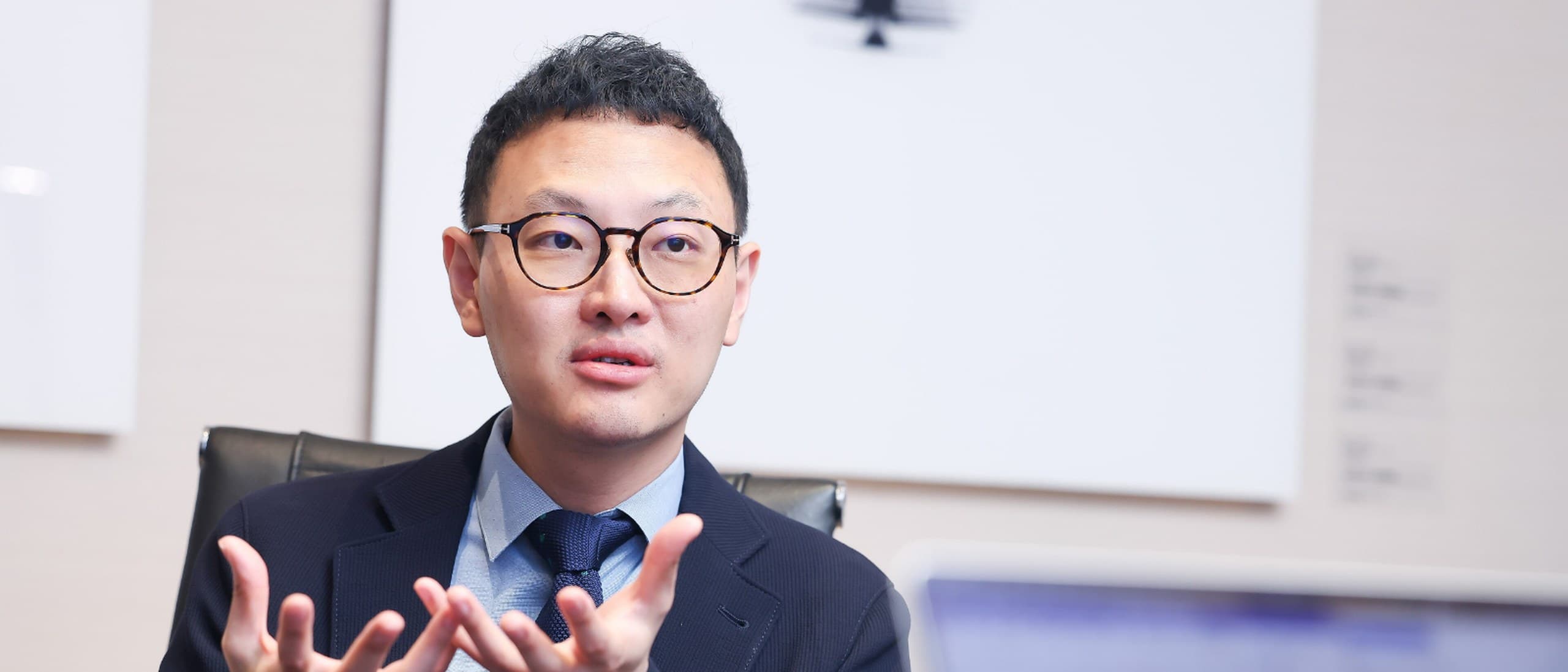
On Friday in Taipei, once the opening ceremony of Taiwan Creative Content Fest wraps, four people are due on the main stage: Sue Wang, chair of the Taiwan Creative Content Agency (TAICCA), and three executives from Weta FX, the Wellington studio behind the effects in The Lord of the Rings and Avatar. CEO Daniel Seah, chief technology officer Kimball Thurston and VFX supervisor Sheldon Stopsack will launch a partnership that Variety, which broke the details on Tuesday 3 November, describes as a plan to turn Taiwan into a center for AI-driven screen production in Asia.
The deal itself is not in doubt: Wang had already told Taiwanese reporters at a pre-festival briefing on Friday 30 October that one of the festival's four industry launches would be TAICCA with Weta FX, set up to respond to the AI trend (CNA). What nobody has published yet is the part a working creator would care about. Variety reports three strands, joint investment, AI research and development, and training new talent, and says plainly that the "specifics of the arrangement are being held back for the launch." There is no figure, no timeline, no named tool, no location and no word on who the training is for.
Which AI Weta actually means
The phrase "AI screen production hub" invites a picture of prompt boxes and generated shots. Weta's own record points somewhere narrower and, for a lot of artists, more interesting. At the Busan market in October, Thurston said the studio had been growing its use of AI "at a measured pace," using it "for image clean-up; not necessarily for generating images; but generating the motion that goes into some of the crowd scenes," and added that "there's still some problems that we have to solve" (Deadline, Saturday 10 October).
He was just as direct about the interface: "for a visual artist, a text-based prompt is not the best way to interact with this technology." That matches how Weta pitched its two big tech deals last winter. Its Amazon Web Services agreement, reported on Tuesday 2 December 2025, set out to build custom VFX tools that work "not with chatbots or text prompts" but with intuitive, interactive control for artists, as Cartoon Brew summed up the studio's description. A memorandum with AMD followed on Wednesday 10 December, and Thurston told Cartoon Brew that "any training we do for generic tools will be using our own data, rights-managed external datasets, and synthetic data we are generating."
TAICCA is pitching the same lane from the other side. At the 30 October briefing, Wang said that while the public still has doubts about generative AI in cultural content, visual effects and post-production are the most suitable place to start (CNA, our translation). Put those two positions together and the likely shape of Friday's announcement is a pipeline story about clean-up, crowds, rendering and artist-controlled tools, rather than a text-to-video studio. That is our reading of both parties' public words, not something either has announced.
What TAICCA money usually looks like
TAICCA was set up by Taiwan's Ministry of Culture in 2019 and invests rather than hands out grants. It manages National Development Fund capital, and its CEO, Erica Wang, explained to Deadline in November 2025 that foreign partners typically either commit to a slate of co-productions or set up a company in Taiwan with TAICCA as a shareholder. On AI specifically, she said Taiwanese companies "are interested in co-investing in joint ventures with TAICCA to explore this space," and that TAICCA might "invite some foreign companies to join the equity pool."
That money comes with recoupment rules. Deadline reported that the fund imposes strict rules on investment criteria and recoupment, which pushes it toward commercial projects. So if the joint investment strand follows the usual pattern, it will look like equity in a venture or a project slate that has to earn its money back, not an open fund that independent AI filmmakers can apply to. We'll know on Friday whether it follows that pattern.
It also matters who sits across the table. Sue Wang chairs TAICCA and, per the agency's own board page, is a serving political deputy minister of culture. This is a partnership with a government body, not a private studio.
Why Seah, and why Taiwan
Seah has run Weta FX since late January 2025, after Peter Jackson approached him in May 2024 (BusinessNext). Weta's own bio says he grew up in Taiwan and spent more than a decade as CEO of Digital Domain, where he set up facilities including one in Taipei. Variety calls the deal a personal one for him, and the groundwork shows. In August, Taoyuan mayor Chang San-cheng credited Seah, whom he called a longtime friend, with bringing a Weta team to the first Taoyuan International Film & Technology Forum, where Seah gave the keynote and Thurston walked through 30 years of the studio's tech (China Times, Thursday 20 August).
One assumption doing the rounds needs correcting. Weta FX has no corporate parent that has to approve an equity deal: Jackson and Fran Walsh still hold 60% of the company, according to New Zealand's NBR in September. Unity bought the separate Weta Digital tools business in 2021, which is a different company.
What we still don't know
- Money and structure: how much, who puts it in, and whether it becomes a joint-venture company or a slate of projects.
- Training: who is eligible (students, working crews, Taiwanese only or international), how many places, whether it is paid and how to apply.
- Tools and data: whether Taiwan gets Weta's in-house clean-up and motion tools or new generative work, and whether the own-data training policy carries over to any research done there.
- Footprint: whether Weta opens a Taiwan office or hires staff there.
The "for Asia" framing is also Variety's for now. Neither TAICCA nor Weta has published a release, and Weta's X account had not posted about the deal at the time of writing. Reaction so far is thin as well. Variety's post on X had about 13,000 impressions and two replies on Wednesday morning, one of which asked the question this whole piece turns on: whether the talent development includes crews getting to train with Weta.
What it means for AI creators
If the training strand is real and open, it's a rare route into a top-tier VFX pipeline that treats AI as a set of artist-controlled tools rather than a prompt box, and that workflow is where a lot of professional AI work is heading. If it stays inside a state-backed joint venture with Weta's own staff and a handful of Taiwanese studios, it will matter to the industry and barely touch the independent creator. The gap between studio-grade tools and what most people can actually use is the thing to watch here, and Friday's eligibility details will show which side of it this deal lands on.
Our take
This is a government-backed bet on Weta's careful, artist-controlled AI, not a generative studio. Its value to creators depends on who Friday's training strand actually admits.
Timeline
- Date: 2019. Event: Taiwan's Ministry of Culture sets up TAICCA; Source: Variety; Deadline
- Date: May 2024. Event: Peter Jackson invites Daniel Seah to run Weta FX; Source: BusinessNext
- Date: Late Jan 2025. Event: Seah takes over as Weta FX CEO; Source: BusinessNext
- Date: Fri 7 Nov 2025. Event: TAICCA CEO Erica Wang says foreign companies may join AI joint-venture equity; Source: Deadline
- Date: Tue 2 Dec 2025. Event: Weta FX and AWS agreement on artist-controlled AI tools reported; Source: fxguide; Cartoon Brew
- Date: Wed 10 Dec 2025. Event: Weta FX and AMD memorandum on rendering and AI; Source: Cartoon Brew
- Date: Thu 20 Aug 2026. Event: Weta team at the first Taoyuan International Film & Technology Forum; Source: China Times
- Date: Sat 10 Oct 2026. Event: Thurston at Busan: AI for clean-up and crowd motion, not necessarily image generation; Source: Deadline
- Date: Fri 30 Oct 2026. Event: TAICCA chair announces a Weta FX launch event at TCCF; Source: CNA
- Date: Tue 3 Nov 2026, 5:32pm PT. Event: Variety reports three strands; specifics held back; Source: Variety
- Date: Fri 6 Nov 2026. Event: Formal launch on the TCCF main stage, Taipei; Source: Variety; CNA
- Date: Fri 6 to Mon 9 Nov 2026. Event: TCCF runs at Nangang Exhibition Center Hall 2; Source: CNA
Sources and what is unconfirmed: Variety (Naman Ramachandran), 3 Nov 2026; CNA (Wang Pao-erh), 30 Oct 2026, Chinese quotes in our translation; Deadline (Liz Shackleton), 7 Nov 2025 and 10 Oct 2026; fxguide, 2 Dec 2025; Cartoon Brew, 10 Dec 2025; Weta FX executive bio of Daniel Seah; BusinessNext, 5 Mar 2025; China Times (Lu Hsiao-chan), 20 Aug 2026; NBR, 8 Sep 2026 (ownership line only); TAICCA board page; X API metrics for Variety's post, 4 Nov 2026. Unconfirmed until the launch: investment size and structure, timeline, location, tools, training eligibility, and whether "for Asia" is either party's phrase. We did not ask Weta FX or TAICCA for comment. This is a preview; the article should be updated after the 6 Nov launch.