Zhao Liying sues Hongguo and Douyin, testing whether a recognizable AI face makes the app pay
Zhao Liying sued Hongguo's operator, its parent Douyin Information Service and an individual for portrait-rights infringement, and a Beijing court heard it on 10 November. Reports say AI face swaps are at issue, though no complaint is public. In March the Beijing Internet Court ruled a recognizable AI face is a portrait and an unreviewed platform pays too.
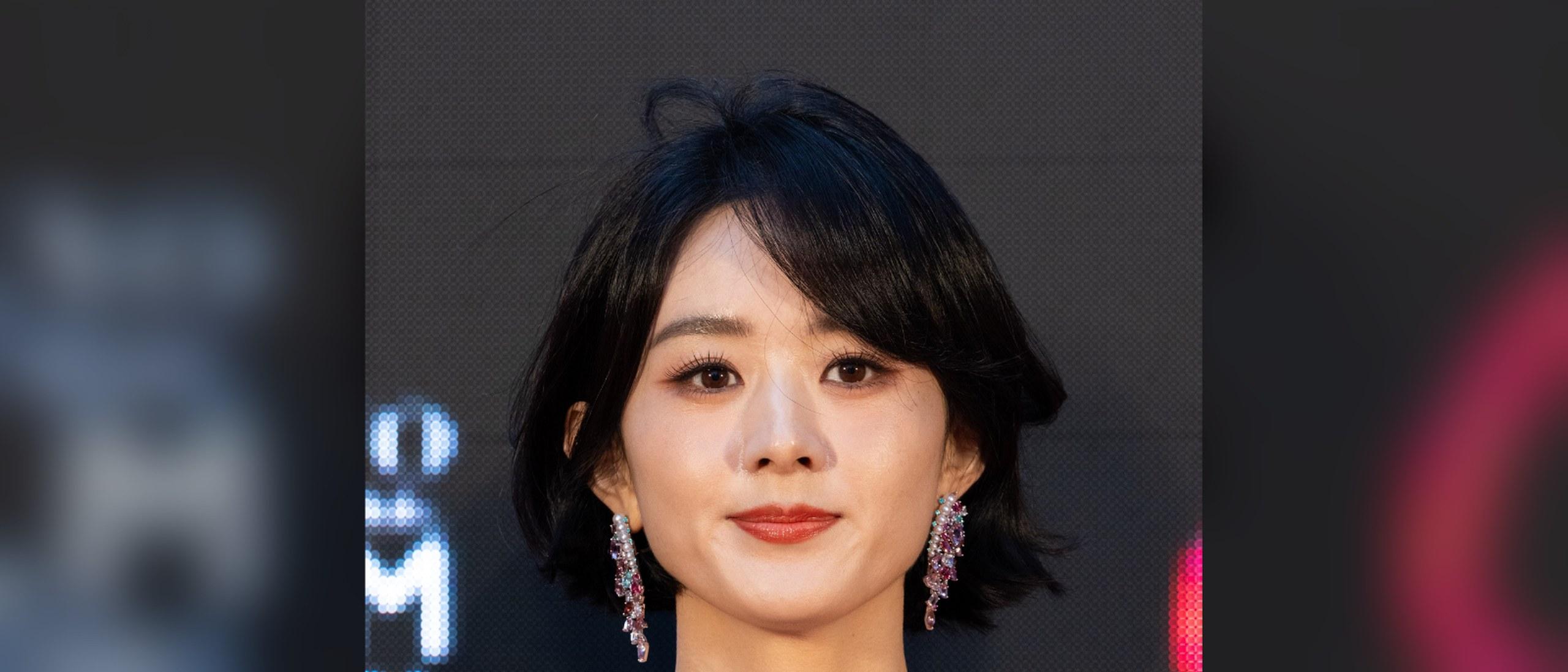
Chinese actress Zhao Liying has sued Beijing Bimo Liuxiang Technology, which runs the Hongguo short-drama app, along with its sole shareholder Beijing Douyin Information Service and one individual, for infringing her portrait rights. Beijing's Mentougou District People's Court heard the case online on Tuesday 10 November, according to a court hearing notice. No ruling has been issued.
Chinese media say the suit targets AI face-swapped microdramas, though no complaint or statement from her side has been published. The rule it will test already exists. In March the Beijing Internet Court held that an AI face does not have to be an exact copy to be someone's portrait, and that a platform which streams it without reasonable review shares the liability. Much of this week's coverage called Zhao's suit the first of its kind, and it isn't. What is new is who sits in the dock: the operator of China's biggest short-drama app and its parent company.
What the hearing notice does and does not say
Every report this week traces back to one hearing notice surfaced by the business database Qichacha, which we have not opened ourselves. A notice of this kind lists the cause of action, the parties, the court and the time, and nothing else. The defendants are Bimo Liuxiang, Douyin Information Service and an individual named only as Shi Moulun.
The AI detail is the weakest part of the story. Reports say Zhao accuses the defendants of using AI face-swap and face-merge tools to put her features on drama characters and of using her portrait on covers to pull in viewers. One outlet says its account was compiled from public information. Another writes that Zhao's side makes the claim without naming a source. Nobody has named the drama or explained Shi's role, and Hongguo did not respond to a request for comment from one Chinese business outlet.
The RMB 810,000 figure circulating online belongs to other cases. Zhao claimed exactly that sum against merchandise sellers in Changsha in May 2025, and it appears again in a separate November notice against two companies over infringing products. The Hongguo notice discloses no amount.
The March ruling the coverage skipped
On Friday 20 March the Beijing Internet Court published its ruling for an unnamed well-known actress against a short-drama producer and the company that streamed its drama. Two segments of the 44-episode series used face swapping. The producer argued the AI character only happened to look like her and that it never typed a prompt about her. The court did not accept that, partly because the producer could not reproduce its own generation process when asked to in court.
Judge Zhao Qi said in the court's English summary that "the segments bore a strong resemblance to the actress, and public comments identified the character as her." The distributor lost too because it published a short, controversial clip without reasonable review. Both companies had to apologize in writing and pay her losses, and neither appealed. A 2024 ruling from the same court draws the other edge of the line: face-swap templates that replaced two models' faces did not infringe their portraits, because viewers could no longer identify them.
Why the platform cannot easily step aside
Two lawyers interviewed by The Paper split the defendants. You Yunting of Shanghai Dabang Law Firm said Hongguo cannot rely on safe-harbor protection, because a short-drama platform reviews titles itself before they go live, so its duty of care is higher (our translation). Douyin, he thinks, may still get that protection as a shareholder that only has to act after notice. Zhang Shuqing of Shanghai Jin Mao Law Firm added that algorithmic promotion of an infringing video can add liability.
The regulator is leaning the same way. On Thursday 5 November an official of the National Radio and Television Administration told a microdrama forum that platforms must review everything before broadcast, with full human review. A day later the agency announced a two-month campaign, running to the end of December, that names AI face theft and voice theft. On Monday 9 November, the evening before the hearing, Hongguo added a tool that lets creators confirm rights to virtual likenesses by uploading a real person's authorization and ID, an IP license chain or a copyright certificate. The notice says a confirmation record is not an absolute guarantee against rights risk.
The countertake is that this may end small: Chinese portrait damages tend to be modest, and the case could settle or turn on a single thumbnail. Hongguo said in April it had checked 15,000 titles after a wave of face-theft complaints from stars' studios and acted on 670.
What it means for AI creators
- A face that viewers recognize counts as that person's portrait in China, even when it is generated and not an exact copy.
- Generation records are evidence: the March producer lost partly because it could not replay how its character was made.
- Hongguo's rights tool moves paperwork onto creators without promising them cover, so licenses for every real face, including on thumbnails, are the creator's own protection.
Our take
China's courts have already said the face is the test, so the real question here is how much of the bill lands on the platform. If Hongguo shares it, apps will pay for real review and licensed likenesses, and AI drama makers who keep clean records and cast with consent will find the biggest buyer in the market wants exactly what they already do.
Timeline
- Date: Thu 20 Jun 2024. Event: Beijing Internet Court: face-swap templates that replaced two models' faces did not infringe their portraits but did infringe personal information; Source: Beijing Internet Court
- Date: May 2025. Event: Zhao sues merchandise sellers in Changsha for RMB 810,000, the figure now misattached to this case; Source: Chinese press, 12 May 2025
- Date: Fri 20 Mar 2026. Event: Beijing Internet Court rules for an actress against an AI face-swap short-drama producer and its distributor; Source: Beijing Daily; court English summary, 24 Mar
- Date: Mar to Apr 2026. Event: Several stars' studios complain of AI face theft on Hongguo; Hongguo says it checked 15,000 titles and acted on 670; Source: Chinese press, 20 Mar to 8 Apr
- Date: Thu 5 Nov 2026. Event: Regulator official: platforms must review everything before broadcast, with full human review; Source: Xinhua
- Date: Fri 6 Nov 2026. Event: Regulator announces a two-month microdrama campaign that names AI face theft and voice theft; Source: NRTA notice
- Date: Mon 9 Nov 2026. Event: Hongguo launches a virtual-likeness rights confirmation tool for creators; Source: Chinese tech press, 11 Nov
- Date: Tue 10 Nov 2026. Event: Mentougou District People's Court hears Zhao's case online; no ruling; Source: Court hearing notice as reported
- Date: Wed 11 Nov 2026. Event: First reports of the hearing on Weibo; Source: Weibo posts
Sources and what is unconfirmed: the court hearing notice as reported by The Paper, IT Home, Guandian, Yicai and Red Star Capital, 11 to 12 Nov 2026; Beijing Internet Court case summary (Beijing Daily, 20 Mar 2026; court English page, 24 Mar 2026); Beijing Internet Court 2024 face-swap template ruling; NRTA notice, 6 Nov 2026; Xinhua, 5 Nov 2026; Hongguo creator notice as reported by IT Home and Sina Tech, 11 Nov 2026; company registry records. Unconfirmed: the AI face-swap allegation itself (no complaint or statement from Zhao's side is public), the drama at issue, Shi Moulun's role and any amount claimed. Lawyers' remarks are from The Paper's interviews, in our translation. We did not open the notice or contact the parties.